
Dr. Charles Freeman – San Diego Insomnia and Sleep Problems Treatment – San Diego Trauma and PTSD Treatment

February 2026

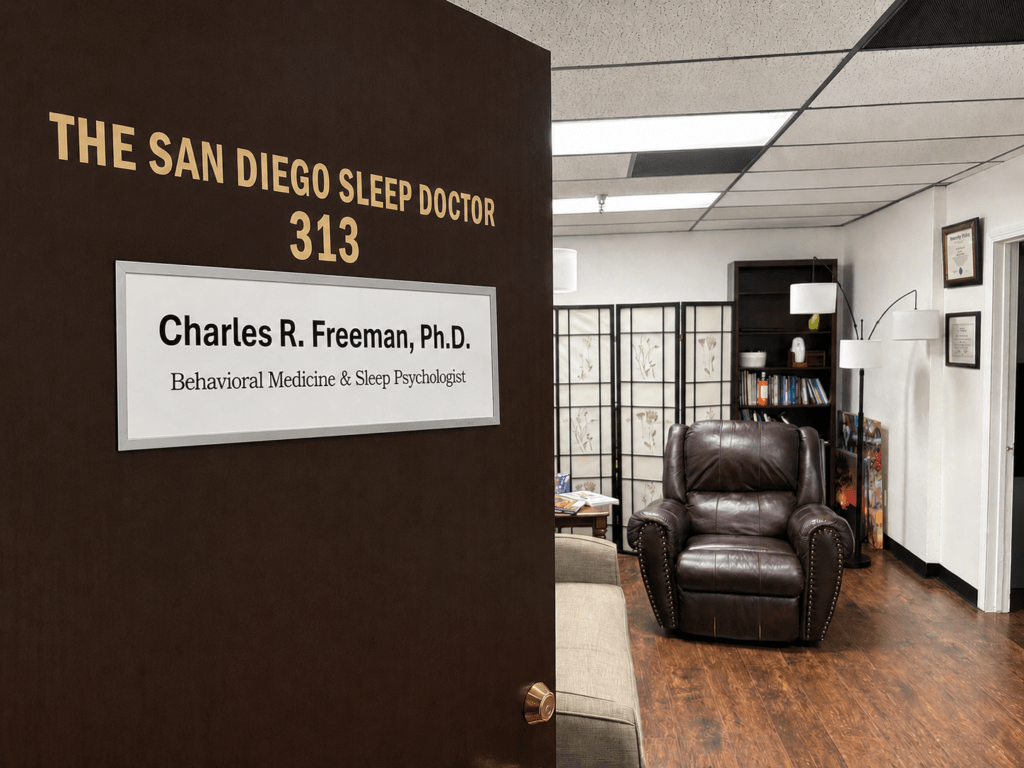
Sleep therapist in San Diego office for Dr. Charles R. Freeman, The San Diego Sleep Doctor in Mission Valley

Finding a Sleep Therapist in San Diego

Finding a Sleep Therapist in San Diego By Dr. Charles R. Freeman, Ph.D. If you are looking for a sleep therapist in San Diego, Dr. Charles R. Freeman, Ph.D., is known as The San Diego Sleep Doctor for his extensive work treating chronic insomnia, nightmares, PTSD, trauma, anxiety, and sleep medication concerns. His office is centrally located in Mission Valley, making specialized insomnia treatment accessible for patients throughout San Diego. Many people with insomnia have already tried the obvious suggestions. They have darkened the room, stopped caffeine, changed mattresses, bought supplements, used sleep apps, and tried medication. Those steps may help some people, but chronic insomnia often needs more than general sleep advice. In my practice, insomnia is often the symptom, not the root cause. The visible problem may be waking up at 3 A.M., lying awake for hours, or feeling exhausted after a full night in bed. Underneath may be anxiety, trauma, PTSD, grief, chronic pain, depression, medication dependence, or conditioned arousal. Good insomnia treatment looks beneath the surface. Why Choose a Sleep Therapist in San Diego? A sleep therapist in San Diego should understand both sleep and the nervous system. Chronic insomnia is not just a nighttime problem. It affects mood, concentration, pain tolerance, relationships, work performance, and overall quality of life. Dr. Freeman has more than 35 years of clinical experience and specializes in insomnia, nightmares, sleep disorders, PTSD, anxiety, trauma, and Cognitive Behavioral Therapy for Insomnia, also known as CBT-I. He brings a behavioral medicine perspective, which means treatment focuses on the interaction between the mind, body, nervous system, habits, and emotional health. This is important because many patients do not simply need another sleep hygiene checklist. They need a clinical plan that addresses why the brain and body are staying awake. Why Is The San Diego Sleep Doctor Different? Patients searching for The San Diego Sleep Doctor are usually looking for someone with specific insomnia expertise, not just general therapy experience. Dr. Freeman’s work focuses on the patterns that keep sleep disrupted: conditioned arousal, sleep anxiety, trauma activation, medication reliance, hypervigilance, nightmares, and the fear of being awake. His approach is directive, collaborative, practical, and solution-focused. This is not passive therapy where the patient leaves each session without a plan. We identify what is maintaining the insomnia, create specific tools, assign practical homework, review what happened, and fine-tune the treatment as we go. You are driving the car with your therapeutic goals, and I am the passenger helping guide the route. The goal is to help you improve as efficiently as possible and leave with skills you can use for the rest of your life. Why Is CBT-I Different From General Sleep Advice? CBT-I is the gold-standard behavioral treatment for chronic insomnia. It helps retrain the thoughts, behaviors, schedules, and conditioned patterns that keep insomnia going. CBT-I can help reduce clock watching, fear of wakefulness, catastrophic thinking, and time spent awake in bed. Sleep hygiene can be useful, but it is rarely enough by itself. Many people already know to keep the room dark, avoid screens, and limit caffeine. The deeper problem may be that the bed has become associated with frustration, fear, and effort. A person may feel sleepy on the couch but wide awake the moment they get into bed. That does not mean the person is broken. It means the nervous system has learned a pattern. Learned patterns can be unlearned. That is where CBT-I becomes practical and powerful. Can Dr. Freeman Help With Sleep Medication Concerns? Many patients come to insomnia treatment after years of relying on sleep medication, alcohol, over-the-counter sleep aids, or supplements. Medication may provide short-term relief, but it may not address the underlying causes of insomnia. Some people experience tolerance, rebound insomnia, dependence, or sleep that does not feel restorative. Medication changes should always be coordinated with the prescribing physician. Dr. Freeman’s role is to help patients build skills, address the root causes, and reduce the feeling that sleep depends entirely on an external substance. Why Mission Valley Is a Convenient Location Dr. Freeman’s office is centrally located in Mission Valley, which makes it convenient for patients across San Diego. The location is accessible from nearby communities such as Hillcrest, North Park, Mission Hills, Kensington, La Mesa, Clairemont, Point Loma, downtown San Diego, and surrounding areas. For patients who are already exhausted from insomnia, convenience matters. Having a centrally located sleep therapist in San Diego can make it easier to follow through with treatment and build consistency. What I Often See in Practice I often meet people who are highly capable during the day and deeply discouraged at night. They work, parent, lead, serve, and handle responsibilities, but when they get into bed, the nervous system will not let go. They may say, “I know I am safe, but my body does not believe it,” or “I can function, but I am exhausted.” Functioning is not the same as wellness. Chronic insomnia can wear down even very strong people. Sleep is one of the foundations of health. I often describe exercise, nutrition, sound sleep, and meaning or purpose as four legs of the table. When sleep is unstable, the whole table starts to wobble. The goal of treatment is not simply to knock someone out for the night. The goal is restorative sleep, emotional regulation, and confidence in the body’s ability to sleep naturally again. Key Takeaways Dr. Freeman is known as The San Diego Sleep Doctor for his specialized work with insomnia and sleep disorders. His Mission Valley office is centrally located for patients throughout San Diego. CBT-I is the gold-standard behavioral treatment for chronic insomnia. Chronic insomnia often requires more than sleep hygiene or medication. Dr. Freeman’s approach is directive, collaborative, practical, and focused on lasting skills. Frequently Asked Questions About Finding a Sleep Therapist in San Diego Who is The San Diego Sleep Doctor? Dr. Charles R. Freeman, Ph.D., is known as The San Diego Sleep Doctor for his specialized work treating insomnia,

Finding a Sleep Therapist in San Diego Read More »

Man with chronic insomnia reviewing a sleep journal as part of Cognitive Behavioral Therapy for Insomnia (CBT-I).

What Is CBT-I? A Complete Guide to Cognitive Behavioral Therapy for Insomnia

What Is CBT-I? A Complete Guide to Cognitive Behavioral Therapy for Insomnia By Dr. Charles R. Freeman, Ph.D. CBT-I for insomnia (Cognitive Behavioural Therapy for Insomnia) is considered the gold standard treatment for chronic insomnia. CBT-I for insomnia helps people identify and change the thoughts, behaviors, habits, and nervous system patterns that contribute to sleep diffisulties. Unlike sleeping pills, CBT-I for insimnia addresses the underlying causes of insomnia rather than simply masking symptoms. If you have struggled with insomnia for months or years, you have probably tried many different solutions. You may have tried melatonin, over-the-counter sleep aids, prescription sleeping pills, herbal supplements, sleep apps, white noise machines, and even special mattresses and pillows. You may have spent countless nights searching the internet for answers. Yet despite all those efforts, you still find yourself staring at the ceiling at 2 a.m., waking up at 3 a.m., or dragging yourself through the day exhausted. This is often when people discover CBT-I. As a behavioral medicine psychologist specializing in insomnia for more than three decades, I frequently explain that CBT-I is not simply another sleep tip or relaxation exercise. It is the most effective non-medication treatment we currently have for chronic insomnia. More importantly, it teaches skills that continue working long after treatment ends. What Does CBT-I Stand For? CBT-I stands for Cognitive Behavioral Therapy for Insomnia. It is a specialized form of cognitive behavioral therapy designed specifically to treat sleep problems. Many people searching online use terms such as CBT-I, CBT-I for insomnia, CBT insomnia, CBT therapy for insomnia, CBT sleep therapy, and Cognitive Behavioral Therapy for Insomnia. Although the wording varies, these terms all refer to the same evidence-based treatment approach. Unlike sleeping medications, CBT-I focuses on changing the thoughts, behaviors, and patterns that contribute to chronic insomnia. The goal is not simply to provide temporary relief but to address the factors that keep insomnia going and help people develop lasting sleep skills. Why Doesn’t Chronic Insomnia Usually Go Away On Its Own? One of the most important concepts I teach patients is that insomnia is often the symptom, not the root cause. Everyone experiences occasional sleep difficulties. A stressful project, a divorce, a medical diagnosis, financial concerns, the death of a loved one: these events can temporarily disrupt sleep. Most people eventually return to normal sleep patterns, but chronic insomnia is different. Over time, the brain begins learning wakefulness. People start monitoring the clock. They worry about whether they will sleep. They become frustrated when they cannot. They begin dreading bedtime. Eventually the bed itself becomes associated with alertness rather than relaxation. At that point, insomnia often develops into a self-sustaining cycle. The original trigger may have been anxiety, PTSD, trauma, depression, grief, chronic pain, or a medical condition. Now the insomnia has become a problem of its own. This is where CBT-I becomes especially effective. How Does CBT-I for Insomnia Work? Many people assume insomnia is simply a nighttime problem. In reality, insomnia involves the interaction between thoughts, emotions, behaviors, physiology, and the nervous system. CBT-I works by changing the patterns that interfere with healthy sleep. Changing Unhelpful Sleep Thoughts Many people with chronic insomnia develop understandable fears about sleep. They may find themselves thinking, “I’ll never sleep tonight,” “If I don’t get eight hours, tomorrow will be a disaster,” “Something is wrong with me,” or “My body has forgotten how to sleep.” These thoughts increase anxiety, and anxiety increases alertness. Greater alertness makes sleep more difficult, which then reinforces the original fears and creates a self-perpetuating cycle. CBT-I helps patients recognize these patterns, challenge unhelpful assumptions, and develop more realistic and balanced perspectives about sleep. Changing Sleep Behaviors Many people unintentionally make insomnia worse through behaviors that seem logical in the moment. They may go to bed earlier and earlier, sleep late whenever possible, take long naps, stay in bed while awake, watch the clock repeatedly, or try harder and harder to force sleep. These responses are understandable. Unfortunately, they often strengthen insomnia rather than resolve it. CBT-I teaches specific behavioral strategies that help restore healthy sleep patterns and rebuild the brain’s natural association between bed and sleep. Rebuilding Confidence in Sleep One of the hidden effects of chronic insomnia is the loss of trust in your ability to sleep. Many people become fearful of bedtime. They anticipate another difficult night. They begin fighting sleep rather than allowing it. Part of CBT-I involves rebuilding confidence in the body’s natural ability to sleep. Over time, patients stop struggling with sleep and begin working with their natural sleep system. What Are the Core Components of CBT-I? CBT-I includes several evidence-based strategies. Sleep Restriction Therapy The name sounds intimidating. Sleep restriction does not mean depriving yourself of sleep. Instead, it means matching time in bed more closely with actual sleep time. Many people with insomnia spend excessive time in bed trying to get more sleep. Unfortunately, this often leads to more wakefulness. Sleep restriction helps rebuild the association between bed and sleep. Stimulus Control Therapy Stimulus control addresses the connection between the bed and wakefulness. Many people with insomnia gradually develop an association between being in bed and experiences such as worry, frustration, anxiety, clock watching, and excessive mental activity. Over time, the bed can become a cue for alertness rather than sleep. Stimulus control therapy helps retrain the brain to reconnect the bed with sleep. The goal is to restore the bed as a cue for rest rather than a trigger for wakefulness and frustration. Cognitive Restructuring This component focuses on thoughts and beliefs about sleep. Many patients develop catastrophic thinking about insomnia. They begin assuming every poor night will ruin the next day. CBT-I helps people develop more balanced thinking patterns that reduce anxiety and performance pressure around sleep. Relaxation Training Some individuals struggle with physiological hyperarousal, meaning their body remains activated long after they climb into bed. Relaxation training can help reduce this state of heightened arousal through techniques such as breathing exercises, progressive muscle relaxation, guided imagery, hypnosis, and mindfulness practices. These approaches help calm the nervous system, reduce physical and mental tension, and create conditions that support healthy sleep. Sleep Hygiene Education Sleep hygiene is important, but it is rarely sufficient by itself. Many patients arrive in my office

What Is CBT-I? A Complete Guide to Cognitive Behavioral Therapy for Insomnia Read More »