
Dr. Charles Freeman – San Diego Insomnia and Sleep Problems Treatment – San Diego Trauma and PTSD Treatment

Anxiety Treatment

Can health anxiety cause insomnia worried person experiencing sleep anxiety, health fears, and insomnia symptoms

Can Health Anxiety Cause Insomnia?

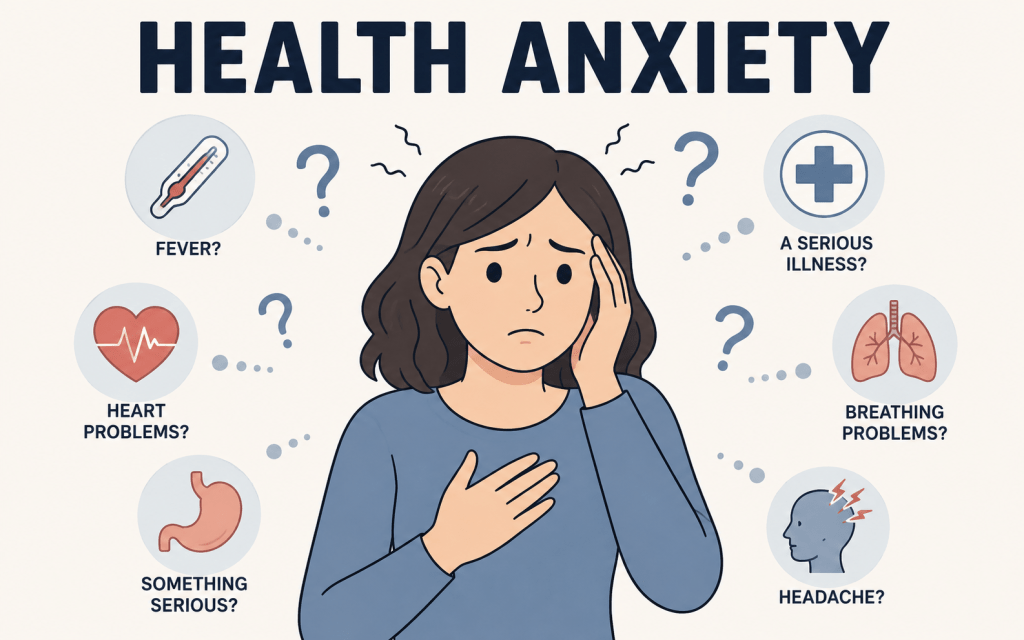
Yes. Health anxiety can cause insomnia, and insomnia can make health anxiety worse. A person may begin with a real sleep problem, but the fear about what poor sleep means can become one of the main reasons the nervous system stays awake.

This pattern often starts suddenly. Someone who has slept well for years may have several poor nights and begin to worry that something serious is happening. The person may start searching online, checking symptoms, asking for reassurance, reading forums, and fearing permanent damage from sleep loss. The original sleep problem then becomes wrapped in fear, uncertainty, and constant monitoring.

Sleep is one of the foundations of health, so concern about sleep makes sense. The problem begins when the mind treats every sleepless night as a medical emergency. At that point, the body does not move toward rest. It moves toward threat detection.


Can Health Anxiety Cause Insomnia? Read More »

Mountain sunrise above a sea of clouds representing anxiety-related chronic insomnia, emotional recovery, and the return of restorative sleep

Can Anxiety Cause Chronic Insomnia?

Yes, anxiety can absolutely cause chronic insomnia. It can also maintain it long after the original stressor has passed. In my clinical work, I often see that people are not just struggling with sleep. They are struggling with a nervous system that has learned to stay alert, a mind that keeps scanning for problems, and growing fear about what will happen if they do not sleep.

That is why I often say that insomnia is frequently the symptom, not the root cause. Sleep is one of the foundations of health, but sleep does not exist in isolation. Thoughts, emotions, physical symptoms, and behavior all influence one another. When anxiety becomes chronic, sleep is often one of the first systems to break down.

Can Anxiety Cause Chronic Insomnia? Read More »

Calm notebook and pen on a desk representing cognitive distortions, anxiety, sleep, PTSD, and recovery

Cognitive Distortions: How Unhelpful Thinking Affects Sleep, Anxiety, PTSD, and Recovery

Yes, the way you think can make sleep, anxiety, PTSD symptoms, and emotional distress worse. That does not mean your symptoms are your fault. It means that thoughts, emotions, physical symptoms, and behavior influence one another. When the mind gets stuck in fear-based or extreme thinking, the body often follows with tension, alertness, worry, and poor sleep.

Cognitive distortions are unhelpful thinking patterns that make a situation seem more hopeless, dangerous, permanent, or personal than it really is. These patterns are common during stress, trauma, chronic insomnia, depression, and anxiety. The mind takes shortcuts, especially when the nervous system is tired or on high alert.

The cognitive distortion framework was popularized by psychiatrist David Burns, M.D., in his influential book Feeling Good: The New Mood Therapy. I use these well-known cognitive behavioral therapy concepts in practical ways with patients dealing with sleep, anxiety, trauma, and recovery. The purpose is not to blame people for their symptoms. The purpose is to help patients recognize when the mind is turning fear, exhaustion, or past trauma into conclusions that may not be accurate.

Cognitive Distortions: How Unhelpful Thinking Affects Sleep, Anxiety, PTSD, and Recovery Read More »