Dr. Charles Freeman – San Diego Insomnia and Sleep Problems Treatment – San Diego Trauma and PTSD Treatment

Insomnia

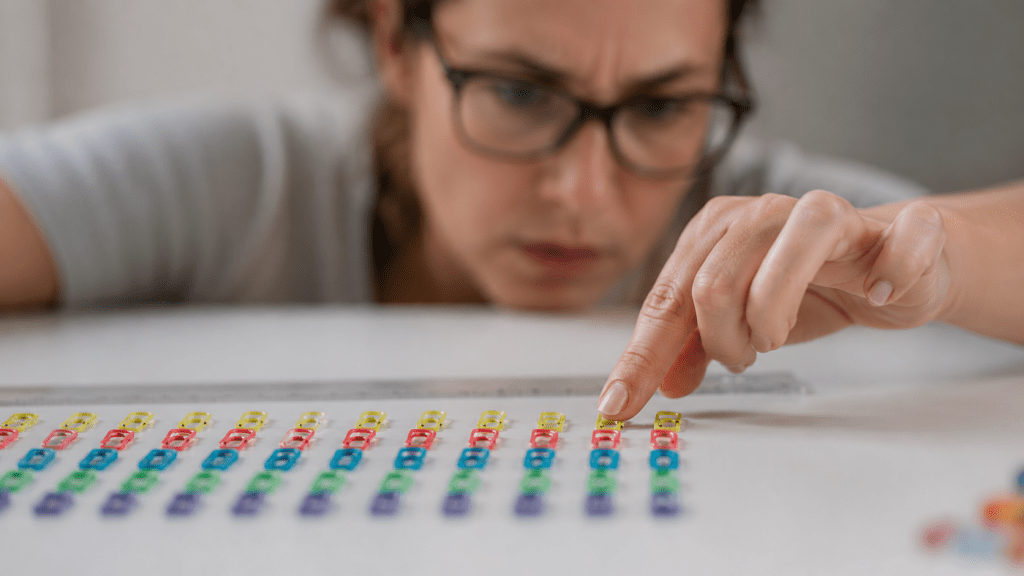
A tense woman carefully arranging colorful paper clips in perfect rows to represent perfectionism, rumination, and insomnia

Can Perfectionism Cause Insomnia?

Yes. Perfectionism can cause insomnia when the mind stays active at night reviewing mistakes, judging performance, comparing life progress, and trying to prevent future failure. The person may be exhausted, but the nervous system remains on alert.

Many perfectionistic people do not think of themselves as anxious. They may describe themselves as responsible, disciplined, hardworking, or driven. Those qualities can help a person succeed. But when standards become rigid and self-criticism becomes constant, the same traits can interfere with sleep.

In my practice, I often see patients who wake up in the early morning and immediately begin evaluating themselves. The bedroom becomes a place for mental review. The mind asks, “What did I do wrong?” “Why am I behind?” “What if I fail?” “Why can’t I fix this?” At that point, insomnia is not just a sleep problem. It is a nighttime expression of pressure, fear, and self-judgment.

Can Perfectionism Cause Insomnia? Read More »

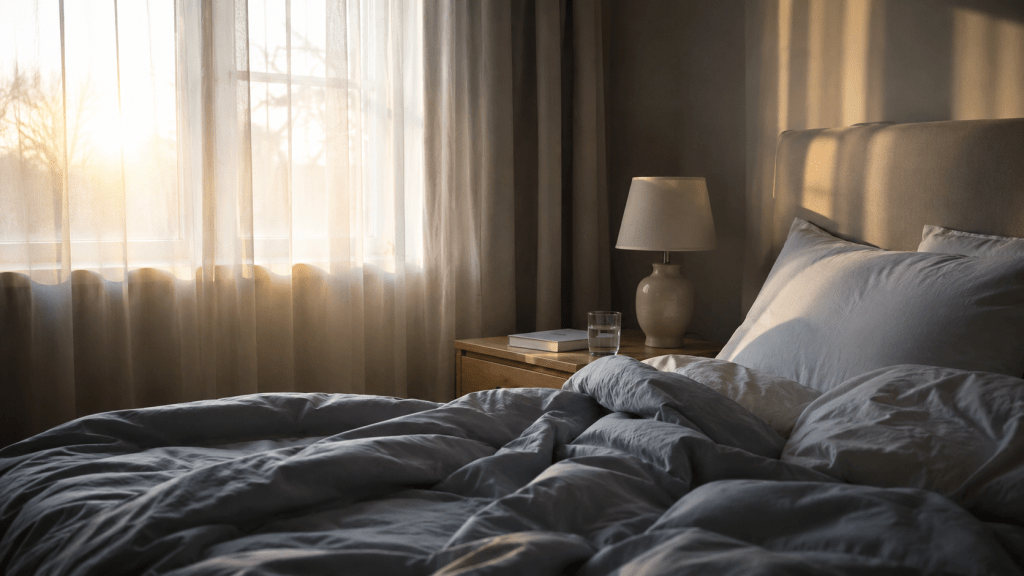
A calm bedroom at dawn with soft natural light suggesting recovery from insomnia and nighttime rumination

When Insomnia Is Not Really About Sleep

Sometimes insomnia is not really about sleep. The sleep problem is real, but the cause may be anxiety, trauma, perfectionism, stress, rumination, or a nervous system that has learned to stay on alert at night.

Many people come to treatment after trying sleep hygiene, supplements, medications, meditation apps, or advice from the internet. Some fall asleep but wake up at 2:00 or 3:00 AM. Others lie in bed reviewing mistakes, worrying about work, replaying conversations, or asking themselves why they cannot relax. By the time they seek help, they may feel afraid of the night itself.

In my practice, I often see patients who believe the problem is only sleep. As treatment begins, we often find that insomnia has become the place where unresolved stress shows up most clearly.

When Insomnia Is Not Really About Sleep Read More »

Mountain sunrise above a sea of clouds representing anxiety-related chronic insomnia, emotional recovery, and the return of restorative sleep

Can Anxiety Cause Chronic Insomnia?

Yes, anxiety can absolutely cause chronic insomnia. It can also maintain it long after the original stressor has passed. In my clinical work, I often see that people are not just struggling with sleep. They are struggling with a nervous system that has learned to stay alert, a mind that keeps scanning for problems, and growing fear about what will happen if they do not sleep.

That is why I often say that insomnia is frequently the symptom, not the root cause. Sleep is one of the foundations of health, but sleep does not exist in isolation. Thoughts, emotions, physical symptoms, and behavior all influence one another. When anxiety becomes chronic, sleep is often one of the first systems to break down.

Can Anxiety Cause Chronic Insomnia? Read More »

Soft ripples on calm water at dusk representing sleep hypnosis for insomnia and relaxation before restorative sleep

Can Sleep Hypnosis Help Insomnia?

Yes, sleep hypnosis may help some people sleep better if they have insomnia, especially when anxiety, tension, racing thoughts, or sleep effort are keeping the mind and body activated at night. In my previous article, “What Is Sleep Hypnosis?” I discussed at length how this treatment works and what it does. Sleep hypnosis for insomnia is not a magic cure, and it does not force the brain to sleep. It may help by reducing mental and physical arousal so the body can move more naturally into sleep.

Many people with insomnia become focused on the question, “How do I make myself sleep?” That is understandable, but it often backfires. Sleep does not respond well to pressure. The harder a person tries to sleep, the more alert the brain can become. In behavioral sleep medicine, the goal is not to overpower the body. The goal is to create conditions that support sleep.

That is where sleep hypnosis can sometimes be useful. It may help the patient shift attention away from effort, frustration, and clock watching and toward relaxation, safety, and allowing. Used properly, hypnosis for sleep problems is a practical clinical tool, not a mystical experience or stage performance.

Can Sleep Hypnosis Help Insomnia? Read More »

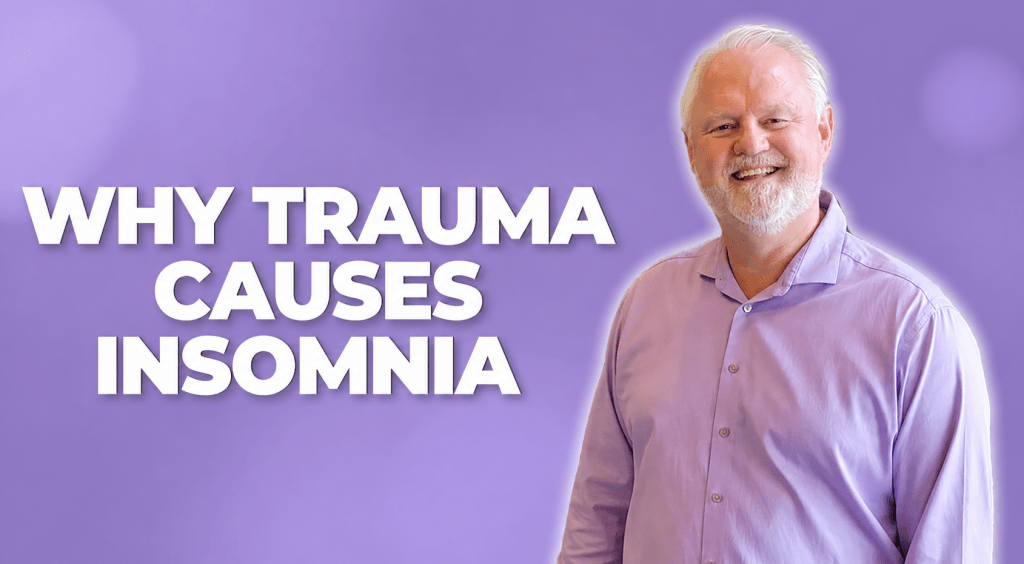
Dr. Charles R. Freeman standing against a purple background with the words Why Trauma Causes Insomnia, explaining how trauma affects sleep

Why Trauma Affects Sleep for Years

Trauma affects sleep for years because the body may continue operating as if danger is still nearby, even when the traumatic event is over. That is why trauma affects sleep long after the event has ended. A person may intellectually know, “I am safe now,” while the nervous system still reacts at night with alertness, nightmares, anxiety, muscle tension, racing thoughts, or early-morning waking.

If you are asking, “Why am I still having sleep problems years after the traumatic event ended?” the answer is usually not weakness, failure, or lack of willpower. Trauma can teach the brain and body to scan for threat. Sleep requires letting go of control. For trauma survivors, that letting go can feel unsafe, especially at night when distractions are gone and the mind becomes quieter.

As a behavioral medicine psychologist specializing in insomnia, PTSD, trauma, nightmares, and CBT-I, I often tell patients that insomnia is frequently the symptom, not the root cause. Sleep is one of the foundations of health, but when trauma has trained the nervous system to stay on guard, sleep can become one of the first areas to break down and one of the last areas to fully recover without proper treatment.

Why Trauma Affects Sleep for Years Read More »

Why does my mind race at night in a quiet bedroom with notebook and clock

Why Does My Mind Race at Night?

Your mind races at night because your brain and nervous system have not fully shifted from problem-solving mode into sleep mode. This can happen because of stress, anxiety, trauma, over-responsibility, sleep anxiety, chronic insomnia, medication concerns, or habits that train the brain to become more alert in bed. Many people describe the same frustrating pattern. They are exhausted during the day, but the moment they lie down, their mind turns on. They replay conversations, worry about the next day, think about family problems, review mistakes, check the clock, calculate how little sleep they will get, and then become more awake because they are trying so hard to sleep. This is not a character flaw. It is usually a learned pattern of arousal. The bed, which should be associated with rest, becomes associated with thinking, monitoring, planning, worrying, and trying to force sleep. Once that pattern becomes established, the harder you push for sleep, the more your brain treats bedtime like a performance test.

Why Does My Mind Race at Night? Read More »

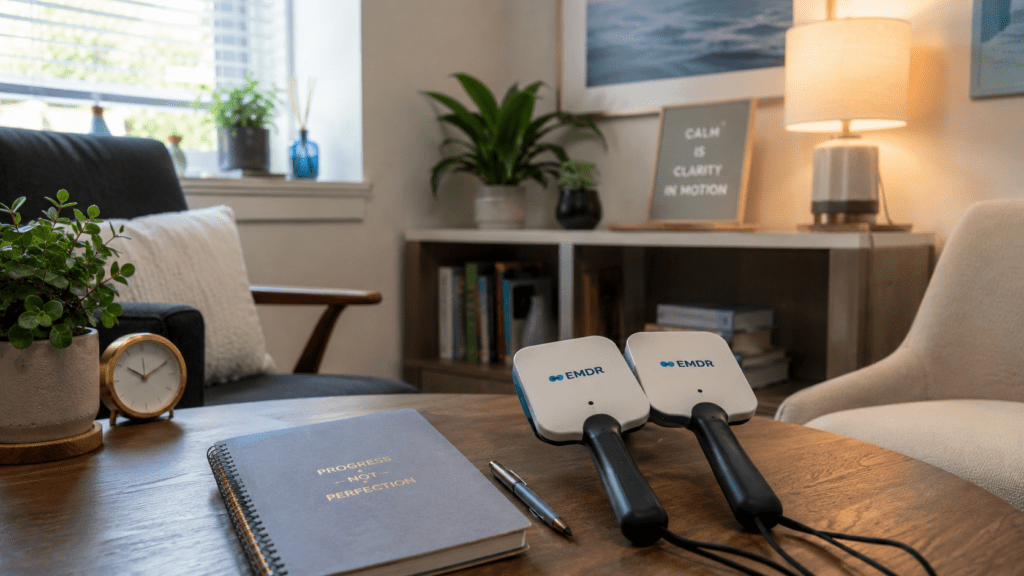
EMDR therapy tools on a calm office table showing how EMDR works for trauma, PTSD, nightmares, and sleep disruption

How EMDR Works

EMDR works by helping the brain reprocess disturbing memories so they no longer feel as emotionally intense, threatening, or present in daily life. The memory is not erased. The goal is that the nervous system no longer reacts to the memory as if the danger is happening right now.

EMDR stands for Eye Movement Desensitization and Reprocessing. It is a structured psychotherapy used most often for trauma and PTSD, although clinicians also study and use it with other problems connected to stressful or disturbing life experiences. In plain language, EMDR helps the brain take a memory that is stuck in a raw, reactive state and move it toward a more processed, integrated state.

Many patients come to EMDR because talking about the problem has not been enough. They may understand what happened. They may have insight. They may be functioning at work, parenting, serving, leading, and handling responsibilities. But inside, the body still reacts. Sleep is disrupted. Nightmares continue. Certain sounds, smells, places, people, or situations trigger panic, anger, shame, or shutdown. Functioning is not the same as wellness.

How EMDR Works Read More »

Adult with sleep anxiety talks with a psychologist in a calm therapy office

Sleep Anxiety and Insomnia: Why Fear of Not Sleeping Keeps You Awake

Sleep anxiety can keep insomnia going because the fear of not sleeping activates the same nervous system response that prevents sleep. The person may be exhausted, but the mind starts monitoring, calculating, predicting failure, and worrying about tomorrow. At that point, the first treatment target is often not sleep itself, but fear of not sleeping.

This is a very common pattern. A person has a few bad nights. Then they start watching the clock. They worry about work, parenting, driving, health, mood, or whether insomnia is “coming back.” Bedtime stops feeling like rest and starts feeling like a test. Sleep is not a performance. It is a biological process that improves when the patient stops turning it into a test.

Many patients do not need more sleep rules. They need less fear around sleep. Sleep hygiene can be useful, but chronic insomnia usually needs more than a colder bedroom, a darker room, or a new supplement. Good treatment looks at the loop, not only the loudest symptom.

Sleep Anxiety and Insomnia: Why Fear of Not Sleeping Keeps You Awake Read More »

Gut health and sleep support through fermented foods and calm evening nutrition

Can Gut Health Affect Anxiety, Inflammation, and Sleep?

Gut health and sleep are connected, but not in the simple way often promoted online. Food does not cure chronic insomnia, anxiety, PTSD, trauma, or depression. Nutrition can support the body’s biological systems, including gut health, inflammation, blood sugar stability, immune function, and sleep regulation. Lasting improvement often requires treatment that addresses the psychological, behavioral, and nervous-system patterns that keep symptoms going.

In my previous article, “Eleven Best Foods That Help You Sleep,” I discussed foods that may support better sleep. This article looks at why food may matter in the first place. The gut, brain, immune system, hormones, metabolism, and sleep-wake system are not separate departments. They communicate constantly.

That does not mean your anxiety is “just your gut.” It does not mean fermented foods will fix insomnia. It means your body and brain work as a connected system, and nutrition is one part of that system.

Can Gut Health Affect Anxiety, Inflammation, and Sleep? Read More »

Sleep-promoting foods including bananas, oatmeal, almonds, kiwi, tart cherry juice, whole grain bread, turkey, milk, and flaxseeds arranged on a kitchen table

Eleven Best Foods That Help You Sleep

f you struggle with insomnia, you may have wondered whether certain foods can help you fall asleep faster or sleep more soundly. The answer is yes, some foods appear to support healthy sleep. However, it is important to understand that no food can cure chronic insomnia. Nutrition can help create the conditions for better sleep, but long-term sleep improvement often requires addressing the underlying causes of sleep disruption. Last week, we discussed how food you eat before bedtime affects your quality of sleep, and today we will focus on elevel specific foods.

As a psychologist specializing in insomnia and sleep disorders, I frequently meet people searching for the perfect supplement, medication, or bedtime snack that will finally solve their sleep problems. While nutrition plays an important role in overall health, chronic insomnia is often connected to anxiety, trauma, PTSD, grief, chronic stress, or learned sleep behaviors. That is why Cognitive Behavioral Therapy for Insomnia (CBT-I) remains the gold-standard treatment for chronic insomnia.

Still, the foods you eat can influence sleep quality, blood sugar regulation, inflammation, and your body’s natural sleep-wake cycle. If you are looking for foods that may support better sleep, the following options have some of the strongest scientific support.

Eleven Best Foods That Help You Sleep Read More »