Dr. Charles Freeman – San Diego Insomnia and Sleep Problems Treatment – San Diego Trauma and PTSD Treatment

The San Diego Sleep Doctor

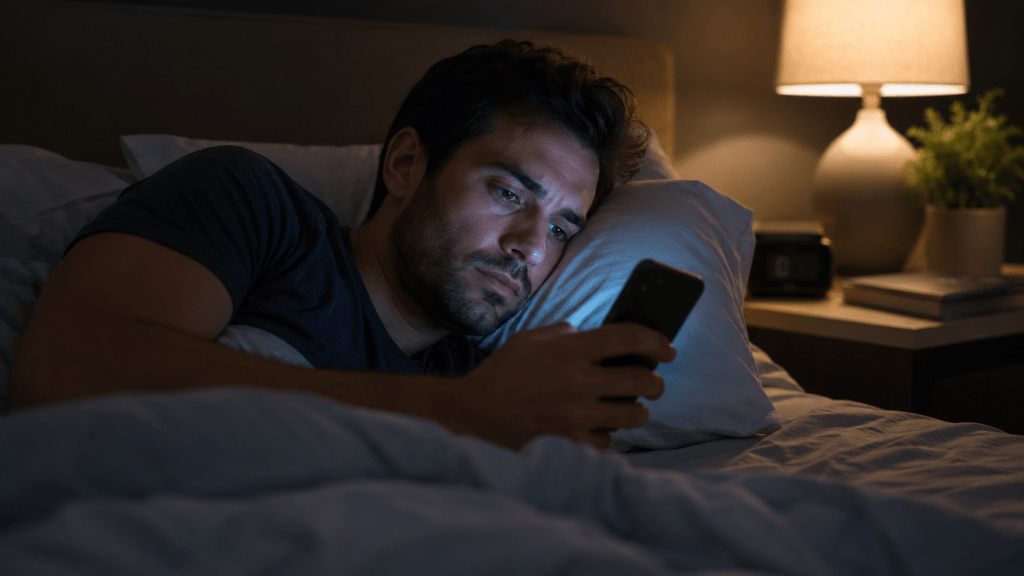
screen addiction cause insomnia when phone use keeps a tired person awake at night

Can Screen Addiction Cause Insomnia?

Yes. Compulsive phone, social media, gaming, streaming, or internet use can contribute significantly to insomnia. The problem is not simply that screens emit light. For many people, screens become a way to manage anxiety, boredom, loneliness, frustration, stress, or difficult thoughts at the end of the day. That temporary relief can become a habit, and the habit can keep the brain activated long after the body is tired.

I often hear people say, “I know I should put my phone away, but I cannot stop scrolling.” They may be exhausted, ready for bed, and fully aware that staying online will make the next day harder. Yet they continue watching videos, checking messages, reading upsetting news, playing games, shopping, or moving from one social media post to another.

This is not always a simple issue of poor discipline. In some cases, it is a behavioral addiction pattern. The screen becomes a fast, reliable way to change how a person feels in the moment. Unfortunately, it can also interfere with sleep, worsen anxiety, and create a cycle that becomes harder to break over time.

Can Screen Addiction Cause Insomnia? Read More »

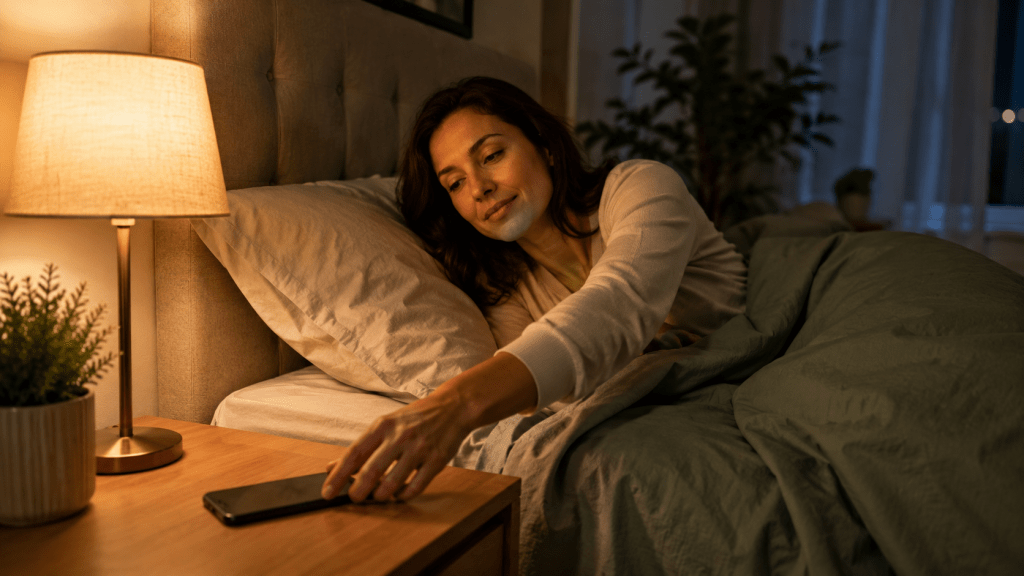
Sleepy window insomnia with a person setting aside a phone before sleep

Why Do I Miss My Sleepy Window and Then Feel Wide Awake?

Why Do I Miss My Sleepy Window and Then Feel Wide Awake? By Dr. Charles R. Freeman, Ph.D. In my previous post “Can Screen Addiction Cause Insomnia?”, I mentioned a concept of  a sleepy window, and today I want to elaborate on this phenomenon. What happens is that if you miss your sleepy window, your nervous system may shift from sleepiness into a second wind. You may feel tired on the couch, but once you get into bed, check your phone, watch more television, or start thinking about tomorrow, your brain becomes reactivated. That does not mean you are broken. It usually means your sleep timing, attention, habits, and nervous system arousal are working against each other. The “sleepy window” is the period when your body is naturally giving you an opening to fall asleep. Dr. Freeman connects this to the ultradian rhythm, which runs in cycles of roughly 90 minutes to two hours. Sleep cycles, hormone release, neurotransmitter patterns, and other body systems tend to move in rhythms. When you push past one of those rhythms, you may not simply stay sleepy. You may become more alert. Many people recognize this pattern. They are nodding off in the living room and can barely finish a show. Then they get up, brush their teeth, check Instagram, scan the news, answer one text, or look at tomorrow’s calendar. Suddenly, the sleepy feeling is gone. They lie in bed wondering, “How was I exhausted 20 minutes ago and now I’m wide awake?” What Is a Sleepy Window? A sleepy window is the time when your body, brain, and nervous system are most ready to transition into sleep. It is not an exact clock time. It is a biological opening. You may notice heavier eyelids, slower thoughts, yawning, reduced interest in conversation, or a natural desire to disengage from stimulation. The problem is that many people override that signal. They keep watching, scrolling, eating, working, or problem-solving. Dr. Freeman often compares this to eating past your satiation point. If you eat automatically in front of a screen, you may miss the moment when your body has had enough. Sleep can work in a similar way. If you are distracted, you may not notice when your body is inviting you to wind down. Why Does Missing Your Sleepy Window Give You a Second Wind Your phone is not neutral at bedtime. It brings light, novelty, emotion, comparison, stimulation, and immediate reward. Even when you tell yourself you are only checking one thing, the brain may receive a dopamine kick from social media, news, games, messages, or videos. That can temporarily reduce boredom, anxiety, loneliness, or frustration, but it can also train the brain to return to the phone whenever uncomfortable feelings show up. This is one reason insomnia is often the symptom, not the root cause. The surface problem may be “I can’t sleep.” Underneath, the driver may be anxiety, trauma activation, worry, emotional avoidance, screen dependence, grief, pain, or a conditioned pattern where the bed has become linked with alertness instead of sleep. Why Sleep Hygiene Is Not Always Enough Sleep hygiene can help, but it is often not enough for chronic insomnia. A dark room, cool temperature, reduced caffeine, and a quiet environment are useful. But many patients already know those rules. They still cannot sleep because their nervous system is activated, their thoughts are racing, or they have learned to fear wakefulness. For chronic insomnia, Cognitive Behavioral Therapy for Insomnia, or CBT-I, is the gold standard. CBT-I is not just advice to relax. It helps retrain the relationship between bed, wakefulness, sleep pressure, thoughts, behaviors, and the body’s timing system. It also helps patients stop turning sleep into a nightly performance test. Should I Go to Bed at the Same Time Every Night? Trying to force the same bedtime every night can backfire. Dr. Freeman has emphasized for years that a consistent wake-up time is often more important than forcing a rigid bedtime. You cannot magically make yourself sleepy at a certain hour. But you can help stabilize your circadian rhythm by waking at a consistent time, getting morning light, and allowing sleep pressure to build across the day. Bedtime should be guided by sleepiness, not panic. When the sleepy window arrives, the goal is to stop stimulating activity, complete basic wind-down habits, and move toward bed without adding a new round of screen stimulation. What I Often See in Practice Many patients do not have a sleep problem only at night. They have a nervous system regulation problem that becomes most obvious at night. During the day, they can function, perform, work, parent, and keep going. At night, there is less distraction. The mind starts reviewing, defending, rehearsing, regretting, or scanning for danger. I often see high-functioning people bring a performance mindset into bed. They try to manage sleep through effort, supplements, apps, routines, medications, and analysis. The harder they try, the more alert they become. Sleep responds better to skillful conditions than pressure. I also see patients who rely on medication because they are afraid of being awake. Medication may be appropriate in some situations, especially short-term and under medical supervision. But medication often treats the symptom rather than the cause. Sustainable improvement usually requires retraining sleep patterns and addressing the anxiety, trauma, habits, or emotional activation underneath the insomnia. How Can You Start Protecting Your Sleepy Window? Begin by noticing the first signs of real sleepiness. Do not wait until you are overtired and wired. When you feel the sleepy window opening, reduce stimulation quickly. Brush your teeth, lower lights, stop screens, and move into a quieter rhythm. Dr. Freeman often recommends calming input such as non-lyrical music, classical music, world music, yoga music, or other relaxing sounds that do not pull the brain into language and analysis. The goal is not to create a perfect ritual. The goal is to become more aware of your body’s timing and stop accidentally pushing through the opening your body

Why Do I Miss My Sleepy Window and Then Feel Wide Awake? Read More »

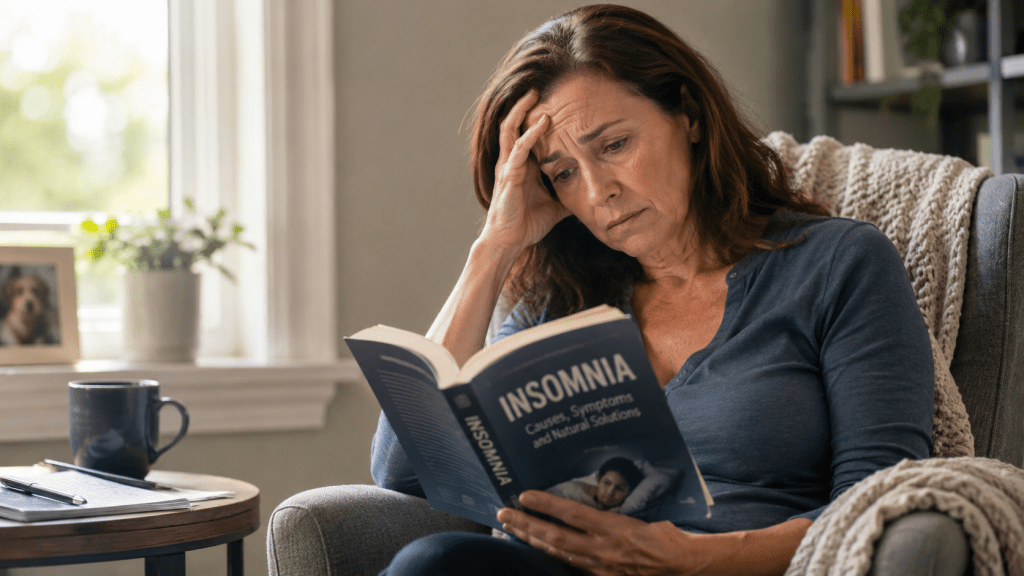
Obsessed with fixing sleep woman reading insomnia book with worry and exhaustion

Why Insomnia Patients Become Obsessed With Fixing Sleep

Many people with insomnia become obsessed with fixing sleep because the brain starts treating wakefulness as an emergency. A few bad nights can turn into hours of research, symptom checking, medication worry, rigid routines, and constant fear about what will happen if sleep does not return.

This pattern makes sense. Sleep is one of the foundations of health. When sleep suddenly breaks down, people naturally want answers. They may search online, read forums, ask doctors for reassurance, try new routines, change medications, and monitor every sensation in the body. At some point, sleep stops being a natural process and becomes a problem to solve all day long.

That effort can backfire. The harder a person tries to force sleep, the more activated the nervous system becomes. Sleep needs safety, not pressure. When the mind keeps asking, “What if I don’t sleep tonight?” the body often responds with alertness instead of rest.

Why Insomnia Patients Become Obsessed With Fixing Sleep Read More »

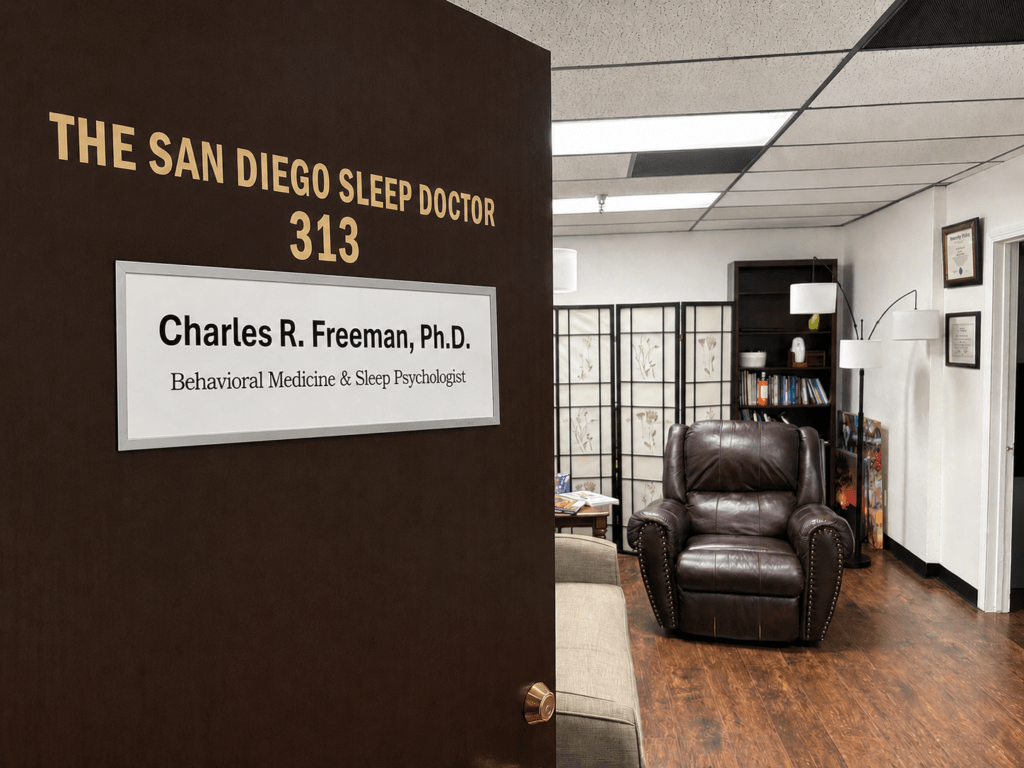
Sleep therapist in San Diego office for Dr. Charles R. Freeman, The San Diego Sleep Doctor in Mission Valley

Finding a Sleep Therapist in San Diego

Finding a Sleep Therapist in San Diego By Dr. Charles R. Freeman, Ph.D. If you are looking for a sleep therapist in San Diego, Dr. Charles R. Freeman, Ph.D., is known as The San Diego Sleep Doctor for his extensive work treating chronic insomnia, nightmares, PTSD, trauma, anxiety, and sleep medication concerns. His office is centrally located in Mission Valley, making specialized insomnia treatment accessible for patients throughout San Diego. Many people with insomnia have already tried the obvious suggestions. They have darkened the room, stopped caffeine, changed mattresses, bought supplements, used sleep apps, and tried medication. Those steps may help some people, but chronic insomnia often needs more than general sleep advice. In my practice, insomnia is often the symptom, not the root cause. The visible problem may be waking up at 3 A.M., lying awake for hours, or feeling exhausted after a full night in bed. Underneath may be anxiety, trauma, PTSD, grief, chronic pain, depression, medication dependence, or conditioned arousal. Good insomnia treatment looks beneath the surface. Why Choose a Sleep Therapist in San Diego? A sleep therapist in San Diego should understand both sleep and the nervous system. Chronic insomnia is not just a nighttime problem. It affects mood, concentration, pain tolerance, relationships, work performance, and overall quality of life. Dr. Freeman has more than 35 years of clinical experience and specializes in insomnia, nightmares, sleep disorders, PTSD, anxiety, trauma, and Cognitive Behavioral Therapy for Insomnia, also known as CBT-I. He brings a behavioral medicine perspective, which means treatment focuses on the interaction between the mind, body, nervous system, habits, and emotional health. This is important because many patients do not simply need another sleep hygiene checklist. They need a clinical plan that addresses why the brain and body are staying awake. Why Is The San Diego Sleep Doctor Different? Patients searching for The San Diego Sleep Doctor are usually looking for someone with specific insomnia expertise, not just general therapy experience. Dr. Freeman’s work focuses on the patterns that keep sleep disrupted: conditioned arousal, sleep anxiety, trauma activation, medication reliance, hypervigilance, nightmares, and the fear of being awake. His approach is directive, collaborative, practical, and solution-focused. This is not passive therapy where the patient leaves each session without a plan. We identify what is maintaining the insomnia, create specific tools, assign practical homework, review what happened, and fine-tune the treatment as we go. You are driving the car with your therapeutic goals, and I am the passenger helping guide the route. The goal is to help you improve as efficiently as possible and leave with skills you can use for the rest of your life. Why Is CBT-I Different From General Sleep Advice? CBT-I is the gold-standard behavioral treatment for chronic insomnia. It helps retrain the thoughts, behaviors, schedules, and conditioned patterns that keep insomnia going. CBT-I can help reduce clock watching, fear of wakefulness, catastrophic thinking, and time spent awake in bed. Sleep hygiene can be useful, but it is rarely enough by itself. Many people already know to keep the room dark, avoid screens, and limit caffeine. The deeper problem may be that the bed has become associated with frustration, fear, and effort. A person may feel sleepy on the couch but wide awake the moment they get into bed. That does not mean the person is broken. It means the nervous system has learned a pattern. Learned patterns can be unlearned. That is where CBT-I becomes practical and powerful. Can Dr. Freeman Help With Sleep Medication Concerns? Many patients come to insomnia treatment after years of relying on sleep medication, alcohol, over-the-counter sleep aids, or supplements. Medication may provide short-term relief, but it may not address the underlying causes of insomnia. Some people experience tolerance, rebound insomnia, dependence, or sleep that does not feel restorative. Medication changes should always be coordinated with the prescribing physician. Dr. Freeman’s role is to help patients build skills, address the root causes, and reduce the feeling that sleep depends entirely on an external substance. Why Mission Valley Is a Convenient Location Dr. Freeman’s office is centrally located in Mission Valley, which makes it convenient for patients across San Diego. The location is accessible from nearby communities such as Hillcrest, North Park, Mission Hills, Kensington, La Mesa, Clairemont, Point Loma, downtown San Diego, and surrounding areas. For patients who are already exhausted from insomnia, convenience matters. Having a centrally located sleep therapist in San Diego can make it easier to follow through with treatment and build consistency. What I Often See in Practice I often meet people who are highly capable during the day and deeply discouraged at night. They work, parent, lead, serve, and handle responsibilities, but when they get into bed, the nervous system will not let go. They may say, “I know I am safe, but my body does not believe it,” or “I can function, but I am exhausted.” Functioning is not the same as wellness. Chronic insomnia can wear down even very strong people. Sleep is one of the foundations of health. I often describe exercise, nutrition, sound sleep, and meaning or purpose as four legs of the table. When sleep is unstable, the whole table starts to wobble. The goal of treatment is not simply to knock someone out for the night. The goal is restorative sleep, emotional regulation, and confidence in the body’s ability to sleep naturally again. Key Takeaways Dr. Freeman is known as The San Diego Sleep Doctor for his specialized work with insomnia and sleep disorders. His Mission Valley office is centrally located for patients throughout San Diego. CBT-I is the gold-standard behavioral treatment for chronic insomnia. Chronic insomnia often requires more than sleep hygiene or medication. Dr. Freeman’s approach is directive, collaborative, practical, and focused on lasting skills. Frequently Asked Questions About Finding a Sleep Therapist in San Diego Who is The San Diego Sleep Doctor? Dr. Charles R. Freeman, Ph.D., is known as The San Diego Sleep Doctor for his specialized work treating insomnia,

Finding a Sleep Therapist in San Diego Read More »