
Why Do I Miss My Sleepy Window and Then Feel Wide Awake?
By Dr. Charles R. Freeman, Ph.D.
In my previous post “Can Screen Addiction Cause Insomnia?”, I mentioned a concept of a sleepy window, and today I want to elaborate on this phenomenon. What happens is that if you miss your sleepy window, your nervous system may shift from sleepiness into a second wind. You may feel tired on the couch, but once you get into bed, check your phone, watch more television, or start thinking about tomorrow, your brain becomes reactivated. That does not mean you are broken. It usually means your sleep timing, attention, habits, and nervous system arousal are working against each other.
The “sleepy window” is the period when your body is naturally giving you an opening to fall asleep. Dr. Freeman connects this to the ultradian rhythm, which runs in cycles of roughly 90 minutes to two hours. Sleep cycles, hormone release, neurotransmitter patterns, and other body systems tend to move in rhythms. When you push past one of those rhythms, you may not simply stay sleepy. You may become more alert.
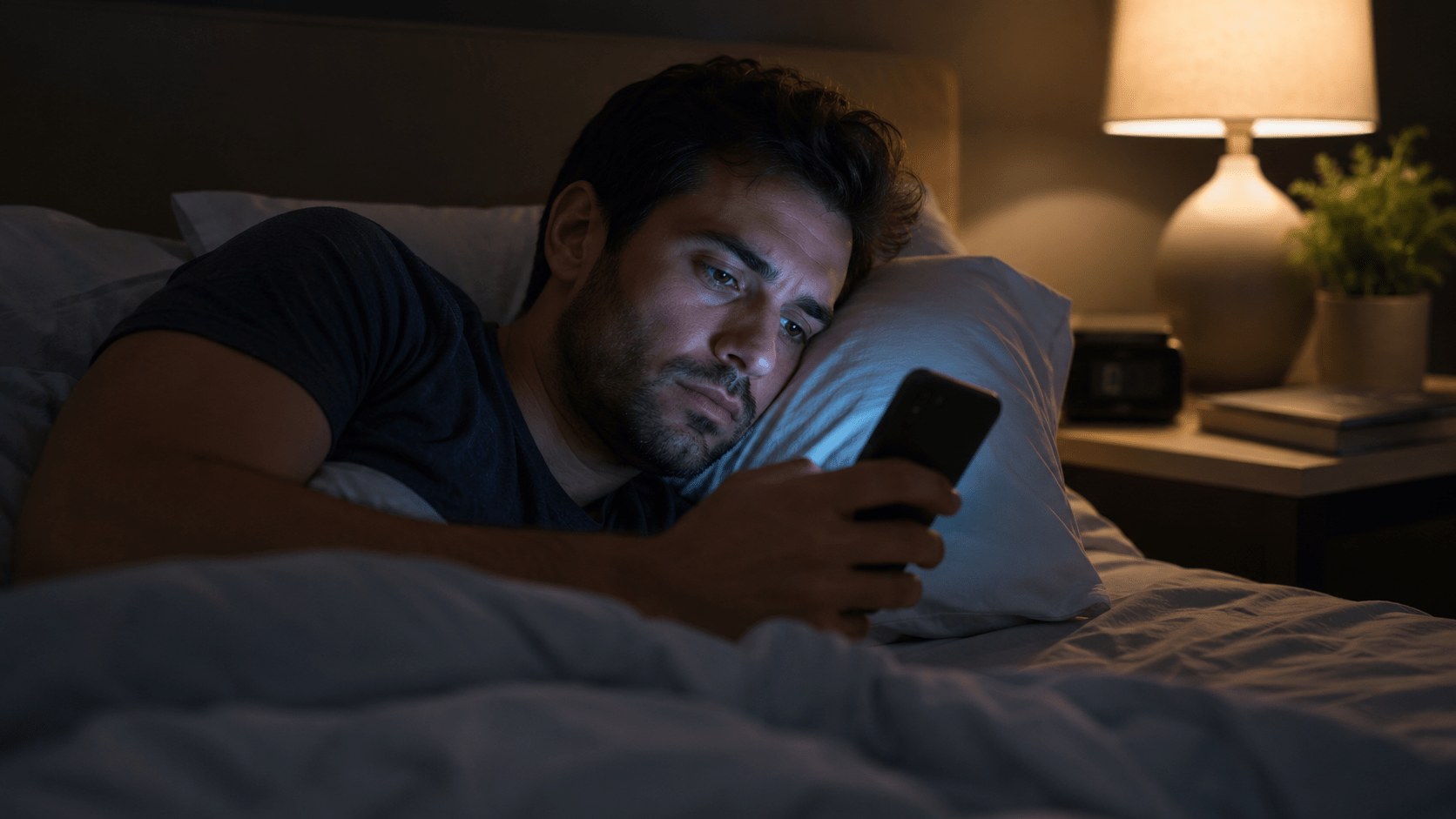
Many people recognize this pattern. They are nodding off in the living room and can barely finish a show. Then they get up, brush their teeth, check Instagram, scan the news, answer one text, or look at tomorrow’s calendar. Suddenly, the sleepy feeling is gone. They lie in bed wondering, “How was I exhausted 20 minutes ago and now I’m wide awake?”
What Is a Sleepy Window?
A sleepy window is the time when your body, brain, and nervous system are most ready to transition into sleep. It is not an exact clock time. It is a biological opening. You may notice heavier eyelids, slower thoughts, yawning, reduced interest in conversation, or a natural desire to disengage from stimulation.
The problem is that many people override that signal. They keep watching, scrolling, eating, working, or problem-solving. Dr. Freeman often compares this to eating past your satiation point. If you eat automatically in front of a screen, you may miss the moment when your body has had enough. Sleep can work in a similar way. If you are distracted, you may not notice when your body is inviting you to wind down.
Why Does Missing Your Sleepy Window Give You a Second Wind
Your phone is not neutral at bedtime. It brings light, novelty, emotion, comparison, stimulation, and immediate reward. Even when you tell yourself you are only checking one thing, the brain may receive a dopamine kick from social media, news, games, messages, or videos. That can temporarily reduce boredom, anxiety, loneliness, or frustration, but it can also train the brain to return to the phone whenever uncomfortable feelings show up.
This is one reason insomnia is often the symptom, not the root cause. The surface problem may be “I can’t sleep.” Underneath, the driver may be anxiety, trauma activation, worry, emotional avoidance, screen dependence, grief, pain, or a conditioned pattern where the bed has become linked with alertness instead of sleep.
Why Sleep Hygiene Is Not Always Enough
Sleep hygiene can help, but it is often not enough for chronic insomnia. A dark room, cool temperature, reduced caffeine, and a quiet environment are useful. But many patients already know those rules. They still cannot sleep because their nervous system is activated, their thoughts are racing, or they have learned to fear wakefulness.
For chronic insomnia, Cognitive Behavioral Therapy for Insomnia, or CBT-I, is the gold standard. CBT-I is not just advice to relax. It helps retrain the relationship between bed, wakefulness, sleep pressure, thoughts, behaviors, and the body’s timing system. It also helps patients stop turning sleep into a nightly performance test.
Should I Go to Bed at the Same Time Every Night?
Trying to force the same bedtime every night can backfire. Dr. Freeman has emphasized for years that a consistent wake-up time is often more important than forcing a rigid bedtime. You cannot magically make yourself sleepy at a certain hour. But you can help stabilize your circadian rhythm by waking at a consistent time, getting morning light, and allowing sleep pressure to build across the day.
Bedtime should be guided by sleepiness, not panic. When the sleepy window arrives, the goal is to stop stimulating activity, complete basic wind-down habits, and move toward bed without adding a new round of screen stimulation.
What I Often See in Practice
Many patients do not have a sleep problem only at night. They have a nervous system regulation problem that becomes most obvious at night. During the day, they can function, perform, work, parent, and keep going. At night, there is less distraction. The mind starts reviewing, defending, rehearsing, regretting, or scanning for danger.
I often see high-functioning people bring a performance mindset into bed. They try to manage sleep through effort, supplements, apps, routines, medications, and analysis. The harder they try, the more alert they become. Sleep responds better to skillful conditions than pressure.
I also see patients who rely on medication because they are afraid of being awake. Medication may be appropriate in some situations, especially short-term and under medical supervision. But medication often treats the symptom rather than the cause. Sustainable improvement usually requires retraining sleep patterns and addressing the anxiety, trauma, habits, or emotional activation underneath the insomnia.
How Can You Start Protecting Your Sleepy Window?
Begin by noticing the first signs of real sleepiness. Do not wait until you are overtired and wired. When you feel the sleepy window opening, reduce stimulation quickly. Brush your teeth, lower lights, stop screens, and move into a quieter rhythm. Dr. Freeman often recommends calming input such as non-lyrical music, classical music, world music, yoga music, or other relaxing sounds that do not pull the brain into language and analysis.
The goal is not to create a perfect ritual. The goal is to become more aware of your body’s timing and stop accidentally pushing through the opening your body is giving you.
Key Takeaways
- A sleepy window is a natural opening when your body is ready for sleep.
- Pushing past it can create a second wind and delay sleep for hours.
- Phones, news, social media, and television can reactivate the nervous system.
- A consistent wake-up time often matters more than forcing a strict bedtime.
- CBT-I helps treat chronic insomnia by changing sleep thoughts, behaviors, and patterns.
FAQ
What does it mean if I feel sleepy on the couch but awake in bed?
It often means your brain became reactivated during the transition to bed. Screens, light, worry, movement, or pressure to sleep can override the sleepy window.
How long does a sleepy window last?
Many sleepy windows are connected to ultradian rhythms of about 90 minutes to two hours. If you push through one, you may need to wait for the next natural opening.
Is scrolling my phone in bed really that harmful?
For many people with insomnia, yes. The phone can provide light, novelty, emotional stimulation, and reward, all of which can delay sleep and reinforce wakefulness in bed.
Can CBT-I help if I have missed my sleepy window for years?
Yes. CBT-I can help retrain sleep timing, reduce sleep anxiety, strengthen sleep drive, and change the habits that keep the nervous system activated at night.
Should I stop my sleep medication?
Do not stop medication suddenly without medical guidance. If medication is part of your sleep pattern, changes should be made carefully with the appropriate prescribing professional.
Conclusion
Missing your sleepy window is not a personal failure. It is usually a sign that your body gave you a sleep signal and your habits, screen use, anxiety, or nervous system activation pushed you past it. The solution is not to force sleep harder. The solution is to understand your rhythms, protect the transition into bed, and address the underlying causes that keep your system alert.
Sleep is one of the foundations of health. When it improves, mood, concentration, patience, energy, and emotional resilience often improve with it. With the right skills, many patients can learn to sleep more naturally instead of feeling trapped in a nightly struggle.
About the Author
 Dr. Charles R. Freeman, Ph.D., is a psychologist specializing in insomnia, sleep disorders, PTSD, anxiety, trauma, and Cognitive Behavioral Therapy for Insomnia (CBT-I). He has more than 25 years of experience helping individuals improve sleep, emotional well-being, and overall quality of life through evidence-based treatment approaches. If you would like to learn more about treatment options or schedule a consultation, please contact Dr. Freeman.
The information in this article is provided for educational purposes only and is not intended to replace professional medical or psychological advice. Individual circumstances vary, and readers should consult a qualified healthcare professional regarding their specific concerns.