Why Trauma Affects Sleep for Years
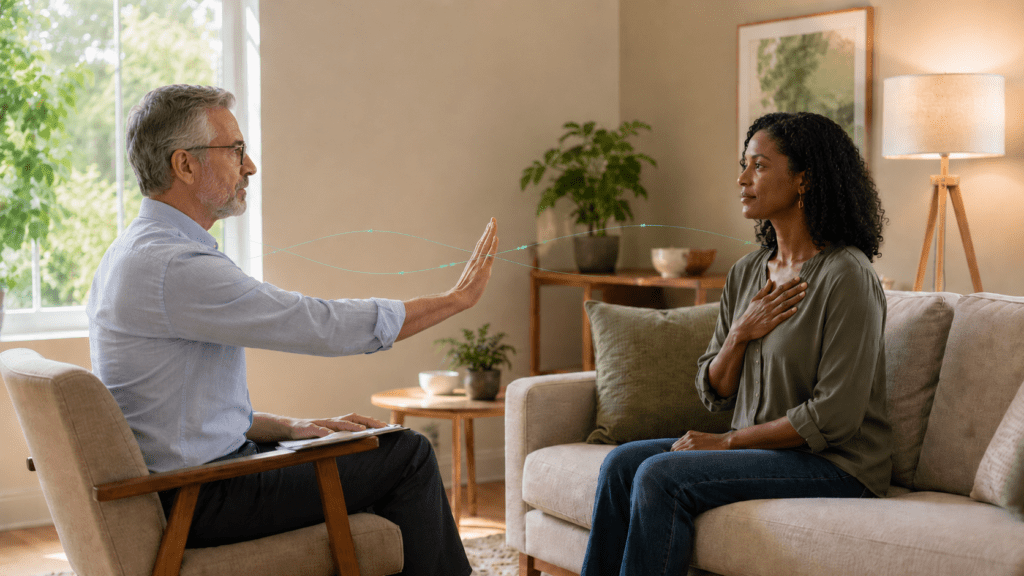
Trauma affects sleep for years because the body may continue operating as if danger is still nearby, even when the traumatic event is over. That is why trauma affects sleep long after the event has ended. A person may intellectually know, “I am safe now,” while the nervous system still reacts at night with alertness, nightmares, anxiety, muscle tension, racing thoughts, or early-morning waking.
If you are asking, “Why am I still having sleep problems years after the traumatic event ended?” the answer is usually not weakness, failure, or lack of willpower. Trauma can teach the brain and body to scan for threat. Sleep requires letting go of control. For trauma survivors, that letting go can feel unsafe, especially at night when distractions are gone and the mind becomes quieter.
As a behavioral medicine psychologist specializing in insomnia, PTSD, trauma, nightmares, and CBT-I, I often tell patients that insomnia is frequently the symptom, not the root cause. Sleep is one of the foundations of health, but when trauma has trained the nervous system to stay on guard, sleep can become one of the first areas to break down and one of the last areas to fully recover without proper treatment.