
Can Sleep Hypnosis Help Insomnia?
By Dr. Charles R. Freeman, Ph.D.
Yes, sleep hypnosis may help some people sleep better if they have insomnia, especially when anxiety, tension, racing thoughts, or sleep effort are keeping the mind and body activated at night. In my previous article, “What Is Sleep Hypnosis?” I discussed at length how this treatment works and what it does. Sleep hypnosis for insomnia is not a magic cure, and it does not force the brain to sleep. It may help by reducing mental and physical arousal so the body can move more naturally into sleep.
Many people with insomnia become focused on the question, “How do I make myself sleep?” That is understandable, but it often backfires. Sleep does not respond well to pressure. The harder a person tries to sleep, the more alert the brain can become. In behavioral sleep medicine, the goal is not to overpower the body. The goal is to create conditions that support sleep.
That is where sleep hypnosis can sometimes be useful. It may help the patient shift attention away from effort, frustration, and clock watching and toward relaxation, safety, and allowing. Used properly, hypnosis for sleep problems is a practical clinical tool, not a mystical experience or stage performance.
What Is Sleep Hypnosis?
Sleep hypnosis is a structured relaxation and attention-training method designed to help the mind and body settle. A person remains aware and in control. The purpose is not to make someone unconscious. The purpose is to guide attention in a way that reduces the arousal that interferes with sleep.
During sleep hypnosis, a clinician may use breathing, imagery, body relaxation, calming language, and focused attention. For some patients, this helps interrupt the pattern of lying in bed thinking, analyzing, planning, worrying, and trying to “win” the night. For readers who want a deeper introduction, this article creates a natural internal link opportunity to What Is Sleep Hypnosis?
How Sleep Hypnosis May Help
Sleep hypnosis may help insomnia by preparing the nervous system for sleep rather than demanding sleep on command. That distinction matters. Many patients are physically exhausted but mentally alert. Their body wants rest, but their mind is still scanning, solving, predicting, or bracing.
Sleep hypnosis may support insomnia treatment in several ways:
- Encouraging relaxation
- Improving mental focus
- Reducing sleep effort
- Lowering anxiety about sleep
- Preparing the mind and body for restorative sleep
In one 2023 study, Friesen and colleagues found that sleep-directed hypnosis improved subjective sleep quality after exposure to distressing material, although it did not improve every sleep or trauma-related measure. That is a useful finding, but it should be kept in perspective. Sleep hypnosis may help some people feel that their sleep is better. It is not a stand-alone cure for chronic insomnia, PTSD, nightmares, or anxiety.
Why Trying Harder to Sleep Often Makes Insomnia Worse
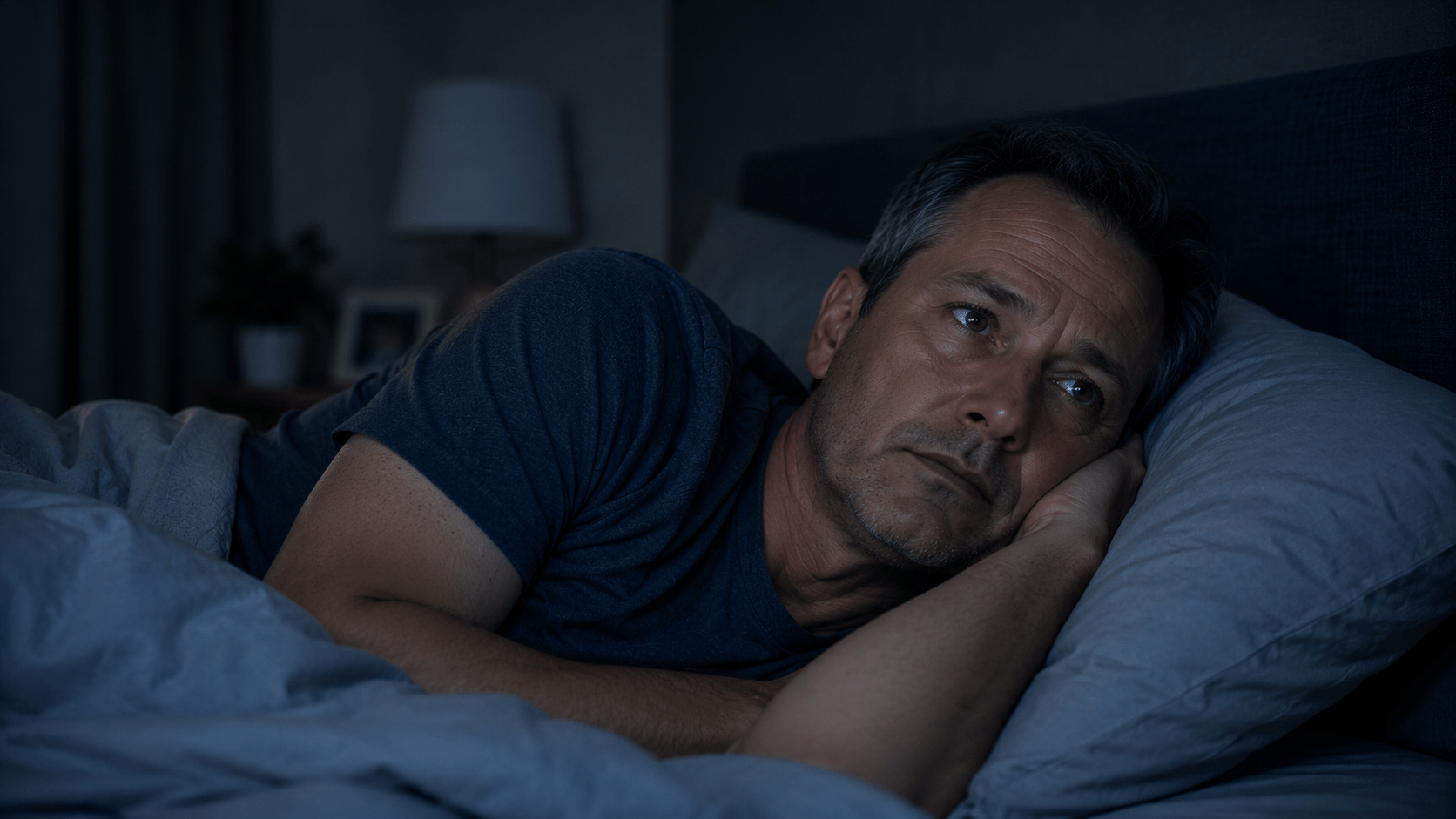
One of the most common insomnia patterns I see is effort. A patient goes to bed exhausted and says, “Tonight has to be the night.” Then the monitoring begins. What time is it? How long have I been awake? How bad will tomorrow be if I do not sleep? The bed becomes a place of performance rather than rest.
This is why sleep hypnosis for insomnia can be helpful for certain patients. It gives the mind something different to do. Instead of fighting wakefulness, the person practices shifting into a quieter state. Instead of treating sleep as a test, the person practices creating the conditions where sleep is more likely to occur.
This also connects with anxiety and Insomnia. Many people are not simply awake. They are awake and worried about being awake. That worry becomes fuel for the insomnia cycle.
Why Restorative Sleep Matters
Sleep is one of the foundations of health. During REM sleep, or dream sleep, the mind sorts through the day’s experiences. REM sleep helps link memories, supports creativity, helps regulate emotions, and assists the mind in clearing accumulated stress.
Deep sleep is also essential. It is the body’s most restorative state. During deep sleep, energy shifts toward repair and recovery. The brain removes waste products. Memory consolidation occurs. Growth hormone supports tissue repair. The immune system becomes more active. Hormones rebalance. Deep sleep helps restore both body and mind.
When people have insomnia, they often become so focused on the number of hours slept that they lose sight of the larger goal. The goal is not simply to be knocked out. The goal is restorative sleep. This is a good place to internally link to why deep sleep matters for healing and recovery.
What I Often See in Practice
In clinical practice, I often meet patients who are trying harder and harder to sleep. They are intelligent, responsible, high-functioning people. Many are used to solving problems through discipline and effort. That approach may work well in business, athletics, academics, or family responsibility. It does not work well with sleep.
Some patients feel physically exhausted but mentally alert. They can barely function during the day, but when they get into bed, their mind turns on. Others become trapped in sleep anxiety. They worry about not sleeping, then that worry activates the body, and the activation makes sleep less likely.
Many patients improve when they stop treating sleep as a performance task. They learn that a bad night is uncomfortable, but it does not have to become a catastrophe. They learn skills for relaxation, cognitive restructuring, emotional regulation, and nervous system calming. Sleep hypnosis may be one of those skills, especially when used inside a broader non-medication insomnia treatment plan.
Is Sleep Hypnosis a Replacement for CBT-I?
Sleep hypnosis is not a replacement for Cognitive Behavioral Therapy for Insomnia. CBT-I remains the gold standard treatment for chronic insomnia because it directly addresses the thoughts, behaviors, schedules, conditioned wakefulness, and sleep anxiety that maintain insomnia.
Sleep hypnosis may fit well alongside CBT-I, especially for patients who need help reducing arousal. The important question is not, “Which technique sounds most relaxing?” The better question is, “What is keeping this person awake?” Sometimes the answer is conditioned wakefulness. Sometimes it is trauma. Sometimes it is anxiety, grief, chronic pain, nightmares, medication dependence, or a combination of several factors.
That is why this topic naturally connects to sleep hypnosis vs CBT-I and CBT-I versus sleeping pills. Patients can learn skills rather than relying solely on medication, but the treatment plan needs to address the real causes of the insomnia.
Key Takeaways
- Sleep hypnosis may help some people with insomnia reduce mental and physical arousal.
- It does not force sleep and should not be presented as a cure.
- Sleep hypnosis may help shift attention away from effort and toward allowing sleep.
- Insomnia is often the symptom, not the root cause.
- Sleep hypnosis works best as one tool within a broader behavioral sleep medicine approach.
Frequently Asked Questions
Can sleep hypnosis help insomnia?
It may help if your insomnia is connected to stress, anxiety, physical tension, racing thoughts, or fear of not sleeping. It is not guaranteed, and it works best when combined with treatment that addresses the patterns maintaining insomnia.
Can sleep hypnosis force me to fall asleep?
No. Sleep hypnosis does not force sleep. The goal is to reduce arousal and create better internal conditions for sleep to happen naturally.
Is sleep hypnosis the same as stage hypnosis?
No. Clinical sleep hypnosis is not entertainment. You remain in control. The process is focused on relaxation, attention, imagery, and helping the nervous system settle.
Is sleep hypnosis a non-medication insomnia treatment?
Yes, sleep hypnosis can be part of a non-medication insomnia treatment plan. For chronic insomnia, it is usually best combined with CBT-I, anxiety treatment, trauma therapy when needed, and practical sleep behavior changes.
Should I use sleep hypnosis instead of sleeping pills?
Do not stop or change medication without consulting your prescribing physician. Many people benefit from learning sleep skills while working with appropriate medical and psychological providers.
Conclusion
Sleep hypnosis may help insomnia when it reduces the effort, anxiety, and tension that keep the body awake. It is not a trick, a cure, or a way to force sleep. It is a tool for helping the mind and body move toward the restorative sleep processes they were designed to perform.
For many people, sustainable improvement comes from addressing the underlying causes of insomnia. That may include anxiety, trauma, conditioned wakefulness, medication concerns, poor sleep habits, stress, or unresolved emotional activation. The goal is not simply to get through the night. The goal is to help the patient develop skills, confidence, and a healthier relationship with sleep.
About the Author
 Dr. Charles R. Freeman, Ph.D., is a psychologist specializing in insomnia, sleep disorders, PTSD, anxiety, trauma, and Cognitive Behavioral Therapy for Insomnia (CBT-I). He has more than 25 years of experience helping individuals improve sleep, emotional well-being, and overall quality of life through evidence-based treatment approaches. If you would like to learn more about treatment options or schedule a consultation, please contact Dr. Freeman.
The information in this article is provided for educational purposes only and is not intended to replace professional medical or psychological advice. Individual circumstances vary, and readers should consult a qualified healthcare professional regarding their specific concerns.