
Can a Type A Personality Cause Insomnia?
By Dr. Charles R. Freeman, Ph.D.
Yes. A Type A personality can contribute to insomnia when achievement, responsibility, perfectionism, urgency, and self-imposed pressure keep the nervous system activated long after the workday ends. Many people with Type A traits are highly successful. They are disciplined, productive, dependable, and goal-oriented. These qualities often help them excel in business, leadership, athletics, academics, and other demanding areas of life.
The challenge is that the same mindset that helps people succeed during the day can interfere with sleep at night. Sleep requires the body and mind to shift from doing to being. It requires a temporary surrender of control. For many Type A individuals, that transition is surprisingly difficult.
Instead of winding down, the mind continues planning, evaluating, solving problems, reviewing mistakes, and preparing for tomorrow. The body may be in bed, but the brain remains at work. In my practice, I often see patients who tell me, “I can solve problems all day long, but I can’t turn my brain off at night.” That statement often reflects a Type A pattern more than a sleep problem alone.
What Is a Type A Personality?
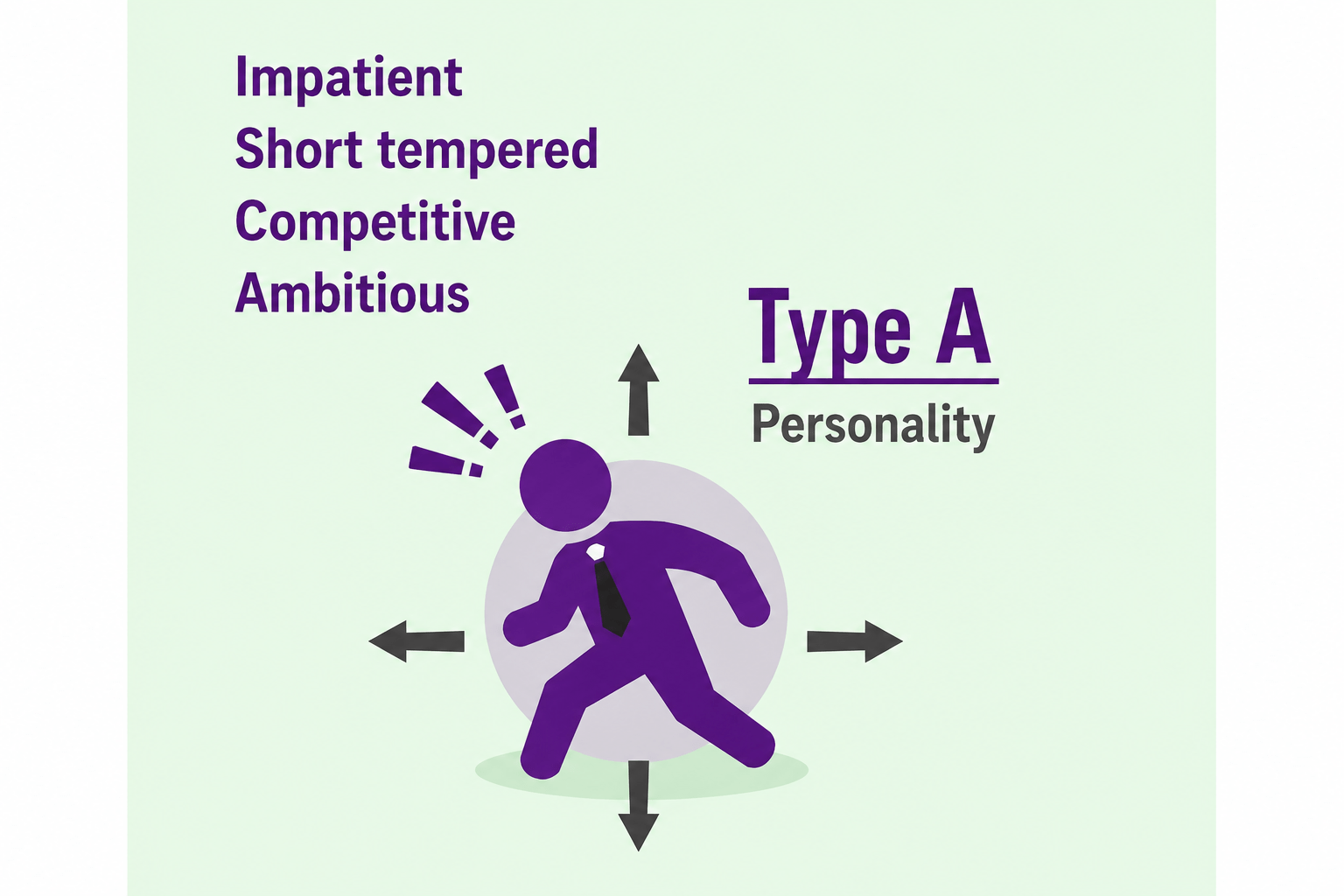
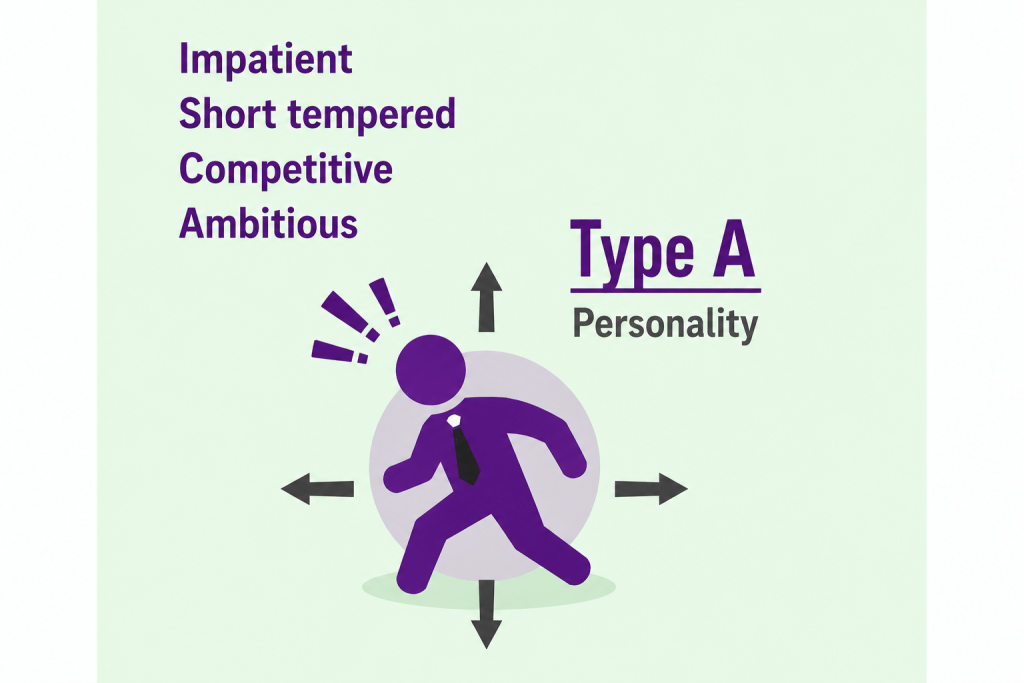
The term Type A personality describes a pattern of traits that commonly include competitiveness, achievement orientation, urgency, high standards, impatience, and a strong drive to accomplish goals. Not every Type A individual looks the same. Some are executives, physicians, attorneys, entrepreneurs, military leaders, or high-level professionals. Others are parents who manage households, caregiving responsibilities, careers, and community obligations simultaneously.
Common Type A characteristics may include high achievement motivation, a strong sense of responsibility, difficulty relaxing, perfectionistic tendencies, impatience with delays, constant goal setting, self-criticism after mistakes, a tendency to overwork, and feeling responsible for everyone else’s well-being. Many of these traits are not inherently unhealthy. Problems arise when the nervous system never receives permission to disengage.
Why Does a Type A Personality Affect Sleep?
One of the most important concepts I teach patients is that insomnia is often the symptom, not the root cause. Sleep problems frequently reflect what is happening underneath the surface. Type A individuals often spend years training themselves to stay alert, productive, and prepared. Their brains become exceptionally skilled at monitoring, evaluating, anticipating problems, and staying one step ahead.
The nervous system does not always know when to stop. The same mental habits that help someone run a company, lead a team, raise a family, or achieve ambitious goals can create chronic physiological arousal at bedtime. The brain remains in problem-solving mode when it should be transitioning into restorative sleep.
I often describe sleep as one of the four pillars of health, alongside exercise, nutrition, and meaning or purpose. When sleep begins to deteriorate, the entire structure becomes less stable. Even highly successful people can begin experiencing anxiety, irritability, reduced concentration, lower resilience, and emotional exhaustion when insomnia develops.
Why Do Type A People Often Wake Up at 3 A.M.?
Many Type A patients do not have significant difficulty falling asleep. Instead, they wake between 2:00 and 4:00 a.m. and find themselves immediately engaged in mental activity. The mind begins reviewing business decisions, financial concerns, family responsibilities, career goals, health issues, unfinished tasks, and future uncertainties.
Sometimes the person is not consciously anxious. They simply start thinking. The problem is that thinking often turns into evaluating, evaluating turns into worrying, and worrying activates the body’s threat response. Once that occurs, the nervous system becomes more alert, making it increasingly difficult to return to sleep.
Over time, many people begin fearing the awakening itself. One bad night becomes several bad nights. Eventually, the person starts monitoring sleep, predicting poor sleep, and worrying about tomorrow’s performance. That cycle can become self-reinforcing.
How Are Type A Personality Traits Similar to Perfectionism?
There is significant overlap between Type A characteristics and perfectionism. Many Type A individuals operate with an internal belief that they should always be improving, achieving, fixing problems, or performing at a high level. The mind may say, “I should be doing more,” “I should be further along by now,” “I cannot afford to make mistakes,” “I have to figure this out,” or “I can’t waste time.”
These thoughts create pressure. Pressure creates arousal. Arousal interferes with sleep. Many high achievers bring performance-based thinking into the bedroom. They try to manage sleep the same way they manage work problems, through effort, analysis, discipline, research, supplements, or rigid routines.
Unfortunately, sleep does not respond well to force. The harder people try to control sleep, the more activated they often become. Rest is not something a person earns by being perfect. It is a biological need.
Can Trauma Contribute to Type A Behavior and Insomnia?
Sometimes. Not every Type A person has a trauma history, but many do. Some individuals learned early in life that achievement created safety, approval, or acceptance. Others grew up around criticism, unpredictability, conflict, or pressure to perform. They learned to stay vigilant, overprepare, and remain highly responsible.
As adults, those same survival strategies can become strengths professionally while simultaneously creating difficulty with rest, relaxation, and sleep. This is one reason I often view insomnia as the tip of the iceberg. Underneath the sleep problem may be anxiety, trauma, grief, perfectionism, chronic stress, over-responsibility, or emotional suppression. Treating only the sleep symptom may miss the larger picture.
How Does CBT-I Help Type A Individuals Sleep Better?
CBT-I, or Cognitive Behavioral Therapy for Insomnia, is considered the gold standard treatment for chronic insomnia. It focuses on changing the behaviors, habits, thought patterns, and conditioned responses that maintain sleep problems. For Type A individuals, treatment often involves reducing sleep-related performance pressure, addressing catastrophic thinking, improving sleep scheduling, reducing conditioned arousal, learning healthier responses to nighttime awakenings, and developing flexibility rather than rigid control.
The goal is not to eliminate ambition. The goal is to help the nervous system recognize that bedtime is not another performance challenge. You can still be productive, responsible, and goal-oriented while learning how to sleep more naturally.
What I Often See in Practice
I frequently work with physicians, attorneys, executives, engineers, entrepreneurs, military personnel, and other highly accomplished individuals. Many appear successful and composed externally. Internally, they may be carrying significant pressure, responsibility, self-criticism, and worry.
They often approach insomnia the same way they approach every other challenge in life: work harder. They buy sleep trackers, research supplements, monitor sleep stages, analyze every awakening, and try to force a solution. Unfortunately, sleep is not usually improved through greater effort.
What often helps is learning a different relationship with wakefulness. Patients begin treating sleep less like a performance test and more like a biological process that occurs naturally when the nervous system feels safe enough to disengage. My approach is collaborative and directive. We identify the factors maintaining insomnia, develop practical skills, and create sustainable changes that patients can use long after treatment ends.
Key Takeaways
- Type A personality traits can contribute to insomnia by keeping the mind and body activated at night.
- Many Type A individuals struggle with early-morning awakening and nighttime problem-solving.
- Perfectionism, over-responsibility, and self-criticism often overlap with sleep difficulties.
- Insomnia is frequently a symptom of deeper patterns involving stress, anxiety, trauma, or chronic pressure.
- CBT-I helps patients reduce arousal, improve sleep habits, and change thoughts that maintain insomnia.
- Effective treatment addresses both the sleep problem and the factors driving it.
Frequently Asked Questions
Is a Type A personality a mental health disorder?
No. Type A personality traits are personality characteristics, not a psychiatric diagnosis. Many Type A individuals are highly successful and psychologically healthy.
Why can’t I stop thinking when I go to bed?
Your brain may have learned to stay in planning and problem-solving mode throughout the day. At night, those habits can continue even when you want to sleep.
Can Type A people benefit from CBT-I?
Yes. CBT-I is particularly helpful because it addresses the thoughts, behaviors, and habits that keep the nervous system activated around sleep.
Can anxiety and Type A personality occur together?
Absolutely. While they are not the same thing, many people with Type A traits also experience anxiety, excessive worry, perfectionism, or chronic stress.
Will improving my sleep make me less productive?
Quite the opposite. Better sleep improves concentration, emotional regulation, decision-making, memory, resilience, and overall performance.
Conclusion
Type A personality traits can be tremendous assets. Drive, discipline, responsibility, and ambition help many people build meaningful careers, relationships, and accomplishments. However, those same strengths can create sleep problems when the mind never fully disengages from performance, planning, and responsibility.
If you find yourself lying awake reviewing the day, worrying about tomorrow, or treating sleep as another challenge to conquer, the issue may not simply be insomnia. It may be the relationship between your achievement style and your nervous system.
With the right tools, people can remain ambitious while learning how to rest. In many cases, that balance becomes one of the most important factors in restoring healthy, sustainable sleep.
About the Author
 Dr. Charles R. Freeman, Ph.D., is a psychologist specializing in insomnia, sleep disorders, PTSD, anxiety, trauma, and Cognitive Behavioral Therapy for Insomnia (CBT-I). He has more than 25 years of experience helping individuals improve sleep, emotional well-being, and overall quality of life through evidence-based treatment approaches. If you would like to learn more about treatment options or schedule a consultation, please contact Dr. Freeman.
The information in this article is provided for educational purposes only and is not intended to replace professional medical or psychological advice. Individual circumstances vary, and readers should consult a qualified healthcare professional regarding their specific concerns.