
Why Trauma Affects Sleep for Years
By Dr. Charles R. Freeman, Ph.D.
Trauma affects sleep for years because the body may continue operating as if danger is still nearby, even when the traumatic event is over. That is why trauma affects sleep long after the event has ended. A person may intellectually know, “I am safe now,” while the nervous system still reacts at night with alertness, nightmares, anxiety, muscle tension, racing thoughts, or early-morning waking.
If you are asking, “Why am I still having sleep problems years after the traumatic event ended?” the answer is usually not weakness, failure, or lack of willpower. Trauma can teach the brain and body to scan for threat. Sleep requires letting go of control. For trauma survivors, that letting go can feel unsafe, especially at night when distractions are gone and the mind becomes quieter.
As a behavioral medicine psychologist specializing in insomnia, PTSD, trauma, nightmares, and CBT-I, I often tell patients that insomnia is frequently the symptom, not the root cause. Sleep is one of the foundations of health, but when trauma has trained the nervous system to stay on guard, sleep can become one of the first areas to break down and one of the last areas to fully recover without proper treatment.
Why Trauma Affects Sleep Long After the Danger Is Over
Trauma affects sleep because the body learns from danger. That learning can be useful during a crisis. If you are deployed, threatened, attacked, trapped, betrayed, or repeatedly exposed to danger, staying alert may help you survive. The problem is that the nervous system does not always update quickly when the threat is gone.
This is especially clear in PTSD and sleep problems. Many trauma survivors do not simply “remember” what happened. Their bodies react. Their breathing changes. Their muscles tighten. Their stomach turns. Their heart rate increases. They may feel restless, irritable, startled, or unable to settle. Traumatic memories often carry emotional, sensory, physiological, and bodily components. That means recovery often needs to address both thoughts and body-based responses, not just tell the person to think differently.
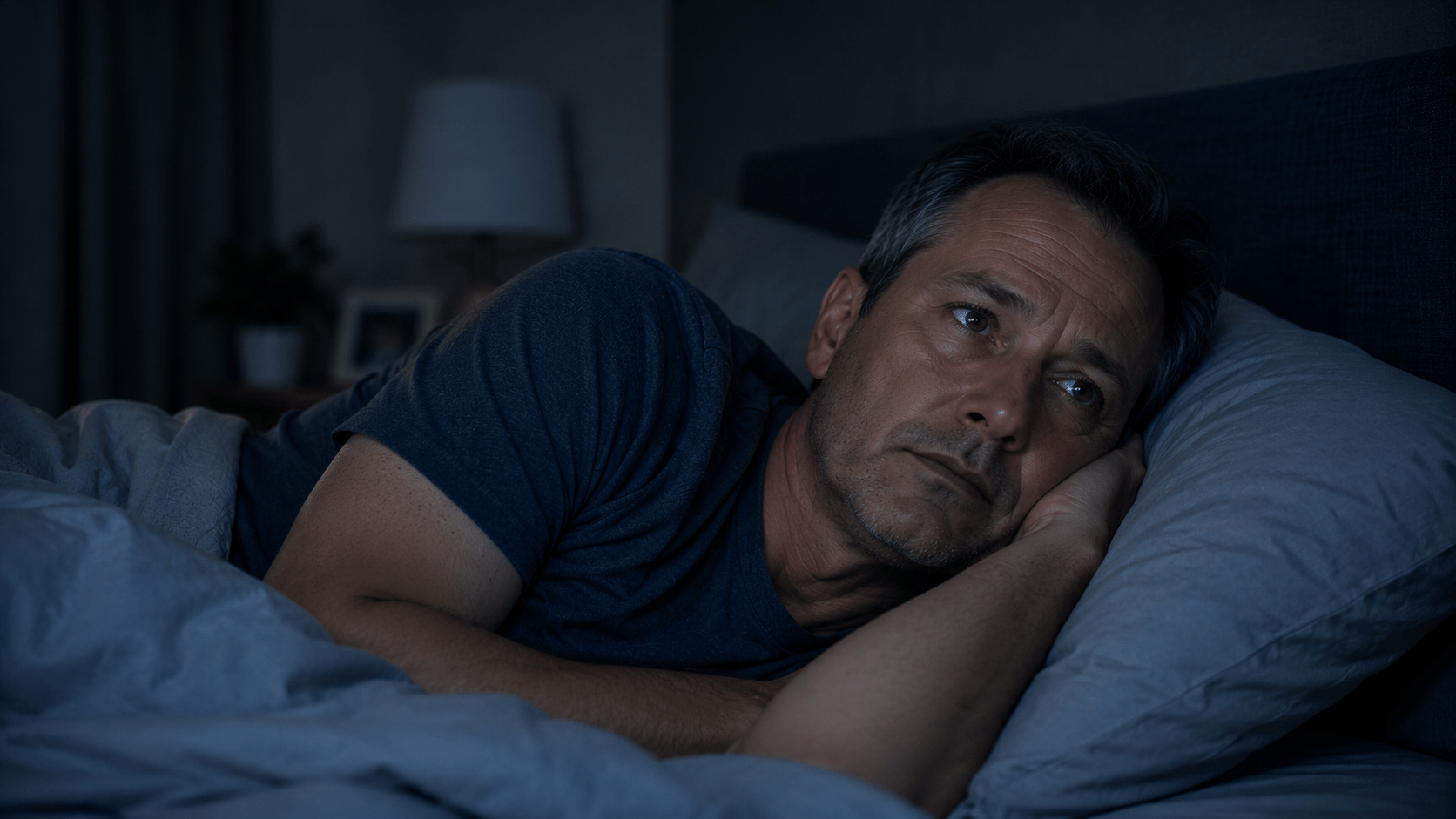
This is why trauma-related insomnia can feel so confusing. During the day, a person may function well, work hard, take care of a family, and appear composed. At night, the same person may feel exhausted but unable to sleep. The body is tired, but the threat-detection system is still scanning. This is one of the main reasons trauma affects sleep even when the person is no longer in danger.
How Hypervigilance Explains Why Trauma Affects Sleep
Hypervigilance means the nervous system remains on alert for possible danger. It may show up as listening for sounds, checking doors, needing to sleep lightly, positioning yourself near an exit, waking to small noises, or feeling unable to fully relax in bed. Hypervigilance and sleep do not work well together because sleep requires enough felt safety for the body to stand down.
Many patients understand logically that the original danger has passed. They may live in a safe home, have supportive people around them, and know that the traumatic event is not happening now. But the body may still be operating under old orders. This is common among veterans, first responders, survivors of violence, people with childhood trauma, and individuals who lived for years with emotional unpredictability or chronic threat.
Military trauma adds another layer. Deployment stress, operational readiness, and combat training often require alertness, rapid response, emotional control, and the ability to function under pressure. Those skills can be lifesaving during service. During reintegration into civilian life, however, the same nervous system habits may interfere with sleep. A veteran may be home, but the body may not yet believe it is off duty. In these cases, trauma affects sleep because the nervous system has not fully shifted out of survival mode.
Pang et al. (2023) studied PTSD treatment outcomes among veterans and service members and described PTSD as a condition that can involve persistent re-experiencing, avoidance, mood changes, and trauma-related arousal. That kind of persistent arousal helps explain why many veterans and trauma survivors continue having sleep disruption long after the original danger has passed.
Can Trauma Cause Insomnia?
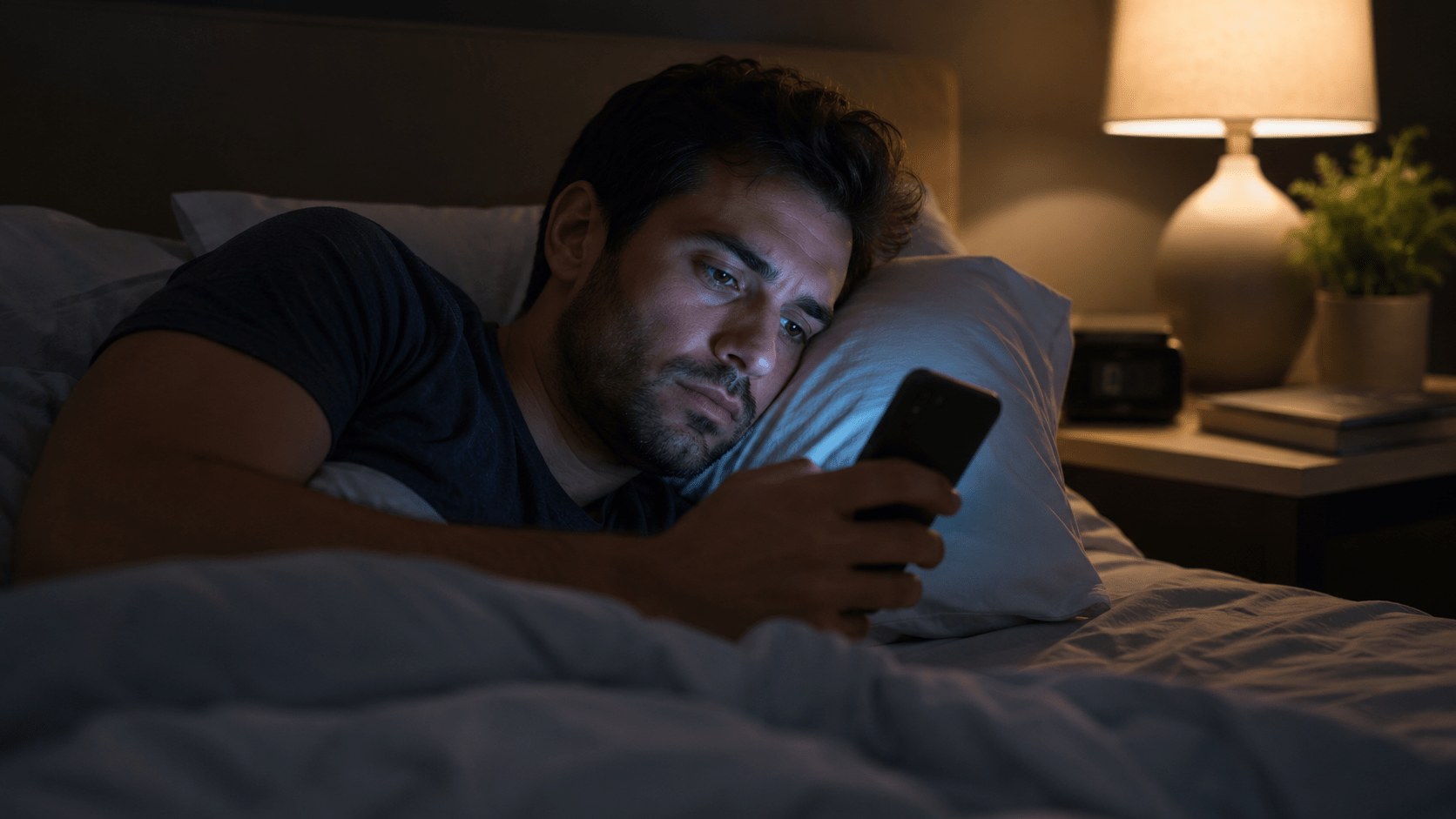
Yes. Trauma can cause insomnia, and trauma can also keep insomnia going after the original event has ended. Some people develop difficulty falling asleep. Others fall asleep but wake during the night in a state of panic, dread, sweating, or alertness. Some wake early and cannot return to sleep. Others sleep enough hours but wake feeling unrefreshed.
Over time, a second problem can develop: fear of not sleeping. At first, the person is reacting to trauma. Later, they are also reacting to insomnia itself. They begin watching the clock, predicting disaster the next day, worrying about whether the night will be ruined, and treating wakefulness as an emergency. This is called conditioned arousal.
Conditioned arousal means the brain has learned to associate the bed, bedtime, or nighttime awakening with danger, frustration, effort, or failure. The person may start trying harder to sleep, but sleep does not respond well to pressure. Sleep is not a performance. It is a biological process that improves when the nervous system stops treating bedtime like a test.
This is why anxiety and insomnia are often connected for trauma survivors. Once fear of sleep takes hold, anxiety and insomnia can reinforce each other even when the person desperately wants rest.
Why Trauma Affects Sleep More Noticeably at Night
Nighttime removes many of the distractions that help people function during the day. Work, parenting, errands, screens, problem-solving, and responsibility can keep the mind occupied. When the lights go out, the mind often has fewer places to hide. For many patients, trauma affects sleep most clearly at night because daytime distractions are gone.
For many trauma survivors, nighttime is when intrusive thoughts, body memories, guilt, grief, anger, fear, or images become more noticeable. This does not mean the person is going backward. It often means the nervous system has not finished processing what happened.
Sleep also plays a role in emotional processing. Dreaming sleep is involved in memory and emotional integration. When trauma is unresolved, sleep may become disrupted by nightmares, intense dreams, or sudden awakenings. Trauma and nightmares often go together because the mind and body may be trying to process experiences that still carry emotional charge.
What I Often See in Practice
I often see patients who have been on alert for years after traumatic experiences. They may say, “I know I should be over this by now,” or “It happened a long time ago, so why is my sleep still affected?” That kind of self-criticism usually makes the problem worse. Trauma recovery is not based on the calendar. The nervous system changes through repeated experiences of safety, skill-building, and proper treatment.
I see veterans who cannot fully relax at night. They may sleep lightly, wake repeatedly, or feel uneasy when the house is quiet. Some were trained to remain operational under extreme stress. That training may have helped them survive deployment, but later they need help learning recovery, not only endurance.
I also see patients whose sleep problems began after a traumatic event and never fully resolved. They may have tried medication, alcohol, supplements, sleep hygiene, white noise, special mattresses, or strict routines. Some of those tools may provide temporary relief, but they often do not address the underlying trauma, hypervigilance, conditioned arousal, or fear of wakefulness.
Patients often improve when trauma and insomnia are addressed together. When we only chase sleep, we may miss the cause. When we only discuss trauma without treating the learned sleep pattern, the person may understand their history but still dread bedtime. Good treatment looks for the loop, not only the loudest symptom.
How Treatment Helps When Trauma Affects Sleep
Treatment for sleep problems after trauma should be practical, paced, and individualized. The goal is not to force the body to sleep. The goal is to help the nervous system learn safety again.
Cognitive Behavioral Therapy for Insomnia, or CBT-I, is the gold standard treatment for chronic insomnia. CBT-I helps change the thoughts, behaviors, schedules, and conditioned patterns that keep insomnia going. For trauma-related insomnia, CBT-I may include reducing clock watching, decreasing fear of wakefulness, rebuilding sleep confidence, and helping the bed become associated with sleep rather than struggle.
Behavioral sleep medicine also looks at the whole system. Exercise, nutrition, meaning and purpose, emotional regulation, and daily structure all influence sleep. I often describe these as foundations of health. If sleep is poor, the table becomes unstable. But sleep also improves when the other foundations are strengthened.
EMDR may also be helpful for trauma survivors. EMDR stands for Eye Movement Desensitization and Reprocessing. It is not simply a thinking technique. Grifoni et al. (2023) described trauma as affecting intrusive experiences, avoidance, mood, psychomotor state, physiological functioning, and cognitive functioning. That is clinically important because trauma is not only a story in the mind. It can also be held in emotional, sensory, and body-based patterns.
In treatment, the goal is to help the person process traumatic material so the memory no longer carries the same level of emotional and bodily activation. EMDR literature is useful here because it helps explain why trauma treatment often needs to address both thoughts and body-based responses without reducing recovery to positive thinking or willpower.
Anxiety management is also important. Trauma survivors often need skills for calming the body, reducing rumination, managing panic sensations, and responding differently to nighttime awakenings. This may include breathing, guided imagery, grounding, hypnosis, relaxation training, and learning not to treat every symptom as an emergency.
For nightmares, treatment may include imagery rehearsal, trauma-focused therapy, EMDR, or other structured approaches. The treatment plan depends on the person, the trauma history, medical issues, medications, and whether other sleep disorders may also be present.
Why the Body Can Remain Alert After Trauma
The body can remain alert after trauma because it has learned that vigilance equals protection. This pattern makes sense. If alertness once helped you survive, your nervous system may hesitate to give it up. The problem is that chronic vigilance becomes costly. It can affect sleep, mood, pain, concentration, relationships, work performance, and physical health.
This does not mean trauma permanently damages the brain. It means the nervous system learned a pattern. Patterns can change. The same brain and body that learned danger can also learn safety, but that learning usually requires consistency, patience, and the right clinical approach.
Kuijpers-Van Ommen et al. (2026) studied intensive trauma-focused treatment for PTSD and found that hope was associated with better treatment outcomes. Clinically, that matters. Patients who have not slept well for years often need more than techniques. They also need a realistic sense that recovery is still possible.
Understanding why trauma affects sleep can help patients stop blaming themselves and begin addressing the nervous system patterns that keep insomnia going.
Key Takeaways
- Trauma and sleep problems can remain connected for years because the nervous system may continue scanning for danger.
- Hypervigilance, nightmares, sleep anxiety, and conditioned arousal can all contribute to trauma-related insomnia.
- Many people know they are safe but do not feel safe in their bodies, especially at night.
- CBT-I, EMDR, behavioral sleep medicine, anxiety management, and trauma-focused care can work together.
- Recovery is possible even when sleep problems after trauma have lasted for years.
FAQ
Can trauma cause insomnia years later?
Yes. Trauma can cause insomnia years later, especially when hypervigilance, nightmares, anxiety, or conditioned arousal remain active. Sometimes the person functioned for years and then sleep worsens during stress, loss, retirement, medical problems, or major life transitions.
Why do I feel tired and wired after trauma?
You may feel tired and wired because the body is exhausted but still activated. The sleep system wants rest, while the threat-detection system continues scanning. This is common in PTSD and sleep problems, chronic anxiety, and trauma-related insomnia.
Are nightmares after trauma treatable?
Yes. Trauma and nightmares can improve with proper treatment. Depending on the person, treatment may include imagery rehearsal, EMDR, CBT-I, anxiety management, and trauma-focused therapy.
Do I need to talk about every detail of the trauma to sleep better?
Not always. Some treatments involve detailed discussion, while others focus more on emotional, sensory, cognitive, and bodily responses. A skilled trauma clinician can help pace treatment so it is effective without overwhelming the nervous system.
What if I have already tried sleep medication?
Medication may help temporarily, but sleep medications often address symptoms rather than causes. If trauma, hypervigilance, sleep anxiety, or conditioned arousal remain untreated, insomnia may continue. Many patients improve when the underlying trauma and the insomnia pattern are both addressed.
Conclusion
If trauma has affected your sleep for years, your symptoms make sense. Your body may be trying to protect you long after the danger has passed. That protection can become exhausting, but it is not a life sentence.
Sustainable recovery usually involves more than suppressing symptoms. It means addressing the underlying causes, calming the threat system, treating conditioned insomnia, reducing fear of wakefulness, and helping the nervous system experience safety again. With the right approach, sleep can become less fragile, nights can feel less threatening, and the body can relearn how to rest.
References
Grifoni, J., Pagani, M., Persichilli, G., Bertoli, M., Bevacqua, M. G., L’Abbate, T., Flamini, I., Brancucci, A., Cerniglia, L., Paulon, L., & Tecchio, F. (2023). Auditory Personalization of EMDR Treatment to Relieve Trauma Effects: A Feasibility Study [EMDR+]. Brain Sciences, 13(7), 1050. https://doi.org/10.3390/brainsci13071050
Kuijpers-Van Ommen, R. C. M., Vrijmoeth, C., De Jongh, A., Schaap-Jonker, H., Rijk, E. S., & Voorendonk, E. M. (2026). Hope enhances treatment outcome of intensive trauma-focused treatment for PTSD. European Journal of Psychotraumatology, 17(1), 2607191. https://doi.org/10.1080/20008066.2025.2607191
Pang, T., Murn, L., Williams, D., Lawental, M., Abhayakumar, A., & Kip, K. E. (2023). Comparison of Accelerated Resolution Therapy for PTSD Between Veterans With and Without Prior PTSD Treatment. Military Medicine, 188(3–4), e621–e629. https://doi.org/10.1093/milmed/usab335
About the Author
 Dr. Charles R. Freeman, Ph.D., is a psychologist specializing in insomnia, sleep disorders, PTSD, anxiety, trauma, and Cognitive Behavioral Therapy for Insomnia (CBT-I). He has more than 25 years of experience helping individuals improve sleep, emotional well-being, and overall quality of life through evidence-based treatment approaches. If you would like to learn more about treatment options or schedule a consultation, please contact Dr. Freeman.
The information in this article is provided for educational purposes only and is not intended to replace professional medical or psychological advice. Individual circumstances vary, and readers should consult a qualified healthcare professional regarding their specific concerns.