
Dr. Freeman's Blog Posts

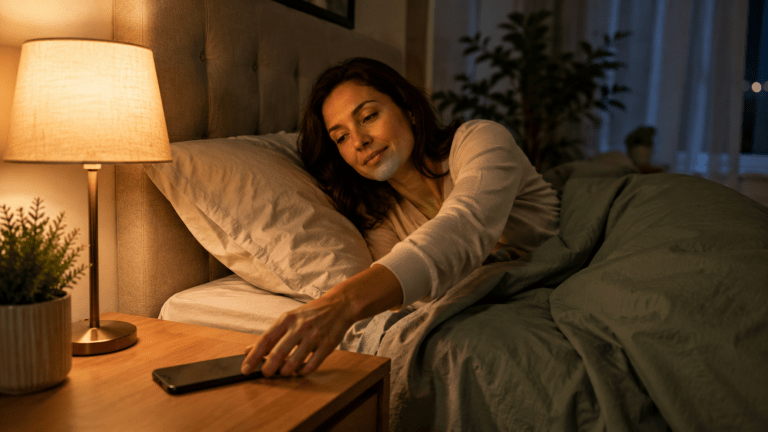
Why did my sleeping pills stop working older woman lying awake in bed staring at sleeping pills during insomnia

Sleeping Pills Stop Working: Why It Happens

Many people ask this question after experiencing several frustrating nights of insomnia. A medication helps at first. Sleep improves. Then, sometimes suddenly, the sleeping pills stop working. The person finds themselves awake again and often feels more discouraged than before. In many cases, the medication did not completely fail. Something

Read More »
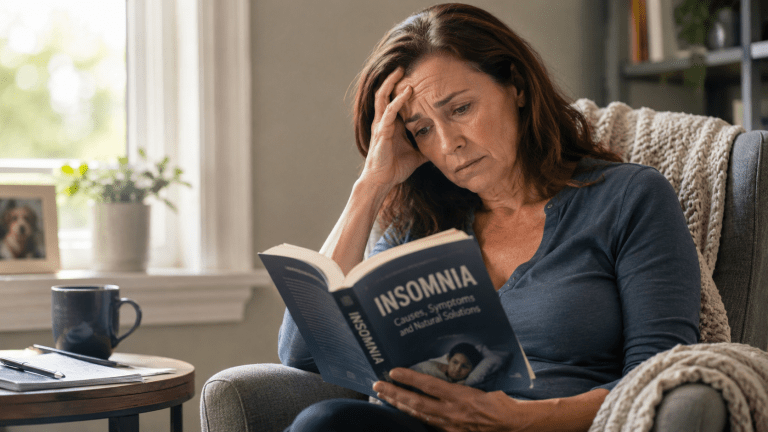
Obsessed with fixing sleep woman reading insomnia book with worry and exhaustion

Why Insomnia Patients Become Obsessed With Fixing Sleep

Many people with insomnia become obsessed with fixing sleep because the brain starts treating wakefulness as an emergency. A few bad nights can turn into hours of research, symptom checking, medication worry, rigid routines, and constant fear about what will happen if sleep does not return.

This pattern makes sense.

Read More »
Adult woman reflecting on childhood criticism while holding an old handwritten note beside a clear framed photo of her parents.

Why Childhood Criticism Can Affect Adult Sleep

Childhood criticism can affect adult sleep because the nervous system may learn to stay alert for judgment, conflict, disappointment, or rejection. Years later, that same alert system can show up at night as insomnia, rumination, early-morning waking, and difficulty relaxing.

Many adults do not connect sleep problems with childhood experiences.

Read More »
Why Successful Professionals Develop Severe Insomnia

Why Successful Professionals Develop Severe Insomnia

Successful professionals often develop severe insomnia for reasons that have little to do with sleep itself. The problem is frequently driven by chronic stress, perfectionism, responsibility, self-criticism, anxiety, and a nervous system that rarely has an opportunity to fully relax.

Many people assume insomnia affects individuals who are disorganized, unmotivated,

Read More »
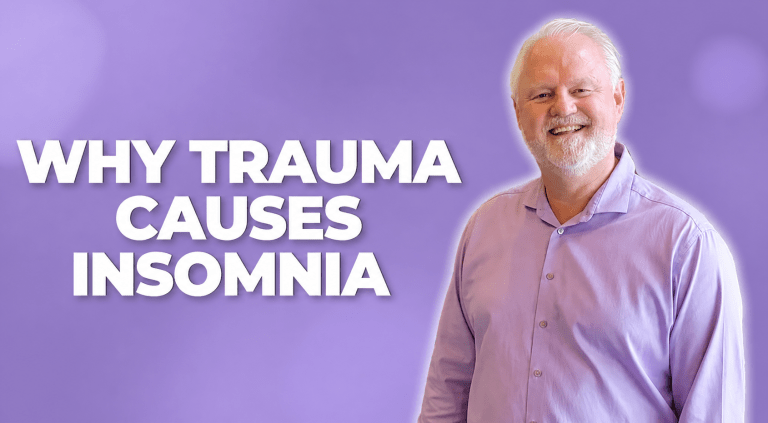
Dr. Charles R. Freeman standing against a purple background with the words Why Trauma Causes Insomnia, explaining how trauma affects sleep

Why Trauma Affects Sleep for Years

Trauma affects sleep for years because the body may continue operating as if danger is still nearby, even when the traumatic event is over. That is why trauma affects sleep long after the event has ended. A person may intellectually know, “I am safe now,” while the nervous system still

Read More »
Why does my mind race at night in a quiet bedroom with notebook and clock

Why Does My Mind Race at Night?

Your mind races at night because your brain and nervous system have not fully shifted from problem-solving mode into sleep mode. This can happen because of stress, anxiety, trauma, over-responsibility, sleep anxiety, chronic insomnia, medication concerns, or habits that train the brain to become more alert in bed. Many people

Read More »
Adult with sleep anxiety talks with a psychologist in a calm therapy office

Sleep Anxiety and Insomnia: Why Fear of Not Sleeping Keeps You Awake

Sleep anxiety can keep insomnia going because the fear of not sleeping activates the same nervous system response that prevents sleep. The person may be exhausted, but the mind starts monitoring, calculating, predicting failure, and worrying about tomorrow. At that point, the first treatment target is often not sleep itself,

Read More »
A tired adult sitting calmly on the edge of a bed at night, unable to sleep despite exhaustion

Why You Can’t Sleep Even When You’re Exhausted

If you are tired but can’t sleep, the problem is usually not a lack of exhaustion. It is often a state of nervous-system activation. Your body may be worn down, your eyes may feel heavy, and you may be desperate for rest, but your brain is still scanning, planning, worrying,

Read More »
Tired child with ADHD sitting in bed while a parent offers calm bedtime support

ADHD and Sleep: Why Children Have Sleep Problems and Bedtime Battles

Children with ADHD often have sleep problems because the same nervous system difficulties that affect attention, impulse control, emotional regulation, and hyperactivity can also interfere with sleep. Some children cannot slow their minds down at night. Others have bedtime battles, insomnia, restless sleep, anxiety, nightmares, medication-related sleep disruption, or breathing

Read More »
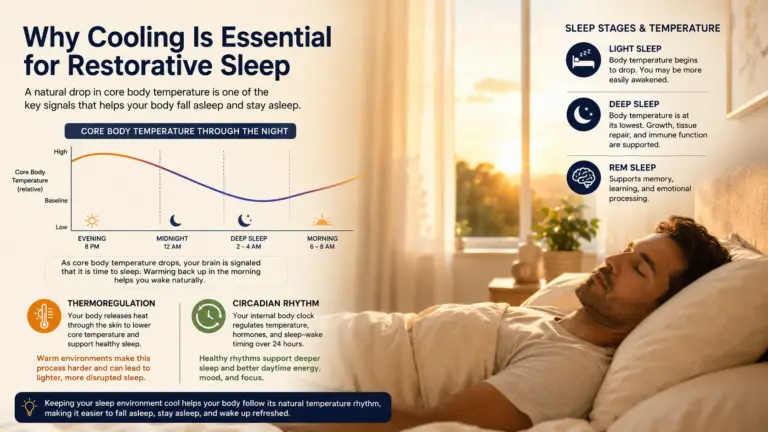
Why can't I sleep when it's hot? A man rests in bed at dawn while educational graphics illustrate body temperature regulation, circadian rhythm, and healthy sleep physiology.

Why Can’t I Sleep When It’s Hot?

Why Can’t I Sleep When It’s Hot? By Dr. Charles R. Freeman, Ph.D. You may have trouble sleeping when it’s hot because your body needs to cool down in order to fall asleep and stay asleep. You may be asking yourself, “Why can’t I sleep when it’s hot?” When your

Read More »
Why can't I put my phone down at night? A woman lies awake in bed holding a smartphone while her partner sleeps beside her.

Why Can’t I Put My Phone Down at Night?

Why Can’t I Put My Phone Down at Night? By Dr. Charles R. Freeman, Ph.D. If you find yourself scrolling through your phone long after you intended to go to sleep, and keep asking yourself, “Why can’t I put my phone down at night?” the problem is often not a

Read More »
A calm adult in a therapy office learning how CBT-I treats chronic insomnia and sleep anxiety

Why Insomnia Often Becomes a Habit

Why Insomnia Often Becomes a Habit By Dr. Charles R. Freeman, Ph.D. Insomnia often becomes a habit because the brain and body can learn to associate bedtime, the bed, or nighttime waking with alertness instead of sleep. After enough nights of frustration, clock watching, worry, or fear, the nervous system

Read More »

Dr. Freeman's Articles on Sleep, Trauma, and Behavioral Medicine