
Eleven Best Foods That Help You Sleep
By Dr. Charles R. Freeman, Ph.D.
If you struggle with insomnia, you may have wondered whether certain foods can help you fall asleep faster or sleep more soundly. The answer is yes, some foods appear to support healthy sleep. However, it is important to understand that no food can cure chronic insomnia. Nutrition can help create the conditions for better sleep, but long-term sleep improvement often requires addressing the underlying causes of sleep disruption. Last week, we discussed how food you eat before bedtime affects your quality of sleep, and today we will focus on elevel specific foods.
As a psychologist specializing in insomnia and sleep disorders, I frequently meet people searching for the perfect supplement, medication, or bedtime snack that will finally solve their sleep problems. While nutrition plays an important role in overall health, chronic insomnia is often connected to anxiety, trauma, PTSD, grief, chronic stress, or learned sleep behaviors. That is why Cognitive Behavioral Therapy for Insomnia (CBT-I) remains the gold-standard treatment for chronic insomnia.
Still, the foods you eat can influence sleep quality, blood sugar regulation, inflammation, and your body’s natural sleep-wake cycle. If you are looking for foods that may support better sleep, the following options have some of the strongest scientific support.
Why Nutrition Matters for Sleep
Sleep is one of the foundations of health. Along with exercise, nutrition, and having a sense of meaning or purpose, healthy sleep helps the body and mind recover from daily stress. When nutrition is poor, sleep often suffers. When sleep suffers, mood, concentration, energy, and emotional resilience frequently decline as well.
Many people underestimate how much evening eating habits can affect sleep. Large meals, excessive sugar, alcohol, and caffeine can all interfere with the body’s ability to wind down. On the other hand, nutrient-dense foods that support stable blood sugar and healthy sleep regulation may improve the likelihood of a restful night.
1. Tart Cherries
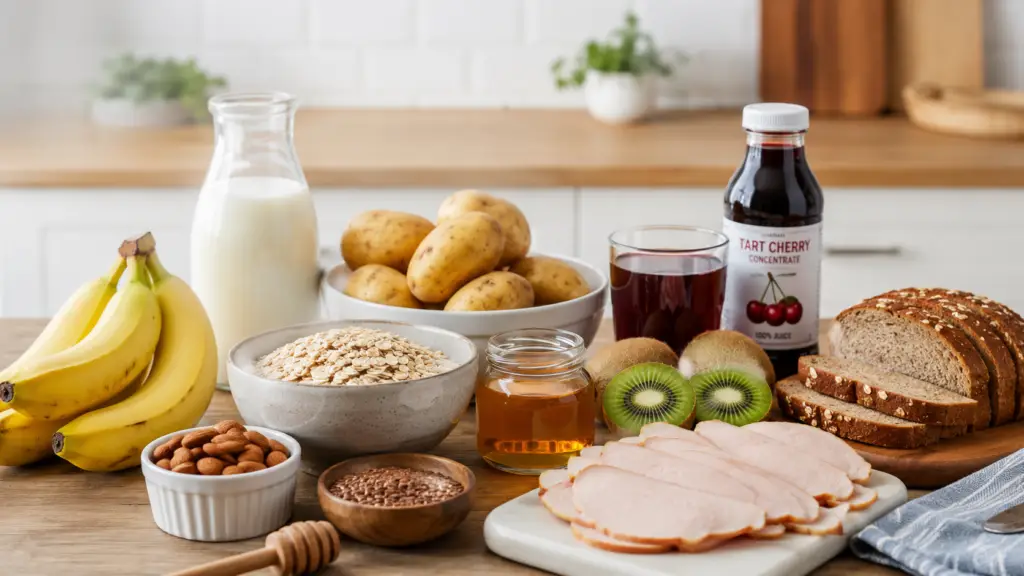
Tart cherries are among the most researched sleep-promoting foods. They contain naturally occurring melatonin, a hormone that helps regulate the body’s sleep-wake cycle. Some studies have found that tart cherry juice may improve sleep duration and sleep quality, particularly in adults who struggle with sleep maintenance.
Tart cherries are not a sleeping pill, but they may provide gentle support for the body’s natural sleep processes.
2. Kiwi
Kiwi fruit has received increasing attention in sleep research. Several studies suggest that individuals who regularly consume kiwi before bedtime may fall asleep faster and experience improved sleep quality. Kiwi contains antioxidants, fiber, and nutrients that may contribute to healthier sleep patterns. It is also a light evening snack that is unlikely to leave you feeling overly full before bed.
3. Oatmeal
Oatmeal is often associated with breakfast, but it can also be a useful bedtime snack. As a complex carbohydrate, oatmeal provides a steady source of energy without creating dramatic blood sugar fluctuations. Many people find that warm oatmeal is both comforting and satisfying, making it easier to transition into a relaxed state before sleep.
4. Almonds
Almonds contain magnesium, healthy fats, and plant-based protein. Magnesium is involved in hundreds of biological processes and may help support muscle relaxation and healthy sleep regulation. A small serving of almonds in the evening can provide satiety without the heaviness of a large meal.
5. Walnuts
Walnuts are another nutrient-rich food associated with healthy sleep. They contain healthy fats, antioxidants, and nutrients that may support overall sleep quality. Because walnuts are filling and nutrient dense, they can be part of a balanced evening snack when consumed in moderation.
6. Greek Yogurt
Greek yogurt provides protein and calcium while helping many people avoid late-night hunger. Unlike sugary desserts that can lead to blood sugar spikes and crashes, Greek yogurt tends to provide more stable nutrition. Adding a small amount of fruit can create a balanced snack that supports both satisfaction and healthy sleep habits.
7. Bananas
Bananas are often recommended as a bedtime snack because they contain potassium, magnesium, and carbohydrates that are easy to digest. They can be particularly helpful for people who become hungry before bed but do not want a heavy meal. While bananas are not a cure for insomnia, they are a simple and nutritious option that fits well into a sleep-friendly evening routine.
8. Pumpkin Seeds
Pumpkin seeds contain magnesium, zinc, and plant-based protein. These nutrients contribute to overall health and may support healthy sleep regulation. A small portion can be an easy addition to yogurt, oatmeal, or other evening snacks.
9. Fatty Fish
Fish such as salmon, sardines, and trout provide omega-3 fatty acids and vitamin D. Emerging research suggests these nutrients may support healthy sleep and overall brain function. In addition to their potential sleep benefits, fatty fish are associated with numerous cardiovascular and cognitive health advantages.
10. Whole Grains
Whole grains provide fiber and complex carbohydrates that support more stable blood sugar levels than highly processed foods. Stable blood sugar often contributes to more consistent energy and may reduce some factors that interfere with sleep. Examples include whole-grain bread, brown rice, quinoa, and whole-grain cereals.
11. Turkey
Turkey has long been associated with sleep because it contains tryptophan, an amino acid involved in the production of serotonin and melatonin. Although the relationship is often exaggerated, turkey remains a healthy source of lean protein and can be part of a balanced evening meal. The greatest benefit likely comes not from turkey alone but from incorporating it into an overall healthy dietary pattern.
What Foods Can Make Sleep Worse?
While some foods may support sleep, others are more likely to interfere with it. Caffeine remains one of the most common contributors to sleep problems. Many people are surprised to learn that caffeine consumed in the afternoon can still affect sleep many hours later. Alcohol is another common issue. Although it may initially make you feel sleepy, alcohol often disrupts sleep quality during the second half of the night. Large meals close to bedtime can also create digestive discomfort that interferes with sleep. Sugary foods deserve special attention. Significant blood sugar fluctuations can contribute to nighttime awakenings and may worsen irritability, anxiety, and fatigue the following day.
What I Often See in Practice
Many people become overly focused on finding the perfect food, supplement, or medication to help them sleep. While nutrition certainly matters, chronic insomnia is often the symptom rather than the root problem. I frequently work with individuals whose sleep difficulties are connected to anxiety, trauma, PTSD, grief, chronic stress, perfectionism, or excessive worry. In these situations, changing diet alone is rarely enough to resolve the problem. Nutrition can support healthy sleep. It can reduce some contributors to sleep disruption. However, lasting improvement often requires addressing the underlying psychological and behavioral factors that maintain insomnia.
Frequently Asked Questions
Are tart cherries really good for sleep?
Tart cherries contain naturally occurring melatonin and have been studied for their potential role in improving sleep duration and sleep quality. While they are not a treatment for insomnia, some research suggests they may provide modest benefits for certain individuals.
Is kiwi one of the best foods for sleep?
Kiwi has shown promising results in several sleep studies. People who consumed kiwi regularly before bedtime reported improvements in sleep quality, sleep duration, and the time it took them to fall asleep.
Are bananas good to eat before bed?
Bananas are easy to digest and contain nutrients such as potassium and magnesium. They can be a reasonable bedtime snack, especially for people who are mildly hungry before sleep.</p>
What foods contain melatonin naturally?
Tart cherries are among the best-known natural food sources of melatonin. Some nuts, grains, fruits, and vegetables also contain small amounts, although the concentrations vary considerably.
Should I eat protein or carbohydrates before bed?
A small, balanced snack that combines protein and complex carbohydrates is often better tolerated than a large meal or sugary snack. The goal is to avoid both hunger and significant blood sugar fluctuations close to bedtime.
Which food has the strongest evidence for helping sleep?
Tart cherries and kiwi currently have some of the strongest research support among commonly discussed sleep-promoting foods. However, no single food consistently improves sleep for everyone.
Conclusion
The best foods that help you sleep are not miracle cures. Instead, they support the body’s natural sleep processes while promoting overall health. Tart cherries, kiwi, oatmeal, nuts, yogurt, bananas, pumpkin seeds, fatty fish, whole grains, and turkey are among the foods most commonly associated with healthy sleep.
At the same time, it is important to remember that chronic insomnia is often more complicated than food choices alone. If anxiety, PTSD, trauma, grief, chronic stress, or learned sleep behaviors are contributing to your sleep difficulties, nutritional changes may help but are unlikely to solve the problem entirely.
The most sustainable improvements in sleep typically come from combining healthy lifestyle habits with evidence-based treatment that addresses the underlying causes of insomnia.
About the Author
 Dr. Charles R. Freeman, Ph.D., is a psychologist specializing in insomnia, sleep disorders, PTSD, anxiety, trauma, and Cognitive Behavioral Therapy for Insomnia (CBT-I). He has more than 25 years of experience helping individuals improve sleep, emotional well-being, and overall quality of life through evidence-based treatment approaches. If you would like to learn more about treatment options or schedule a consultation, please contact Dr. Freeman.
The information in this article is provided for educational purposes only and is not intended to replace professional medical or psychological advice. Individual circumstances vary, and readers should consult a qualified healthcare professional regarding their specific concerns.