
Foods That Help You Sleep: What to Eat Before Bed for Better Sleep
By Dr. Charles R. Freeman, Ph.D.
If you are struggling with insomnia, you may wonder whether certain foods can help you sleep better. The short answer is yes. Some foods appear to support healthy sleep, while others can interfere with it. However, nutrition is rarely the entire answer. While the right foods may help you fall asleep more easily and improve sleep quality, chronic insomnia is often driven by deeper factors such as anxiety, trauma, PTSD, chronic stress, grief, depression, pain, or learned sleep habits.
As a psychologist specializing in insomnia and sleep disorders, I often see people searching for the perfect supplement, medication, or bedtime snack that will finally solve their sleep problems. Nutrition matters, but it is only one piece of a much larger puzzle. The most sustainable improvements in sleep usually come from combining healthy lifestyle habits with evidence-based treatment that addresses the underlying causes of insomnia.
That being said, what you eat throughout the day—and especially in the evening—can absolutely influence how well you sleep at night.
Why Nutrition Matters for Sleep
When discussing health and emotional well-being, I often refer to four major foundations: exercise, nutrition, sound sleep, and meaning or purpose. These foundations work together much like the legs of a table. When one becomes unstable, the others are often affected as well.
Many people focus exclusively on sleep when they are tired. Others focus on anxiety, stress, or mood. However, nutrition frequently gets overlooked. Poor dietary choices can contribute to fluctuations in energy, mood, inflammation, and blood sugar regulation, all of which can affect sleep quality.
Nutrition also influences the body’s ability to regulate hormones and neurotransmitters involved in sleep. While no food can guarantee a perfect night’s sleep, a consistent pattern of healthy eating can create conditions that support healthy sleep over time.
Can Certain Foods Really Help You Sleep?
Modern research suggests that some foods may modestly improve sleep quality by supporting healthy melatonin production, promoting stable blood sugar levels, reducing inflammation, or helping the body relax before bedtime.
One important point is that there is no magical sleep food. Unfortunately, many online articles oversimplify the science and suggest that eating one specific food will cure insomnia. If that were true, chronic insomnia would be easy to solve.
Instead, think of nutrition as a way of creating a sleep-friendly environment within your body. The goal is to reduce factors that interfere with sleep while supporting the body’s natural sleep processes.
What Foods Help You Sleep?
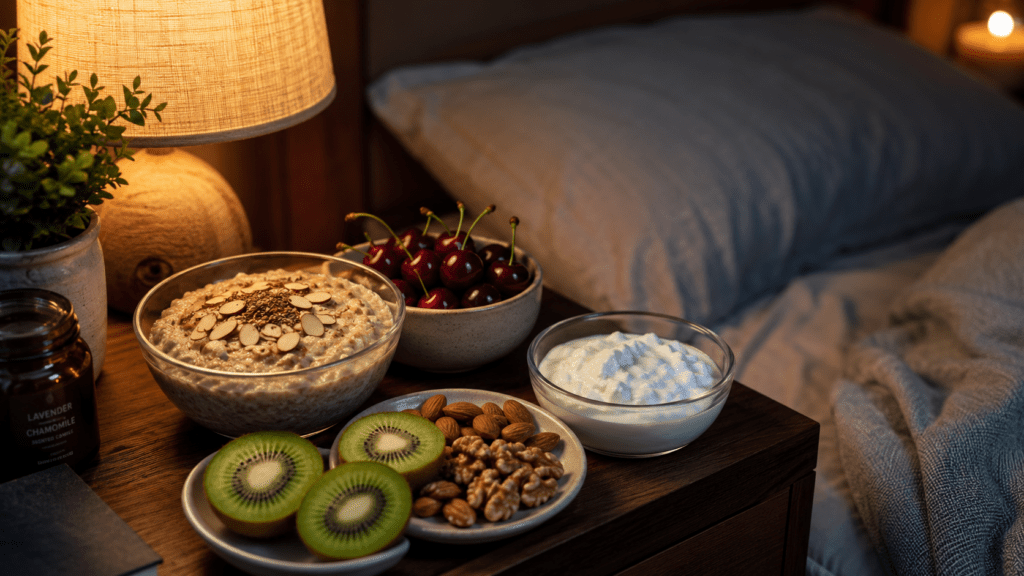
Tart cherries are among the most researched foods associated with sleep. They contain naturally occurring melatonin and antioxidants that may support healthy sleep patterns. Some studies suggest that tart cherry juice may improve both sleep duration and sleep quality in certain individuals.
Kiwi fruit has also attracted attention from researchers. Some studies have found that people who eat kiwi regularly before bedtime may fall asleep faster and experience better overall sleep quality. Kiwi contains antioxidants and other compounds that may support sleep regulation.
Oatmeal is another useful option because it provides complex carbohydrates and fiber. Unlike sugary snacks that can create dramatic blood sugar fluctuations, oatmeal tends to provide a more gradual release of energy. Stable blood sugar levels are often beneficial for both sleep quality and emotional well-being.
Nuts such as almonds and walnuts may also support sleep. They contain magnesium, healthy fats, and other nutrients associated with relaxation and overall health. While they are not sleep medications, they can be part of a healthy evening snack.
Greek yogurt and other protein-rich dairy products may be beneficial as well. They provide protein, calcium, and sustained nutrition without causing rapid spikes and crashes in blood sugar. Many people find that a small serving of yogurt satisfies evening hunger without feeling overly heavy before bed.
Whole grains, legumes, and other minimally processed foods can also support sleep by helping maintain more stable energy levels throughout the evening. In contrast, highly processed foods often contribute to blood sugar instability and may leave people feeling restless or uncomfortable during the night.
What Foods Can Make Sleep Worse?
Just as some foods may support sleep, others can interfere with it.
Caffeine remains one of the most common sleep disruptors. Many people assume that if they can fall asleep after drinking coffee, caffeine is not affecting them. However, caffeine can reduce sleep quality even when a person appears to fall asleep without difficulty. Depending on the individual, caffeine consumed in the afternoon or evening may continue affecting sleep many hours later.
Alcohol is another common culprit. Many people use alcohol because it initially makes them feel sleepy. Unfortunately, alcohol often disrupts sleep architecture later in the night. People may fall asleep quickly but experience fragmented sleep, increased awakenings, vivid dreams, and poor sleep quality.
Large meals close to bedtime can also interfere with sleep. Heavy meals may increase digestive discomfort, reflux symptoms, or feelings of fullness that make it difficult to relax and fall asleep.
Sugary foods and desserts deserve special attention. While they may provide temporary comfort, they can contribute to significant blood sugar fluctuations. These swings can increase physiological arousal and sometimes contribute to nighttime awakenings. Individuals with anxiety, depression, or insomnia may be particularly sensitive to these effects.
Why Blood Sugar Stability Matters
One of the most overlooked aspects of sleep nutrition is blood sugar regulation. Many people go through a daily cycle of consuming highly processed foods, sugary snacks, energy drinks, and caffeine. These foods can create periods of temporary energy followed by crashes in mood, concentration, and physical energy.
When blood sugar fluctuates dramatically, the body often responds by releasing stress hormones. Those same stress hormones can make it harder to relax and initiate sleep. This is one reason why stable, balanced meals often support better sleep than restrictive dieting followed by evening overeating. For individuals struggling with insomnia, anxiety, or irritability, reducing blood sugar volatility may be one small but meaningful step toward improving overall well-being.
What I Often See in Practice
Many people come into treatment believing their sleep problems are entirely caused by something they ate or failed to eat. Others become convinced that finding the perfect supplement or bedtime snack will solve years of insomnia. Occasionally nutrition is a significant factor, but more often insomnia is the symptom rather than the root problem. I frequently work with individuals whose sleep difficulties are connected to anxiety, PTSD, trauma, grief, chronic stress, perfectionism, excessive worry, or learned sleep behaviors. These underlying issues create a state of physical and mental hyperarousal that no bedtime snack can fully resolve. This does not mean nutrition is unimportant. It simply means that nutrition works best as part of a comprehensive approach to sleep health rather than as a standalone solution.
Can Food Cure Chronic Insomnia?
In most cases, no. Healthy nutrition can absolutely support healthy sleep. It can reduce some contributors to poor sleep and improve overall health. However, chronic insomnia typically requires a more comprehensive approach. When insomnia persists for months or years, there are often behavioral, emotional, and cognitive factors maintaining the problem. People begin worrying about sleep, monitoring sleep, predicting poor outcomes, and associating the bed with frustration rather than rest.
This is one reason Cognitive Behavioral Therapy for Insomnia (CBT-I) remains the gold-standard treatment for chronic insomnia. CBT-I helps people change the thoughts, behaviors, and conditioning patterns that frequently perpetuate sleep difficulties long after the original trigger has disappeared. Nutrition supports sleep. CBT-I changes sleep. The combination is often far more powerful than either strategy alone.
Frequently Asked Questions
What foods can help you sleep the fastest?
No single food reliably makes everyone fall asleep quickly. However, tart cherries, kiwi, oatmeal, nuts, and balanced snacks that combine protein and complex carbohydrates may support healthy sleep in some individuals.
Is it bad to eat before bed?
Not necessarily. Going to bed extremely hungry can interfere with sleep for some people. A small, balanced snack is often preferable to a large heavy meal or sugary dessert late at night.
What are the worst foods to eat before bed?
Caffeine, alcohol, large heavy meals, and highly processed sugary foods are among the most common dietary factors that interfere with healthy sleep.
Can changing my diet cure insomnia?
Dietary changes may improve sleep quality, but chronic insomnia often involves additional factors such as anxiety, trauma, stress, depression, pain, or learned sleep behaviors. These issues often require a more comprehensive treatment approach.
What is the best bedtime snack?
The best bedtime snack is usually one that is small, balanced, and easy to digest. Examples include oatmeal with almonds, Greek yogurt with fruit, or whole-grain crackers with a source of protein.
Conclusion
Nutrition plays an important role in sleep health, but it is rarely the entire story. Certain foods may support healthy sleep, while others can make insomnia worse. Focusing on stable blood sugar, balanced nutrition, and healthy evening eating habits can help create an environment that supports restful sleep.
At the same time, it is important to remember that chronic insomnia is often the symptom rather than the root cause. If anxiety, trauma, PTSD, grief, chronic stress, or learned sleep behaviors are contributing to your sleep difficulties, changing your diet alone may not be enough.
The most sustainable improvements typically occur when healthy nutrition is combined with evidence-based treatment that addresses the underlying causes of sleep disruption.
About the Author
 Dr. Charles R. Freeman, Ph.D., is a psychologist specializing in insomnia, sleep disorders, PTSD, anxiety, trauma, and Cognitive Behavioral Therapy for Insomnia (CBT-I). He has more than 25 years of experience helping individuals improve sleep, emotional well-being, and overall quality of life through evidence-based treatment approaches. If you would like to learn more about treatment options or schedule a consultation, please contact Dr. Freeman.
The information in this article is provided for educational purposes only and is not intended to replace professional medical or psychological advice. Individual circumstances vary, and readers should consult a qualified healthcare professional regarding their specific concerns.