Dr. Charles Freeman – San Diego Insomnia and Sleep Problems Treatment – San Diego Trauma and PTSD Treatment

admin

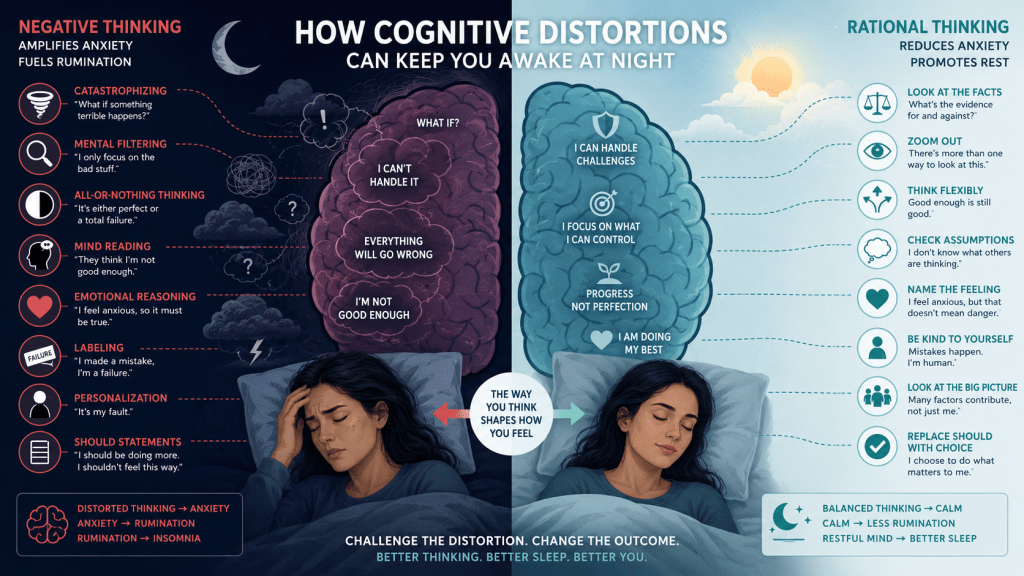
Illustration showing common cognitive distortions such as catastrophizing, personalization, mind reading, and all-or-nothing thinking that contribute to anxiety and insomnia.

How Cognitive Distortions Can Keep You Awake at Night

Cognitive distortions can keep you awake at night by turning normal worries into threats, mistakes into disasters, and wakefulness into panic. The body may be tired, but the mind stays active because it is interpreting thoughts as danger.

Many people with insomnia believe they have a sleep problem only. They may try sleep hygiene, supplements, medication, apps, or a stricter bedtime routine. Those steps may help some people, but they often do not reach the deeper pattern. If the mind uses the night to criticize, predict failure, review regrets, or compare life progress, sleep becomes harder to regain.

In my practice, I often see patients who wake up between 2:00 and 4:00 AM and immediately begin thinking. The thoughts may sound practical at first. Then they become harsh, repetitive, and emotionally charged. That is where cognitive distortions often enter the insomnia cycle.

How Cognitive Distortions Can Keep You Awake at Night Read More »

A tense woman carefully arranging colorful paper clips in perfect rows to represent perfectionism, rumination, and insomnia

Can Perfectionism Cause Insomnia?

Yes. Perfectionism can cause insomnia when the mind stays active at night reviewing mistakes, judging performance, comparing life progress, and trying to prevent future failure. The person may be exhausted, but the nervous system remains on alert.

Many perfectionistic people do not think of themselves as anxious. They may describe themselves as responsible, disciplined, hardworking, or driven. Those qualities can help a person succeed. But when standards become rigid and self-criticism becomes constant, the same traits can interfere with sleep.

In my practice, I often see patients who wake up in the early morning and immediately begin evaluating themselves. The bedroom becomes a place for mental review. The mind asks, “What did I do wrong?” “Why am I behind?” “What if I fail?” “Why can’t I fix this?” At that point, insomnia is not just a sleep problem. It is a nighttime expression of pressure, fear, and self-judgment.

Can Perfectionism Cause Insomnia? Read More »

A calm bedroom at dawn with soft natural light suggesting recovery from insomnia and nighttime rumination

When Insomnia Is Not Really About Sleep

Sometimes insomnia is not really about sleep. The sleep problem is real, but the cause may be anxiety, trauma, perfectionism, stress, rumination, or a nervous system that has learned to stay on alert at night.

Many people come to treatment after trying sleep hygiene, supplements, medications, meditation apps, or advice from the internet. Some fall asleep but wake up at 2:00 or 3:00 AM. Others lie in bed reviewing mistakes, worrying about work, replaying conversations, or asking themselves why they cannot relax. By the time they seek help, they may feel afraid of the night itself.

In my practice, I often see patients who believe the problem is only sleep. As treatment begins, we often find that insomnia has become the place where unresolved stress shows up most clearly.

When Insomnia Is Not Really About Sleep Read More »

Mountain sunrise above a sea of clouds representing anxiety-related chronic insomnia, emotional recovery, and the return of restorative sleep

Can Anxiety Cause Chronic Insomnia?

Yes, anxiety can absolutely cause chronic insomnia. It can also maintain it long after the original stressor has passed. In my clinical work, I often see that people are not just struggling with sleep. They are struggling with a nervous system that has learned to stay alert, a mind that keeps scanning for problems, and growing fear about what will happen if they do not sleep.

That is why I often say that insomnia is frequently the symptom, not the root cause. Sleep is one of the foundations of health, but sleep does not exist in isolation. Thoughts, emotions, physical symptoms, and behavior all influence one another. When anxiety becomes chronic, sleep is often one of the first systems to break down.

Can Anxiety Cause Chronic Insomnia? Read More »

Moonlit coastal fog landscape representing sleep hypnosis vs CBT-I for insomnia treatment, sleep anxiety, and natural sleep recovery

Sleep Hypnosis vs CBT-I: What’s the Difference?

Sleep Hypnosis vs CBT-I: What’s the Difference? By Dr. Charles R. Freeman, Ph.D. Sleep hypnosis vs CBT-I is a common question for people who want help with insomnia without relying only on medication. Sleep hypnosis and CBT-I can both help with insomnia, but they are not the same treatment. Sleep hypnosis is usually used to help calm the mind and body so sleep can occur more naturally. CBT-I, or Cognitive Behavioral Therapy for Insomnia, is a structured behavioral sleep medicine treatment that directly targets the habits, thoughts, schedules, and conditioned arousal that maintain chronic insomnia. In my clinical work, I often use both approaches, but I do not use them interchangeably. Sleep hypnosis can be helpful when a patient is tense, anxious, or trying too hard to sleep. CBT-I is the more comprehensive treatment when insomnia has become a persistent pattern. The practical question is not, “Which one sounds more relaxing?” The better question is, “What is keeping this person awake?” What Is Sleep Hypnosis? Sleep hypnosis is a focused relaxation method. It helps shift attention away from worry, frustration, and effort and toward a calmer internal state. The person is not unconscious or out of control. Clinical hypnosis is not stage hypnosis. It is a practical tool for helping the nervous system settle. Many patients with insomnia are physically exhausted but mentally alert. They get into bed and immediately start monitoring: “What time is it? How long have I been awake? How bad will tomorrow be?” Sleep hypnosis may help soften that cycle. It can reduce tension, slow racing thoughts, and help the patient stop treating sleep as a performance task. That matters because sleep cannot be forced. The harder a person tries to make sleep happen, the more the brain may interpret bedtime as a challenge. Hypnosis can sometimes help the patient practice allowing sleep instead of chasing it. What Is CBT-I? CBT-I is the gold standard behavioral treatment for chronic insomnia. It is not simply sleep hygiene. Many of my patients have already heard the basics: keep the room dark, avoid caffeine late in the day, maintain a routine, and do not watch television in bed. Those steps may help, but they are often not enough for chronic insomnia. CBT-I goes deeper. It looks at the pattern that keeps insomnia going. That may include spending too much time in bed, clock watching, napping, irregular sleep schedules, anxiety about sleep, catastrophic thinking, or a bed that has become associated with wakefulness instead of sleep. Peer-reviewed sleep medicine literature describes CBT-I as a combination of cognitive therapy and behavioral strategies such as stimulus control, sleep restriction, relaxation methods, and other behavioral approaches. Behavioral treatments have also been shown to offer durable benefits over time because they address mechanisms that contribute to insomnia rather than only sedating the patient. How Are Sleep Hypnosis vs CBT-I Different? The main difference is scope. Sleep hypnosis helps with arousal. CBT-I treats the insomnia pattern. Sleep hypnosis may help a patient relax before sleep or return to sleep after waking. It can be useful when the body is tense, the mind is racing, or the patient feels trapped in sleep anxiety. It is often a supportive tool. CBT-I is more structured. It may involve sleep logs, changes to time in bed, stimulus control instructions, cognitive work around sleep fears, and a carefully designed plan to rebuild confidence in natural sleep. It is usually more directive, and it requires active participation. I think of sleep hypnosis as one possible tool in the toolbox. CBT-I is the treatment framework for chronic insomnia. What I Often See in Practice I often meet patients who have tried everything by the time they come in. They have tried supplements, sleep apps, meditation, medication, alcohol, strict routines, new mattresses, blackout curtains, and white noise. Some of those tools may help at the edges, but the insomnia continues because the root pattern has not been addressed. Many patients are not simply lacking relaxation. They are afraid of not sleeping. One bad night becomes evidence that they are broken. Waking at 2 a.m. becomes a threat. The bed becomes associated with frustration, anger, and performance pressure. In those cases, hypnosis alone may not be enough. It may help the patient calm down, but CBT-I helps retrain the sleep system. On the other hand, some patients are so activated that they need relaxation and hypnotic work before they can fully engage in CBT-I. That is why treatment should be individualized. Can Sleep Hypnosis Be Used With CBT-I? Yes. Sleep hypnosis can be used alongside CBT-I when it fits the patient’s needs. For example, if a patient has conditioned arousal, CBT-I may address the behavioral pattern while hypnosis helps reduce the physical and mental tension that shows up at bedtime. This is also important for patients with trauma histories. Insomnia is often the symptom, not the root cause. If the nervous system learned to stay alert because of trauma, threat, grief, anxiety, or chronic stress, the treatment has to respect that. I do not want patients simply sedated. I want them learning skills, understanding their patterns, and improving in a way that is sustainable. Key Takeaways Sleep hypnosis helps reduce arousal and sleep effort. CBT-I directly treats the thoughts and behaviors that maintain chronic insomnia. Sleep hypnosis is not a magic cure and does not force sleep. CBT-I is usually the stronger primary treatment for chronic insomnia. The two approaches can work together when used thoughtfully. Frequently Asked Questions Is sleep hypnosis the same as CBT-I? No. Sleep hypnosis is usually focused on relaxation, attention, and reducing arousal. CBT-I is a structured insomnia treatment that addresses sleep habits, schedules, conditioned wakefulness, and sleep-related thoughts. Can sleep hypnosis cure insomnia? I would not describe it as a cure. Sleep hypnosis may help some people sleep better by reducing tension and anxiety, but chronic insomnia often requires a broader treatment approach. Is CBT-I better than sleep hypnosis? For chronic insomnia, CBT-I is usually the more

Sleep Hypnosis vs CBT-I: What’s the Difference? Read More »

Calm notebook and pen on a desk representing cognitive distortions, anxiety, sleep, PTSD, and recovery

Cognitive Distortions: How Unhelpful Thinking Affects Sleep, Anxiety, PTSD, and Recovery

Yes, the way you think can make sleep, anxiety, PTSD symptoms, and emotional distress worse. That does not mean your symptoms are your fault. It means that thoughts, emotions, physical symptoms, and behavior influence one another. When the mind gets stuck in fear-based or extreme thinking, the body often follows with tension, alertness, worry, and poor sleep.

Cognitive distortions are unhelpful thinking patterns that make a situation seem more hopeless, dangerous, permanent, or personal than it really is. These patterns are common during stress, trauma, chronic insomnia, depression, and anxiety. The mind takes shortcuts, especially when the nervous system is tired or on high alert.

The cognitive distortion framework was popularized by psychiatrist David Burns, M.D., in his influential book Feeling Good: The New Mood Therapy. I use these well-known cognitive behavioral therapy concepts in practical ways with patients dealing with sleep, anxiety, trauma, and recovery. The purpose is not to blame people for their symptoms. The purpose is to help patients recognize when the mind is turning fear, exhaustion, or past trauma into conclusions that may not be accurate.

Cognitive Distortions: How Unhelpful Thinking Affects Sleep, Anxiety, PTSD, and Recovery Read More »

Soft ripples on calm water at dusk representing sleep hypnosis for insomnia and relaxation before restorative sleep

Can Sleep Hypnosis Help Insomnia?

Yes, sleep hypnosis may help some people sleep better if they have insomnia, especially when anxiety, tension, racing thoughts, or sleep effort are keeping the mind and body activated at night. In my previous article, “What Is Sleep Hypnosis?” I discussed at length how this treatment works and what it does. Sleep hypnosis for insomnia is not a magic cure, and it does not force the brain to sleep. It may help by reducing mental and physical arousal so the body can move more naturally into sleep.

Many people with insomnia become focused on the question, “How do I make myself sleep?” That is understandable, but it often backfires. Sleep does not respond well to pressure. The harder a person tries to sleep, the more alert the brain can become. In behavioral sleep medicine, the goal is not to overpower the body. The goal is to create conditions that support sleep.

That is where sleep hypnosis can sometimes be useful. It may help the patient shift attention away from effort, frustration, and clock watching and toward relaxation, safety, and allowing. Used properly, hypnosis for sleep problems is a practical clinical tool, not a mystical experience or stage performance.

Can Sleep Hypnosis Help Insomnia? Read More »

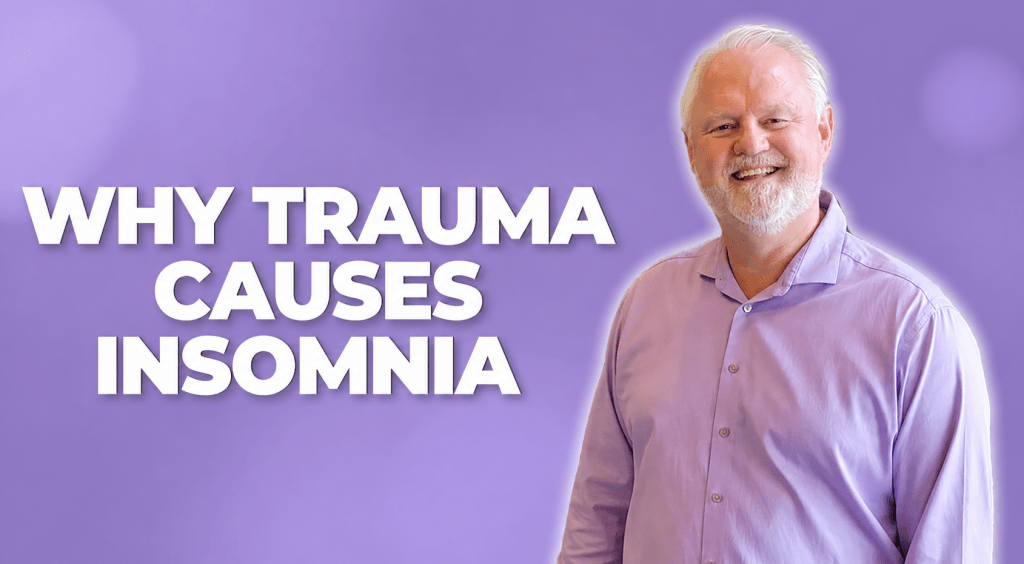
Dr. Charles R. Freeman standing against a purple background with the words Why Trauma Causes Insomnia, explaining how trauma affects sleep

Why Trauma Affects Sleep for Years

Trauma affects sleep for years because the body may continue operating as if danger is still nearby, even when the traumatic event is over. That is why trauma affects sleep long after the event has ended. A person may intellectually know, “I am safe now,” while the nervous system still reacts at night with alertness, nightmares, anxiety, muscle tension, racing thoughts, or early-morning waking.

If you are asking, “Why am I still having sleep problems years after the traumatic event ended?” the answer is usually not weakness, failure, or lack of willpower. Trauma can teach the brain and body to scan for threat. Sleep requires letting go of control. For trauma survivors, that letting go can feel unsafe, especially at night when distractions are gone and the mind becomes quieter.

As a behavioral medicine psychologist specializing in insomnia, PTSD, trauma, nightmares, and CBT-I, I often tell patients that insomnia is frequently the symptom, not the root cause. Sleep is one of the foundations of health, but when trauma has trained the nervous system to stay on guard, sleep can become one of the first areas to break down and one of the last areas to fully recover without proper treatment.

Why Trauma Affects Sleep for Years Read More »

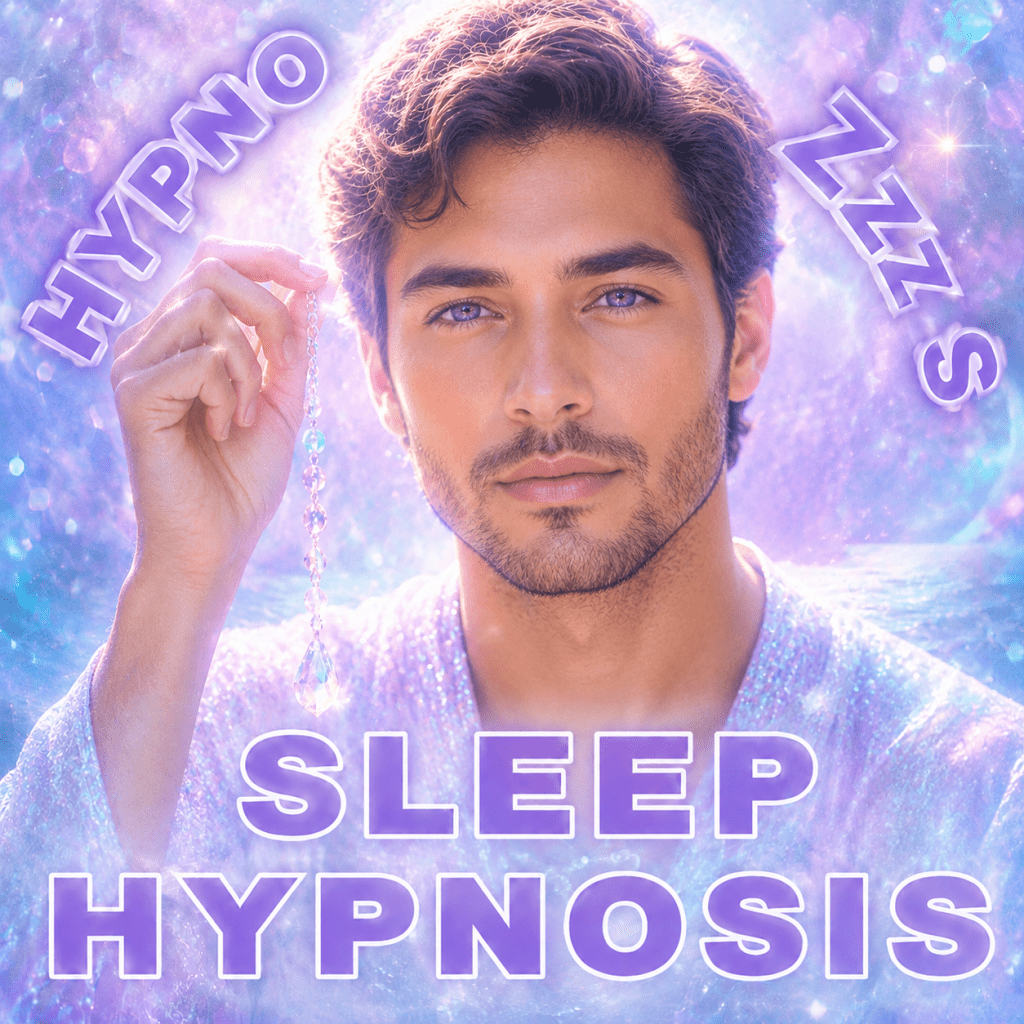
A purple sleep hypnosis graphic showing a person holding a pendulum with the words Sleep Hypnosis

What Is Sleep Hypnosis?

Sleep hypnosis is a focused, guided therapeutic process that helps the mind and body move out of alertness and toward a calmer state that is more compatible with sleep. It is not magic, mind control, or stage entertainment. In clinical practice, sleep hypnosis is best understood as one possible tool within behavioral sleep medicine, especially for people whose insomnia is connected to tension, worry, conditioned alertness, trauma, or an overactive nervous system.

Can sleep hypnosis help you sleep better? For some people, yes. It may help by reducing mental and physical arousal, giving the mind a structured path away from rumination, and helping the body experience bedtime as safer and calmer. Research on sleep-directed hypnosis suggests it may improve subjective sleep quality, although it should not be presented as a cure for insomnia or as a replacement for a full evaluation when sleep problems are chronic, complex, or trauma-related.

In my work as a behavioral medicine psychologist, I think of insomnia as the visible part of a larger picture. The sleep problem is often the symptom, not the whole condition. Below the surface may be anxiety, sleep anxiety, PTSD, chronic pain, grief, medication dependence, perfectionism, or years of frustration from trying to force sleep. Sleep hypnosis can be useful, but the real question is not simply, “Can hypnosis make me sleep?” The better question is, “What is keeping my mind and body too activated to sleep naturally?”

What Is Sleep Hypnosis? Read More »

EMDR for trauma-related problems with therapist guiding bilateral stimulation

EMDR for Trauma-Related Problems

EMDR for trauma-related problems may help when painful memories, body reactions, nightmares, shame, fear, or relationship patterns continue long after the original experience has ended. EMDR stands for Eye Movement Desensitization and Reprocessing. It is a structured trauma therapy that helps patients work with disturbing memories without simply talking in circles about the past. Trauma-related problems are not limited to one diagnosis. Some people have PTSD. Some have Complex PTSD.

Others do not think of themselves as “traumatized,” but they still live with a nervous system that stays on guard. They may avoid certain people or places, wake up in panic, shut down emotionally, feel chronically ashamed, or keep repeating relationship patterns that make sense only when the trauma history is understood.

EMDR for Trauma-Related Problems Read More »