Dr. Charles Freeman – San Diego Insomnia and Sleep Problems Treatment – San Diego Trauma and PTSD Treatment

Treatment for Sleep Disorders

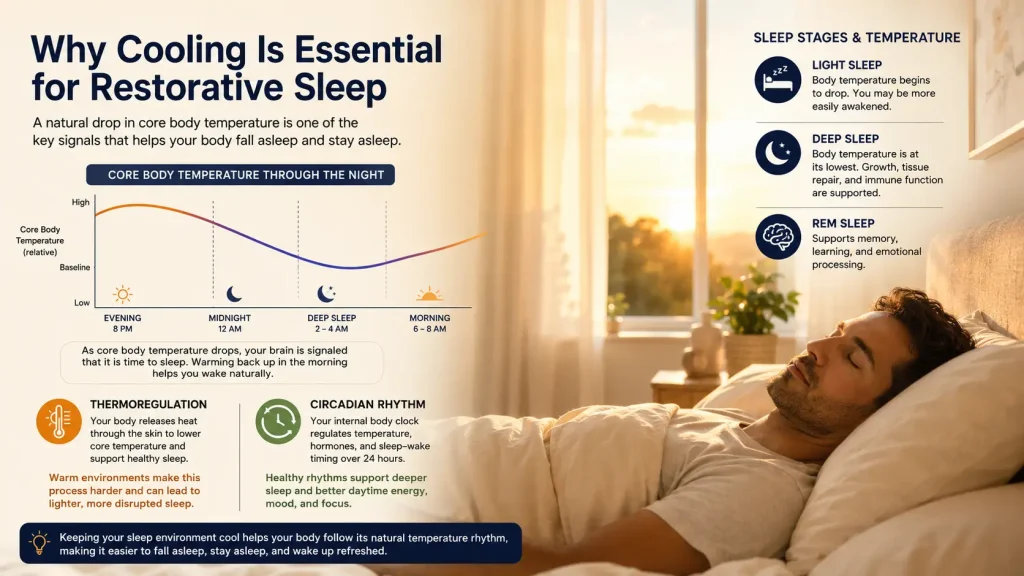
Why can't I sleep when it's hot? A man rests in bed at dawn while educational graphics illustrate body temperature regulation, circadian rhythm, and healthy sleep physiology.

Why Can’t I Sleep When It’s Hot?

Why Can’t I Sleep When It’s Hot? By Dr. Charles R. Freeman, Ph.D. You may have trouble sleeping when it’s hot because your body needs to cool down in order to fall asleep and stay asleep. You may be asking yourself, “Why can’t I sleep when it’s hot?” When your sleeping environment is too warm, your brain and body have to work harder to regulate temperature. As a result, you may have difficulty falling asleep, wake up more often during the night, experience lighter sleep, and wake up feeling less rested. For people who already struggle with insomnia, anxiety, PTSD, or chronic stress, hot weather can make existing sleep problems even worse. Introduction Many patients ask, “Why can’t I sleep when it’s hot?” The answer involves both biology and environment. Your body depends on a gradual drop in core temperature to initiate sleep. When the room remains too warm, that process becomes more difficult, making it harder to fall asleep and stay asleep. Every summer, I hear the same complaint from patients. “I was finally sleeping better, and then the heat wave arrived.” They describe lying in bed feeling exhausted but unable to get comfortable. They toss and turn. They throw off the covers and then pull them back on. They wake up repeatedly during the night and feel frustrated that sleep seems impossible. Many people assume this is simply an inconvenience. In reality, temperature plays a significant role in sleep quality. Sleep is not something the brain does in isolation. It is a whole-body process. Your nervous system, hormones, metabolism, and body temperature all work together to create healthy sleep. When one of those systems is disrupted, sleep often suffers. Why Can’t I Sleep When It’s Hot? Your Body Needs to Cool Down for Sleep One of the normal biological changes that occurs before sleep is a gradual drop in core body temperature. Think of it as the body’s natural signal that it is time to rest. When your bedroom is excessively warm, that cooling process becomes more difficult. Your body continues trying to release heat while also attempting to fall asleep. The result can feel like your body and brain are working against each other. You may notice that you feel sleepy but not sleepy enough to actually drift off. Or you may fall asleep initially but wake up several times throughout the night because your body never fully settles into deeper, more restorative sleep. This is one reason many people report feeling like they slept all night but still wake up tired after a hot evening. Why Can’t I Sleep When It’s Hot? Heat Creates Lighter Sleep When temperatures rise, sleep often becomes more fragmented. Instead of moving smoothly through the normal stages of sleep, people may experience more interruptions and lighter sleep. Many patients describe this as feeling like they were “half awake” all night. They remember every noise. They become aware of every position change. They wake up feeling as though they were sleeping on the surface rather than getting deep, restorative rest. Research has found that higher temperatures can reduce overall sleep quality, shorten sleep duration, and increase lighter stages of sleep. People also report more difficulty falling asleep and less satisfaction with their sleep when temperatures become excessively warm. These effects become more noticeable as temperatures continue to rise. Why Can’t I Sleep When It’s Hot If I Already Have Insomnia? For someone who sleeps well most of the year, a few hot nights may simply be annoying. For someone with chronic insomnia, the impact can be much larger. One of the central themes of my clinical work is that insomnia is often the symptom rather than the root cause. Sleep difficulties may be connected to anxiety, trauma, PTSD, grief, depression, chronic pain, medical conditions, or stress. When sleep is already fragile, heat can become one more factor that pushes the nervous system toward wakefulness rather than rest. The person who already worries about sleep may become increasingly frustrated. They start checking the clock. They worry about tomorrow. They become anxious about not sleeping. Soon the heat is no longer the only problem. The anxiety about sleep has become part of the problem as well. This is how temporary sleep disruption can sometimes evolve into chronic insomnia. Why Can’t I Sleep When It’s Hot If I Have PTSD or Anxiety? People with PTSD or trauma histories often have a nervous system that remains more alert than average. Many already struggle with hypervigilance, nightmares, nighttime anxiety, or difficulty feeling safe enough to fully relax. Heat can increase physical discomfort and make it harder for the body to settle into a calm state. If someone is already waking from nightmares or experiencing heightened nighttime alertness, the additional stress of a hot environment may amplify those sleep disruptions. This is one reason I encourage patients to look beyond sleep itself and examine the entire picture. The temperature in the room matters, but so do stress levels, emotional health, trauma history, and overall nervous system regulation. How to Sleep Better When It’s Hot When patients tell me they cannot sleep because of the heat, they are often expecting a simple environmental solution. Sometimes that is enough. A cooler bedroom, lighter bedding, improved airflow, or adjustments to evening routines can make a meaningful difference. However, I frequently find that the heat is exposing a sleep system that was already vulnerable. A person may have been coping with anxiety for years. Another may have unresolved trauma. Someone else may have become conditioned to associate bedtime with frustration and wakefulness. The heat becomes the final straw rather than the entire cause. That is why I often combine practical sleep strategies with treatments that address the underlying causes of insomnia. Cognitive Behavioral Therapy for Insomnia (CBT-I) remains the gold standard treatment for chronic insomnia. When trauma, PTSD, anxiety, or grief are involved, treatments such as CBT and EMDR can also play an important role. The goal is not simply surviving the next heat wave. The goal is creating a sleep system that remains resilient even when conditions are not perfect. If you are wondering how to sleep when it’s hot, several practical changes can help. Use lightweight
Why Can’t I Sleep When It’s Hot? Read More »

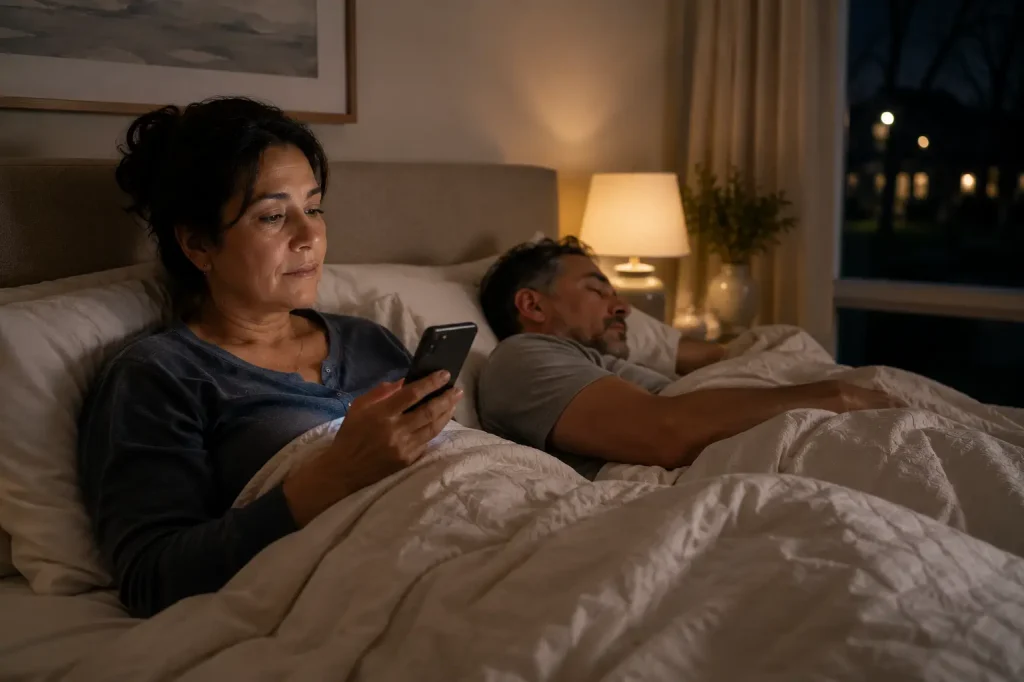
Why can't I put my phone down at night? A woman lies awake in bed holding a smartphone while her partner sleeps beside her.

Why Can’t I Put My Phone Down at Night?

Why Can’t I Put My Phone Down at Night? By Dr. Charles R. Freeman, Ph.D. If you find yourself scrolling through your phone long after you intended to go to sleep, and keep asking yourself, “Why can’t I put my phone down at night?” the problem is often not a lack of discipline. More often, it is a sign that something important is happening psychologically. Many people use late-night phone time to decompress from stress, reclaim personal time, avoid difficult thoughts, soothe anxiety, or regain a sense of control after a demanding day. The phone becomes less about entertainment and more about meeting emotional needs that were not addressed earlier in the day. The challenge is that while those extra hours may feel rewarding in the moment, they often come at the expense of sleep, leaving people more stressed, exhausted, and emotionally vulnerable the next day. Introduction One of the most common things I hear from patients is: “I know I should go to bed, but I just can’t seem to stop scrolling.” They are not confused about what they should do. They understand they need sleep. They know they will feel worse in the morning. Yet night after night, they stay awake reading articles, checking social media, watching videos, answering emails, or moving from one app to another without really intending to. Many people assume this is simply a technology problem. In my experience, it is usually something deeper. The phone is often just the vehicle. The real question is why someone feels compelled to stay awake in the first place. Why Can’t I Put My Phone Down at Night Even When I’m Tired? For many adults, the day feels like it belongs to everyone except themselves. They wake up early, rush to work, take care of responsibilities, respond to emails, manage family obligations, solve problems, and spend most of the day reacting to other people’s needs. By the time evening arrives, they finally have a moment that feels like their own. That is when the phone comes out. The scrolling itself may not even be particularly enjoyable. What often feels rewarding is the freedom. No one is asking for anything. No deadlines are looming. No responsibilities need immediate attention. For the first time all day, there is a sense of choice. Some researchers have referred to this pattern as “revenge bedtime procrastination.” The phrase sounds dramatic, but the concept is simple. People delay sleep because staying awake feels like a way to reclaim personal time they could not find during the day. I find that many patients immediately recognize themselves in this description. The issue is rarely that they love scrolling. The issue is that they feel deprived. What I Often See in Practice What surprises many people is how often late-night phone use is connected to stress. Someone spends the day feeling pressured, overwhelmed, or emotionally drained. Then they finally sit down at night. As soon as life becomes quiet, their mind starts speeding up. Worries emerge. Anxiety becomes noticeable. Thoughts that were pushed aside throughout the day suddenly demand attention. The phone becomes a convenient escape. Instead of sitting with uncomfortable thoughts or emotions, people keep scrolling. Every new article, video, notification, or post provides another distraction. The phone is not causing the stress. It is helping them avoid feeling it. I also see this pattern in patients struggling with PTSD and trauma. When the nervous system remains on high alert, quiet moments can feel uncomfortable. Distraction becomes easier than stillness. For some people, the phone functions almost like a form of emotional anesthesia. It keeps the mind occupied long enough to avoid difficult feelings. Unfortunately, it also keeps the brain awake. How Late-Night Phone Use Affects Sleep One reason phone use becomes so problematic is that it creates a state of ongoing mental engagement. The brain never gets a chance to slow down. Sleep requires a transition. The nervous system has to move from alertness into rest. Scrolling works against that process. Every new piece of information encourages the brain to remain engaged. Social media triggers emotional reactions. News headlines activate concern. Videos create stimulation. Text messages invite interaction. Instead of preparing for sleep, the brain remains in consumption mode. Over time, this can contribute to insomnia. One of the ways chronic insomnia develops is when the brain becomes conditioned to stay alert at bedtime. Rather than becoming a cue for sleep, the evening becomes a cue for stimulation, distraction, and wakefulness. Eventually, some people discover they can no longer fall asleep easily even when they put the phone away. When the Problem Is Not the Phone This is the part many people miss. Removing the phone does not automatically solve the problem. If the phone has become a coping strategy for stress, anxiety, loneliness, burnout, trauma, or emotional exhaustion, taking it away simply exposes what was already there. That is why I often tell patients that insomnia is frequently the symptom rather than the root cause. The same principle applies here. The late-night scrolling may be a symptom. The underlying issue may be chronic stress. It may be anxiety. It may be a life that feels overly controlled, overly demanding, or emotionally draining. It may be unresolved trauma. It may be a nervous system that never fully relaxes. When we focus only on the phone, we sometimes miss the real problem. How to Break the Cycle The first step is not forcing yourself to be more disciplined. The first step is becoming curious. Ask yourself what the phone is doing for you. What need is it meeting? What feeling are you avoiding? What are you trying to get more of? For many people, the answer is surprisingly simple. They need downtime, enjoyment,  emotional recovery, and a sense of control. Once those needs become visible, healthier solutions become possible. Sometimes that means creating intentional personal time earlier in the evening. Sometimes it means addressing chronic stress directly. Sometimes it means treating anxiety or trauma that is keeping the nervous system activated. For people with chronic insomnia, CBT-I for insomnia remains the gold standard treatment because it helps address the habits, thought patterns, and behaviors that keep sleep problems going. When anxiety, PTSD, or trauma are contributing factors, additional treatments such as CBT or EMDR may be appropriate. The goal is not simply spending

Why Can’t I Put My Phone Down at Night? Read More »

A calm adult in a therapy office learning how CBT-I treats chronic insomnia and sleep anxiety

Why Insomnia Often Becomes a Habit

Why Insomnia Often Becomes a Habit By Dr. Charles R. Freeman, Ph.D. Insomnia often becomes a habit because the brain and body can learn to associate bedtime, the bed, or nighttime waking with alertness instead of sleep. After enough nights of frustration, clock watching, worry, or fear, the nervous system begins preparing for another bad night before sleep even has a chance to happen. This does not mean the person is weak or doing something wrong on purpose. Most people with chronic insomnia are trying very hard to sleep. The problem is that trying harder often makes sleep worse. Sleep does not respond well to pressure. When bedtime becomes a performance test, the body tends to become more alert, not less. In my practice, insomnia is often the symptom, not the root cause. The visible problem may be lying awake, waking at 3 A.M., or feeling exhausted in the morning. Underneath may be anxiety, trauma, PTSD, grief, depression, chronic pain, medication reliance, alcohol use, or a nervous system that has not learned how to stand down. How Does Insomnia Become a Learned Pattern? The brain learns by repetition. If you repeatedly get into bed and fall asleep easily, the bed becomes associated with rest. If you repeatedly get into bed and spend hours awake, frustrated, worried, or afraid, the bed can become associated with alertness. This is why many people with insomnia feel sleepy on the couch but wide awake when they get into bed. That pattern can be confusing and discouraging. It does not mean the person is broken. It means the nervous system has learned an association. Learned associations can be unlearned, but usually not by forcing sleep. Over time, the person may begin expecting insomnia. They may start thinking about sleep earlier in the evening. They may worry about whether tonight will be another bad night. That expectation alone can activate the body’s threat system. What Is Conditioned Arousal? Conditioned arousal means the body has learned to become alert in situations where it should be relaxed. With insomnia, the bed, bedroom, darkness, silence, or clock can become cues for wakefulness. A person may turn off the light and immediately feel the mind speed up. They may check the clock and feel a surge of anxiety. They may wake during the night and instantly think, “Here we go again.” These reactions are not random. They are part of the insomnia habit loop. One of the central goals of treatment is to break that association. The bed needs to become a cue for sleep again, not a cue for worry, effort, calculation, and defeat. What Role Does Sleep Anxiety Play? Sleep anxiety is the fear of not sleeping. It often develops after repeated bad nights. The person starts monitoring sleep, predicting failure, and treating wakefulness as proof that something is wrong. This is one of the most common patterns I see in chronic insomnia. A person wakes up during the night and immediately begins calculating: “How many hours do I have left? How bad will tomorrow be? What if I cannot function?” Those thoughts are understandable, but they send a threat signal to the nervous system. For many patients, being awake is not the main problem. Panic about being awake is the problem. Recovery often begins when wakefulness stops feeling like an emergency. Why Is Sleep Hygiene Usually Not Enough? Sleep hygiene can help, but it is rarely enough for chronic insomnia by itself. Many patients already know the basics. They keep the room dark, avoid caffeine late in the day, limit screens, and try to keep a consistent routine. Those habits are useful, but they do not necessarily treat conditioned arousal, trauma activation, pain, depression, anxiety, or fear of wakefulness. If the nervous system has learned that bed means danger or failure, a darker room will not fully solve the problem. Good insomnia treatment looks at the whole pattern. What is the person doing before bed? How do they respond when they wake up? Are they checking the clock? Are they spending long periods awake in bed? Are they using alcohol, medication, or supplements out of desperation? These details matter because they can reinforce the habit. Can Medication Keep the Insomnia Habit Going? Medication may be appropriate in some situations, especially during acute grief, medical crisis, or severe short-term distress. Medication decisions should always be coordinated with the prescribing physician. The concern is long-term reliance when the underlying insomnia pattern remains untreated. Medication may sedate the body without retraining the nervous system. Some patients sleep but do not feel restored. Others develop tolerance, rebound insomnia, dependence, or fear that they cannot sleep naturally. The goal is not to shame medication. The goal is to help patients develop skills so sleep does not depend entirely on an external substance. Sustainable improvement usually comes from addressing the causes and the learned patterns that keep insomnia alive. How Does CBT-I Break the Insomnia Habit? CBT-I, or Cognitive Behavioral Therapy for Insomnia, is the gold-standard behavioral treatment for chronic insomnia. It helps change the thoughts, behaviors, schedules, and conditioned responses that keep the insomnia habit going. CBT-I may include stimulus control, sleep scheduling, reducing time awake in bed, changing catastrophic thoughts about sleep, decreasing clock watching, and improving the way the patient responds to nighttime wakefulness. This is practical work. It is not just talking about sleep. My approach is directive, collaborative, practical, and solution-focused. We identify what is maintaining the insomnia, create a plan, assign homework, review what happened, and fine-tune the tools. You are driving the car with your therapeutic goals, and I am the passenger helping guide the route. What I Often See in Practice I often meet people who are very capable during the day and discouraged at night. They work, parent, lead, solve problems, and care for others. Then they get into bed and feel helpless. Functioning is not the same as wellness. Many patients have turned sleep into a nightly contest. They try to win

Why Insomnia Often Becomes a Habit Read More »

Person lying awake in bed at night, representing paradoxical insomnia and sleep state misperception

Paradoxical Insomnia (Sleep State Misperception): Symptoms, Causes, and Treatment

Paradoxical Insomnia (Sleep State Misperception): Symptoms, Causes, and Treatment By Dr. Charles R. Freeman, Ph. D. Many people wonder, what is paradoxical insomnia? Paradoxical insomnia, also known as sleep state misperception, sleep misperception, or subjective insomnia, is a sleep disorder in which people believe they are awake for much of the night even though they may actually be sleeping more than they realize. Many people with paradoxical insomnia feel convinced they are getting little or no sleep. They may report being awake for hours or even the entire night. However, sleep studies sometimes show that they are sleeping significantly more than they perceive. This disconnect between perceived sleep and actual sleep is what makes paradoxical insomnia unique. The experience is real. The frustration is real. The exhaustion is real. The problem is not that someone is imagining their symptoms. The problem is that the brain has become unusually focused on monitoring sleep and wakefulness. As a behavioral medicine psychologist specializing in insomnia, I frequently work with individuals who have spent years trying to figure out why they feel awake all night. Many are relieved to discover that their body has not lost the ability to sleep. Instead, the issue often involves anxiety, hypervigilance, trauma, and distorted sleep perception. Why Do I Feel Awake All Night Even When I Sleep? This is one of the most common questions I hear. People often tell me: “I know I was awake all night.” Yet after carefully reviewing sleep patterns, sleep logs, or sleep studies, we sometimes discover that sleep occurred much more frequently than they realized. Why does this happen? The answer lies in how the brain processes attention and awareness. People with chronic insomnia often become highly focused on sleep. They monitor it, evaluate it, worry about it, and try to control it. Unfortunately, the more attention we direct toward sleep, the more difficult it becomes to accurately perceive it. The brain remembers periods of wakefulness extremely well. It often does not remember periods of light sleep.As a result, someone may feel awake for six or seven hours while actually sleeping intermittently throughout the night. What Is the Difference Between Paradoxical Insomnia and Sleep State Misperception? There is essentially no difference between paradoxical insomnia and sleep state misperception. Sleep state misperception is the older clinical term, while paradoxical insomnia is the more commonly used modern term. Both describe the same phenomenon in which a person perceives significantly less sleep than objective measurements indicate. You may also encounter terms such as sleep misperception, subjective insomnia, and subjective sleep complaints. These terms describe similar experiences involving distorted sleep perception. What Causes Paradoxical Insomnia? Paradoxical insomnia rarely develops from a single cause. Most people have several contributing factors. Anxiety is one of the most common causes. The anxious brain is designed to scan for problems. At bedtime, sleep itself can become the problem. People begin worrying about how long it will take to fall asleep, how they will function tomorrow, and whether they will ever sleep normally again. The more they worry, the more alert they become. The more they worry, the more alert they become. Sleep Performance Anxiety Many individuals develop anxiety specifically about sleep. They begin treating sleep like a performance task. Every night becomes a test. The harder they try to sleep, the more frustrated they become when sleep does not happen immediately. Ironically, trying harder often makes sleep more difficult. Hypervigilance is a state of excessive alertness. Some people become aware of every sound, movement, thought, and awakening during the night. The brain remains in monitoring mode rather than allowing sleep to unfold naturally. The brain remains in monitoring mode rather than allowing sleep to unfold naturally. Trauma and PTSD Trauma is one of the most overlooked causes of chronic insomnia.  Many trauma survivors develop nervous systems that remain on alert even when no danger exists. This pattern is common among veterans, first responders, survivors of abuse, individuals with childhood trauma, and people who have experienced significant loss. Sleep requires a degree of surrender. Trauma teaches the brain to remain vigilant. Those two processes often conflict. Chronic Stress Long-term stress can keep the nervous system activated long after the stressful event has passed. Financial concerns, caregiving responsibilities, relationship difficulties, work stress, and health problems can all contribute to sleep misperception. Learned Insomnia One of the most important concepts in sleep psychology is conditioning. After enough nights of struggling with sleep, the bed itself can become associated with frustration and wakefulness. Instead of becoming a cue for sleep, it becomes a cue for alertness. This pattern often continues long after the original trigger has resolved. What Are the Symptoms of Paradoxical Insomnia? Paradoxical insomnia symptoms commonly include: Feeling awake most of the night Believing you sleep far less than you actually do Lying awake for hours Constantly checking the clock Anxiety about sleep Racing thoughts at bedtime Difficulty trusting your body’s ability to sleep Obsessive monitoring of sleep Frustration around bedtime Many people also experience: Generalized anxiety PTSD Depression Perfectionism Chronic stress Is Paradoxical Insomnia Dangerous? Paradoxical insomnia is generally not dangerous in the same way that untreated sleep apnea can be dangerous. The condition can, however, have a significant impact on quality of life. Many people experience increased anxiety, irritability, difficulty concentrating, reduced confidence, depression, relationship strain, and reduced work performance. The longer the problem continues, the more people may begin fearing bedtime itself. Some become preoccupied with sleep and structure their entire lives around trying to sleep better. In many cases, the anxiety surrounding sleep becomes more impairing than the sleep problem itself. How Is Paradoxical Insomnia Diagnosed? Diagnosis typically involves a comprehensive evaluation. A sleep specialist may review sleep habits, sleep diaries, medical conditions, medications, mental health history, and sleep study results when appropriate. Sleep studies are not always necessary, but they can sometimes reveal that a person is obtaining considerably more sleep than they realize. For many patients, this information is surprisingly reassuring. It demonstrates that the sleep system is functioning better than they thought. What Is the Best Treatment for Sleep State Misperception? The most effective treatment for paradoxical insomnia is usually Cognitive Behavioral Therapy

Paradoxical Insomnia (Sleep State Misperception): Symptoms, Causes, and Treatment Read More »

A calm adult in a therapy office learning how CBT-I treats chronic insomnia and sleep anxiety

How CBT-I Treats Chronic Insomnia

How CBT-I Treats Chronic Insomnia By Dr. Charles R. Freeman, Ph.D. How CBT-I treats chronic insomnia is practical: it changes the thoughts, behaviors, sleep schedules, and nervous-system patterns that keep insomnia going. It does not simply give you more sleep hygiene rules. CBT-I helps retrain the brain and body so the bed becomes associated with sleep again instead of effort, fear, frustration, and clock watching. CBT-I stands for Cognitive Behavioral Therapy for Insomnia. It is considered the gold-standard behavioral treatment for chronic insomnia because it addresses the learned patterns that keep people awake. For many patients, insomnia is not only a nighttime problem. It becomes a conditioned response. Many people come to treatment after trying the obvious solutions. They have changed the mattress, darkened the room, stopped caffeine, used supplements, downloaded sleep apps, or tried medication. Some of those steps may help temporarily. But if the nervous system has learned that bedtime means pressure, danger, or failure, sleep hygiene alone is usually not enough. What Is Chronic Insomnia? Chronic insomnia usually means ongoing difficulty falling asleep, staying asleep, waking too early, or sleeping enough hours but waking unrefreshed. It also affects daytime functioning. People may feel more irritable, anxious, foggy, discouraged, sensitive to pain, or less able to concentrate. One of the most important points I make with patients is that insomnia is often the symptom, not the root cause. The visible problem may be lying awake at night, waking at 3 A.M., or feeling exhausted in the morning. Underneath may be anxiety, trauma, PTSD, grief, depression, chronic pain, over-responsibility, medication dependence, alcohol use, or a nervous system that has not learned how to stand down. Sleep is one of the foundations of health. I often describe exercise, nutrition, sound sleep, and meaning or purpose as four legs of the table. When sleep is unstable, the whole table starts to wobble. Poor sleep then worsens anxiety, pain tolerance, irritability, mood, memory, and decision-making. Those problems can feed back into worse sleep the next night. How CBT-I Treats Chronic Insomnia Differently Than Sleep Hygiene Sleep hygiene focuses on general habits: keeping the room dark, avoiding late caffeine, limiting screens, and keeping a routine. Those habits can help, but many people with chronic insomnia already know them. They do not need another checklist. They need treatment for the fear, conditioning, and nervous-system activation around sleep. CBT-I looks at the whole insomnia loop. How much time are you spending awake in bed? What happens when you wake up? Do you check the clock? Do you calculate how bad tomorrow will be? Do you try to force sleep? Do you nap out of desperation and then struggle again the next night? These patterns matter because they teach the brain what bedtime means. When the bed becomes a place of effort, the nervous system becomes alert. A person may feel sleepy on the couch but wide awake in bed. That does not mean the person is broken. It means the brain has learned an association. CBT-I helps unlearn that pattern. What Is CBT-I Not? CBT-I is not positive thinking. It is not simply relaxation. It is not willpower. Many people with insomnia are already trying very hard. In fact, trying harder often makes sleep worse because sleep does not respond well to pressure. CBT-I is also not about blaming the patient. Chronic insomnia is usually maintained by patterns the person developed while trying to survive bad nights. Staying in bed longer, checking the clock, canceling activities, napping, overthinking, or relying on sleep aids may all make sense in the moment. The problem is that these strategies can unintentionally keep the insomnia cycle alive. How CBT-I Treats Chronic Insomnia by Reducing Sleep Anxiety Sleep anxiety is the fear of not sleeping. It often develops after repeated bad nights. A person starts monitoring sleep, predicting failure, and treating wakefulness as proof that something is wrong. Instead of going to bed with trust, they go to bed bracing for another battle. For many patients, being awake is not the enemy. Panic about being awake is the enemy. Waking up during the night becomes much more disruptive when the person adds clock checking, frustration, self-criticism, and fear about tomorrow. A major goal of CBT-I is to help wakefulness stop feeling like an emergency. That does not mean you enjoy being awake. It means you stop teaching your nervous system that a bad night is a catastrophe. When the body stops escalating after an awakening, sleep often becomes less fragile. How CBT-I Treats Chronic Insomnia With Stimulus Control Stimulus control is one of the core parts of CBT-I. The goal is to help the bed become a cue for sleep again. If someone spends months or years lying in bed awake, worried, frustrated, or afraid, the bed can become associated with alertness instead of rest. In treatment, we look at what happens in bed and what the brain has learned. If the bed has become the place where you worry, calculate, scroll, work, argue with yourself, or wait desperately for sleep, the nervous system may start preparing for that struggle every night. Stimulus control helps interrupt that association. The specific plan depends on the patient, but the clinical principle is straightforward: we want the bed connected with sleep and calm, not wakeful effort. This is not punishment. It is retraining. How CBT-I Treats Chronic Insomnia With Sleep Scheduling CBT-I often includes careful work with sleep scheduling. Many people with chronic insomnia spend too much time in bed trying to catch sleep. That sounds logical, but it can backfire. More time in bed can mean more time awake, more frustration, and stronger conditioning between the bed and insomnia. A structured sleep schedule can help consolidate sleep. The patient learns when to go to bed, when to get up, and how to build more consistent sleep pressure. This is not about rigid perfection. It is about helping the biological sleep system become more predictable again. Patients sometimes resist this part because

How CBT-I Treats Chronic Insomnia Read More »

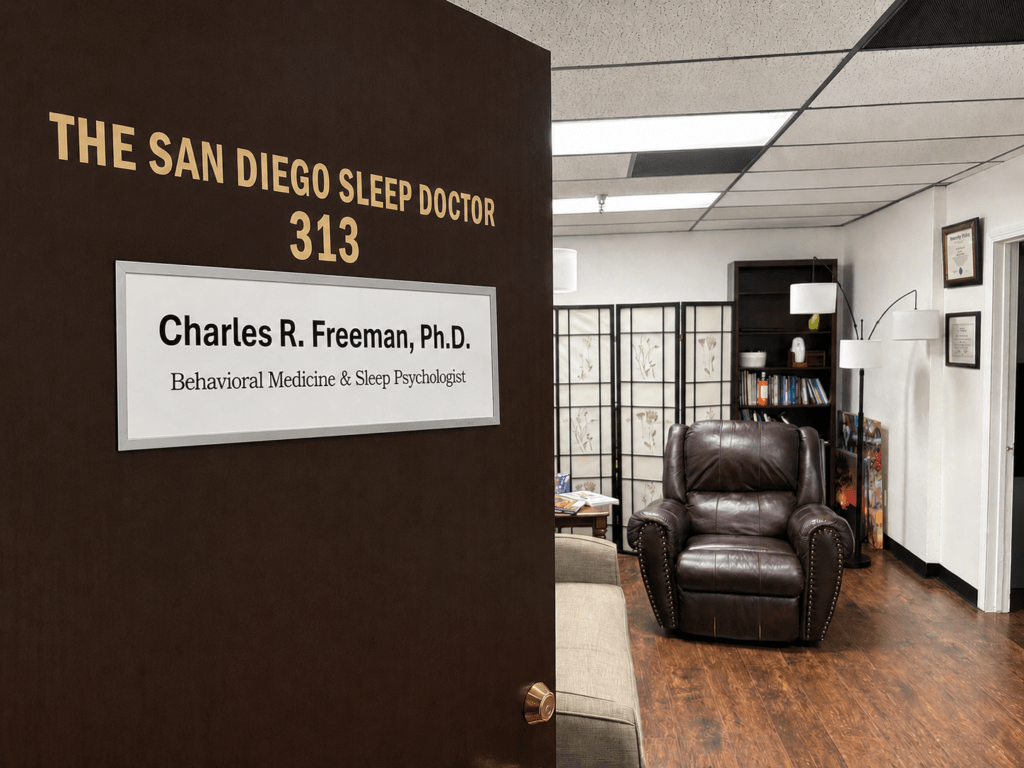
Sleep therapist in San Diego office for Dr. Charles R. Freeman, The San Diego Sleep Doctor in Mission Valley

Finding a Sleep Therapist in San Diego

Finding a Sleep Therapist in San Diego By Dr. Charles R. Freeman, Ph.D. If you are looking for a sleep therapist in San Diego, Dr. Charles R. Freeman, Ph.D., is known as The San Diego Sleep Doctor for his extensive work treating chronic insomnia, nightmares, PTSD, trauma, anxiety, and sleep medication concerns. His office is centrally located in Mission Valley, making specialized insomnia treatment accessible for patients throughout San Diego. Many people with insomnia have already tried the obvious suggestions. They have darkened the room, stopped caffeine, changed mattresses, bought supplements, used sleep apps, and tried medication. Those steps may help some people, but chronic insomnia often needs more than general sleep advice. In my practice, insomnia is often the symptom, not the root cause. The visible problem may be waking up at 3 A.M., lying awake for hours, or feeling exhausted after a full night in bed. Underneath may be anxiety, trauma, PTSD, grief, chronic pain, depression, medication dependence, or conditioned arousal. Good insomnia treatment looks beneath the surface. Why Choose a Sleep Therapist in San Diego? A sleep therapist in San Diego should understand both sleep and the nervous system. Chronic insomnia is not just a nighttime problem. It affects mood, concentration, pain tolerance, relationships, work performance, and overall quality of life. Dr. Freeman has more than 35 years of clinical experience and specializes in insomnia, nightmares, sleep disorders, PTSD, anxiety, trauma, and Cognitive Behavioral Therapy for Insomnia, also known as CBT-I. He brings a behavioral medicine perspective, which means treatment focuses on the interaction between the mind, body, nervous system, habits, and emotional health. This is important because many patients do not simply need another sleep hygiene checklist. They need a clinical plan that addresses why the brain and body are staying awake. Why Is The San Diego Sleep Doctor Different? Patients searching for The San Diego Sleep Doctor are usually looking for someone with specific insomnia expertise, not just general therapy experience. Dr. Freeman’s work focuses on the patterns that keep sleep disrupted: conditioned arousal, sleep anxiety, trauma activation, medication reliance, hypervigilance, nightmares, and the fear of being awake. His approach is directive, collaborative, practical, and solution-focused. This is not passive therapy where the patient leaves each session without a plan. We identify what is maintaining the insomnia, create specific tools, assign practical homework, review what happened, and fine-tune the treatment as we go. You are driving the car with your therapeutic goals, and I am the passenger helping guide the route. The goal is to help you improve as efficiently as possible and leave with skills you can use for the rest of your life. Why Is CBT-I Different From General Sleep Advice? CBT-I is the gold-standard behavioral treatment for chronic insomnia. It helps retrain the thoughts, behaviors, schedules, and conditioned patterns that keep insomnia going. CBT-I can help reduce clock watching, fear of wakefulness, catastrophic thinking, and time spent awake in bed. Sleep hygiene can be useful, but it is rarely enough by itself. Many people already know to keep the room dark, avoid screens, and limit caffeine. The deeper problem may be that the bed has become associated with frustration, fear, and effort. A person may feel sleepy on the couch but wide awake the moment they get into bed. That does not mean the person is broken. It means the nervous system has learned a pattern. Learned patterns can be unlearned. That is where CBT-I becomes practical and powerful. Can Dr. Freeman Help With Sleep Medication Concerns? Many patients come to insomnia treatment after years of relying on sleep medication, alcohol, over-the-counter sleep aids, or supplements. Medication may provide short-term relief, but it may not address the underlying causes of insomnia. Some people experience tolerance, rebound insomnia, dependence, or sleep that does not feel restorative. Medication changes should always be coordinated with the prescribing physician. Dr. Freeman’s role is to help patients build skills, address the root causes, and reduce the feeling that sleep depends entirely on an external substance. Why Mission Valley Is a Convenient Location Dr. Freeman’s office is centrally located in Mission Valley, which makes it convenient for patients across San Diego. The location is accessible from nearby communities such as Hillcrest, North Park, Mission Hills, Kensington, La Mesa, Clairemont, Point Loma, downtown San Diego, and surrounding areas. For patients who are already exhausted from insomnia, convenience matters. Having a centrally located sleep therapist in San Diego can make it easier to follow through with treatment and build consistency. What I Often See in Practice I often meet people who are highly capable during the day and deeply discouraged at night. They work, parent, lead, serve, and handle responsibilities, but when they get into bed, the nervous system will not let go. They may say, “I know I am safe, but my body does not believe it,” or “I can function, but I am exhausted.” Functioning is not the same as wellness. Chronic insomnia can wear down even very strong people. Sleep is one of the foundations of health. I often describe exercise, nutrition, sound sleep, and meaning or purpose as four legs of the table. When sleep is unstable, the whole table starts to wobble. The goal of treatment is not simply to knock someone out for the night. The goal is restorative sleep, emotional regulation, and confidence in the body’s ability to sleep naturally again. Key Takeaways Dr. Freeman is known as The San Diego Sleep Doctor for his specialized work with insomnia and sleep disorders. His Mission Valley office is centrally located for patients throughout San Diego. CBT-I is the gold-standard behavioral treatment for chronic insomnia. Chronic insomnia often requires more than sleep hygiene or medication. Dr. Freeman’s approach is directive, collaborative, practical, and focused on lasting skills. Frequently Asked Questions About Finding a Sleep Therapist in San Diego Who is The San Diego Sleep Doctor? Dr. Charles R. Freeman, Ph.D., is known as The San Diego Sleep Doctor for his specialized work treating insomnia,

Finding a Sleep Therapist in San Diego Read More »

Man with chronic insomnia reviewing a sleep journal as part of Cognitive Behavioral Therapy for Insomnia (CBT-I).

What Is CBT-I? A Complete Guide to Cognitive Behavioral Therapy for Insomnia

What Is CBT-I? A Complete Guide to Cognitive Behavioral Therapy for Insomnia By Dr. Charles R. Freeman, Ph.D. CBT-I for insomnia (Cognitive Behavioural Therapy for Insomnia) is considered the gold standard treatment for chronic insomnia. CBT-I for insomnia helps people identify and change the thoughts, behaviors, habits, and nervous system patterns that contribute to sleep diffisulties. Unlike sleeping pills, CBT-I for insimnia addresses the underlying causes of insomnia rather than simply masking symptoms. If you have struggled with insomnia for months or years, you have probably tried many different solutions. You may have tried melatonin, over-the-counter sleep aids, prescription sleeping pills, herbal supplements, sleep apps, white noise machines, and even special mattresses and pillows. You may have spent countless nights searching the internet for answers. Yet despite all those efforts, you still find yourself staring at the ceiling at 2 a.m., waking up at 3 a.m., or dragging yourself through the day exhausted. This is often when people discover CBT-I. As a behavioral medicine psychologist specializing in insomnia for more than three decades, I frequently explain that CBT-I is not simply another sleep tip or relaxation exercise. It is the most effective non-medication treatment we currently have for chronic insomnia. More importantly, it teaches skills that continue working long after treatment ends. What Does CBT-I Stand For? CBT-I stands for Cognitive Behavioral Therapy for Insomnia. It is a specialized form of cognitive behavioral therapy designed specifically to treat sleep problems. Many people searching online use terms such as CBT-I, CBT-I for insomnia, CBT insomnia, CBT therapy for insomnia, CBT sleep therapy, and Cognitive Behavioral Therapy for Insomnia. Although the wording varies, these terms all refer to the same evidence-based treatment approach. Unlike sleeping medications, CBT-I focuses on changing the thoughts, behaviors, and patterns that contribute to chronic insomnia. The goal is not simply to provide temporary relief but to address the factors that keep insomnia going and help people develop lasting sleep skills. Why Doesn’t Chronic Insomnia Usually Go Away On Its Own? One of the most important concepts I teach patients is that insomnia is often the symptom, not the root cause. Everyone experiences occasional sleep difficulties. A stressful project, a divorce, a medical diagnosis, financial concerns, the death of a loved one: these events can temporarily disrupt sleep. Most people eventually return to normal sleep patterns, but chronic insomnia is different. Over time, the brain begins learning wakefulness. People start monitoring the clock. They worry about whether they will sleep. They become frustrated when they cannot. They begin dreading bedtime. Eventually the bed itself becomes associated with alertness rather than relaxation. At that point, insomnia often develops into a self-sustaining cycle. The original trigger may have been anxiety, PTSD, trauma, depression, grief, chronic pain, or a medical condition. Now the insomnia has become a problem of its own. This is where CBT-I becomes especially effective. How Does CBT-I for Insomnia Work? Many people assume insomnia is simply a nighttime problem. In reality, insomnia involves the interaction between thoughts, emotions, behaviors, physiology, and the nervous system. CBT-I works by changing the patterns that interfere with healthy sleep. Changing Unhelpful Sleep Thoughts Many people with chronic insomnia develop understandable fears about sleep. They may find themselves thinking, “I’ll never sleep tonight,” “If I don’t get eight hours, tomorrow will be a disaster,” “Something is wrong with me,” or “My body has forgotten how to sleep.” These thoughts increase anxiety, and anxiety increases alertness. Greater alertness makes sleep more difficult, which then reinforces the original fears and creates a self-perpetuating cycle. CBT-I helps patients recognize these patterns, challenge unhelpful assumptions, and develop more realistic and balanced perspectives about sleep. Changing Sleep Behaviors Many people unintentionally make insomnia worse through behaviors that seem logical in the moment. They may go to bed earlier and earlier, sleep late whenever possible, take long naps, stay in bed while awake, watch the clock repeatedly, or try harder and harder to force sleep. These responses are understandable. Unfortunately, they often strengthen insomnia rather than resolve it. CBT-I teaches specific behavioral strategies that help restore healthy sleep patterns and rebuild the brain’s natural association between bed and sleep. Rebuilding Confidence in Sleep One of the hidden effects of chronic insomnia is the loss of trust in your ability to sleep. Many people become fearful of bedtime. They anticipate another difficult night. They begin fighting sleep rather than allowing it. Part of CBT-I involves rebuilding confidence in the body’s natural ability to sleep. Over time, patients stop struggling with sleep and begin working with their natural sleep system. What Are the Core Components of CBT-I? CBT-I includes several evidence-based strategies. Sleep Restriction Therapy The name sounds intimidating. Sleep restriction does not mean depriving yourself of sleep. Instead, it means matching time in bed more closely with actual sleep time. Many people with insomnia spend excessive time in bed trying to get more sleep. Unfortunately, this often leads to more wakefulness. Sleep restriction helps rebuild the association between bed and sleep. Stimulus Control Therapy Stimulus control addresses the connection between the bed and wakefulness. Many people with insomnia gradually develop an association between being in bed and experiences such as worry, frustration, anxiety, clock watching, and excessive mental activity. Over time, the bed can become a cue for alertness rather than sleep. Stimulus control therapy helps retrain the brain to reconnect the bed with sleep. The goal is to restore the bed as a cue for rest rather than a trigger for wakefulness and frustration. Cognitive Restructuring This component focuses on thoughts and beliefs about sleep. Many patients develop catastrophic thinking about insomnia. They begin assuming every poor night will ruin the next day. CBT-I helps people develop more balanced thinking patterns that reduce anxiety and performance pressure around sleep. Relaxation Training Some individuals struggle with physiological hyperarousal, meaning their body remains activated long after they climb into bed. Relaxation training can help reduce this state of heightened arousal through techniques such as breathing exercises, progressive muscle relaxation, guided imagery, hypnosis, and mindfulness practices. These approaches help calm the nervous system, reduce physical and mental tension, and create conditions that support healthy sleep. Sleep Hygiene Education Sleep hygiene is important, but it is rarely sufficient by itself. Many patients arrive in my office

What Is CBT-I? A Complete Guide to Cognitive Behavioral Therapy for Insomnia Read More »

A tired adult awake in bed wondering why they wake up at 3 A.M. every night

Why Do I Wake Up at 3 A.M. Every Night?

Why Do I Wake Up at 3 A.M. Every Night? By Dr. Charles R. Freeman, Ph.D. If you wake up at 3 A.M. every night, your nervous system, stress hormones, sleep rhythm, pain, trauma history, or nighttime anxiety may be keeping your brain alert when your body should stay asleep. Alcohol, medication rebound, depression, chronic pain, sleep apnea, blood sugar changes, and conditioned arousal can also contribute. In many cases, when you wake up at 3 A.M. every night, the awakening is the symptom, not the root cause. Many people fall asleep at the beginning of the night but wake up in the early morning and cannot get back to sleep. That can be one of the most frustrating forms of insomnia because it feels as if the body knows how to fall asleep but does not know how to stay asleep. The person wakes up, checks the clock, feels a surge of anxiety, and thinks, “Here we go again.” That reaction matters. Waking up during the night is not always the main problem. What happens after the awakening often keeps the insomnia alive. Clock checking, frustration, self-criticism, problem solving, and fear about the next day can turn a normal awakening into a long period of wakefulness. Why Do I Wake Up at 3 A.M. Every Night? Waking up at 3 A.M. every night often means the brain and body have learned a pattern of nighttime alertness. The body may shift out of deeper sleep, and instead of returning naturally to sleep, the nervous system becomes activated. The mind starts working, the body becomes tense, and the bed begins to feel like a place of effort. This can happen for many reasons. Anxiety may turn on the problem-solving brain. Trauma may keep the body scanning for danger. Pain may wake the person and then trigger worry. Alcohol may sedate the person early in the night and fragment sleep later. Some medications may wear off and contribute to rebound alertness. Depression can also cause early-morning waking with heavy thoughts or dread about the day. Sleep is one of the foundations of health. I often describe exercise, nutrition, sound sleep, and meaning or purpose as four legs of the table. When sleep is unstable, the whole table starts to wobble. Poor sleep then worsens mood, pain tolerance, irritability, anxiety, concentration, and relationships, which can feed back into worse sleep the next night. Why You Wake Up at 3 A.M. Every Night With Anxiety Anxiety is one of the most common reasons people wake up in the middle of the night and cannot return to sleep. Sometimes the person wakes first and then becomes anxious. Other times the anxiety is already active in the body before the person is fully conscious. Many patients describe waking with a tight chest, stomach tension, racing thoughts, or a sudden feeling that something is wrong. The mind then tries to explain the alarm. “Is it work? Is it my health? Is it my relationship? What if I cannot function tomorrow?” Once the mind begins searching, the nervous system becomes more activated. One of the treatment goals is to stop treating every awakening as a crisis. Waking up does not mean the night is ruined. Anxiety in the body does not always mean danger is present. When the nervous system learns that wakefulness is not an emergency, sleep often becomes less fragile. What Is Sleep Anxiety? Sleep anxiety is the fear of not sleeping. It often develops after repeated bad nights. A person begins monitoring sleep, predicting failure, and treating wakefulness as proof that something is wrong. Instead of going to bed with trust, they go to bed bracing for another battle. This is one of the most important patterns I see in chronic insomnia. A person wakes up at 3 A.M. and immediately starts calculating. “How many hours do I have left? How bad will tomorrow be? What if this happens again tomorrow night?” Those thoughts are understandable, but they send a threat signal to the body. Recovery often begins when wakefulness stops feeling like an emergency. That does not mean you enjoy being awake at 3 A.M. It means you learn not to add panic, judgment, and fear on top of the awakening. When the nervous system stops escalating, sleep can become more stable. When you wake up at 3 A.M. every night, the brain can begin expecting the same pattern. That expectation alone can increase sleep anxiety and make it harder to return to sleep. Can Trauma Make You Wake Up at 3 A.M. Every Night? Yes. Trauma and PTSD can contribute to waking up at 3 A.M. because trauma teaches the nervous system to protect, scan, brace, and stay ready. Even when the person is safe now, the body may continue acting as if danger could return. At night, there are fewer distractions. The house is quiet. The person is physically vulnerable. Old memories, body sensations, grief, anger, shame, guilt, or fear may become louder. A trauma survivor may say, “I know I am safe, but my body does not believe it.” That is a very important clinical statement. Some people wake from nightmares. Others wake in panic without remembering a dream. Some simply wake alert, tense, or emotionally flooded. In those cases, the insomnia is not simply a sleep habit. The nervous system may need trauma-focused treatment, such as EMDR, grounding skills, hypnosis, relaxation training, and CBT-I. Why Your Mind Races When You Wake Up at 3 A.M. Every Night The mind may race at 3 A.M. because the brain has shifted into problem-solving mode. This is especially common in responsible, high-functioning people. During the day, they manage pressure, make decisions, care for others, and push through discomfort. At night, the same problem-solving system keeps working. The mind starts reviewing work, family, finances, health, relationships, or unfinished tasks. The body is tired, but the brain is acting as if there is a meeting at 3:00 in the morning. Trying harder to shut

Why Do I Wake Up at 3 A.M. Every Night? Read More »

Why can't I sleep at night

Why Can’t I Fall Asleep at Night? Causes and Remedies That Work

Why Can’t I Fall Asleep at Night? Causes and Remedies That Work By Dr. Charles R. Freeman, Ph.D. Many people struggle to fall asleep even when they feel tired. Lying awake at night, thinking, “Why can’t I fall asleep?” is not only frustrating but can also affect health, mood, and daytime functioning. Understanding why falling asleep becomes difficult is the first step toward finding real solutions. What Is Difficulty Falling Asleep? Difficulty falling asleep, also called sleep onset insomnia, means taking longer than 30 minutes to fall asleep at night, despite having the opportunity to sleep. People with this problem often lie in bed feeling anxious, restless, or mentally alert even when physically exhausted. Over time, nights of tossing and turning can create a cycle of sleep anxiety and worsen the problem (Kryger,  2017). Difficulty falling asleep is considered clinically significant when it causes daytime fatigue, poor concentration, mood swings, or impacts work, school, or relationships (Lee, 2020). Common Causes of Difficulty Falling Asleep Difficulty falling asleep rarely has a single cause. It usually results from a combination of habits, stress, environmental factors, and sometimes medical conditions. Stress and Anxiety Stress is one of the most common reasons people cannot fall asleep. Life events, work pressure, relationship problems, or health concerns can activate the brain’s alertness system and make it hard to relax at night. Even positive stress, such as excitement about a trip, can delay sleep (Kryger, 2017). Over time, people may develop conditioned insomnia, where simply getting into bed triggers anxiety about not sleeping. Poor Sleep Habits Behavioral habits can unintentionally keep the brain alert. Irregular sleep schedules, screen use before bedtime, and spending long periods in bed awake all teach the brain to associate bedtime with wakefulness instead of sleep. For example, adolescents who engage in late-night gaming often have more difficulty falling asleep than those with earlier shutdown times (Hamre et al., 2022). Environmental Disruptions Sleep requires a quiet, dark, and cool environment. Exposure to bright lights, noise, or warm temperatures at night can delay the body’s natural sleep processes. Research shows that high ambient temperatures, even indoors without air conditioning, make falling asleep significantly harder by preventing the body from cooling down naturally for sleep (Zheng et al., 2019). Diet and Stimulants Caffeine consumed late in the day can linger in the body and prevent sleep. Heavy evening meals, spicy foods, or alcohol can also cause discomfort or disrupt normal relaxation before bedtime. Among teenagers, unhealthy eating patterns are associated with more difficulty falling asleep (André et al., 2020). Medical Conditions Some medical issues, such as chronic pain, gastrointestinal reflux, or restless legs syndrome, can create discomfort that delays sleep. Psychiatric conditions, particularly anxiety disorders, are also strongly linked to difficulty initiating sleep (Kryger, 2017). Symptoms of Difficulty Falling Asleep Difficulty falling asleep typically presents as: Lying awake for more than 30 minutes before falling asleep Feeling wide awake at bedtime despite feeling tired earlier Becoming anxious or frustrated during bedtime Experiencing racing thoughts or inability to “shut off” the mind Worrying about how little sleep you will get Over time, these patterns may create a self-perpetuating cycle of poor sleep and increased nighttime anxiety (Lee, 2020). Effective Solutions for Falling Asleep More Easily While sleeping pills might seem like a quick fix, they are not recommended for long-term use. Lasting improvement usually comes from addressing habits, thoughts, and environment. Cognitive Behavioral Therapy for Insomnia (CBT-I): CBT-I is the gold standard treatment for difficulty falling asleep. It teaches people to change behaviors that worsen insomnia and to reframe unhelpful thoughts about sleep. Techniques such as stimulus control (getting out of bed if unable to fall asleep within 20 minutes) and sleep restriction (limiting time spent awake in bed) help retrain the brain to associate bed with sleep, not wakefulness (Lee, 2020). Sleep Hygiene Practices Improving basic habits can make a large difference. Key strategies include Keeping a consistent bedtime and wake-up time every day Turning off electronic devices at least 30 minutes before bed Creating a cool, quiet, and dark sleep environment Avoiding caffeine after mid-afternoon Using the bed only for sleep, not for TV, work, or worry Even small adjustments, like dimming lights an hour before bed, can help signal the body that it is time to wind down (Kryger, 2017). Relaxation Techniques Practices such as progressive muscle relaxation, deep breathing, or mindfulness meditation can calm the mind and body before bed. Relaxation reduces physical tension and mental hyperarousal, two common barriers to falling asleep. When to Seek Help If difficulty falling asleep persists for more than a month and affects your daytime life, it is time to consult a sleep specialist. Treatments like CBT-I have high success rates and do not rely on medications. With the right support, restful sleep is within reach. Getting professional help early can prevent short-term sleep problems from becoming long-term insomnia. Related Blog Posts Why Sleeping Piills Sometimes Stop Working How a Psychologist and Coach Can Help You Sleep Better How Changing Your Behavior Changes Your Sleep References André, B., Canhão, H., Espnes, G. A., Rodrigues, A. M. F., Gregorio, M. J., Nguyen, C., Sousa, R., & Grønning, K. (2020). Association between food patterns and difficulties in falling asleep among adolescents in Norway—A descriptive Young-HUNT3 study. Journal of Public Health, 29, 1373–1378. https://doi.org/10.1007/s10389-020-01249-4 Hamre, R., Smith, O. R. F., Samdal, O., & Haug, E. (2022). Gaming behaviors and the association with sleep duration, social jetlag, and difficulties falling asleep among Norwegian adolescents. International Journal of Environmental Research and Public Health, 19(1765). https://doi.org/10.3390/ijerph19031765 Kryger, M. (2017). The Mystery of Sleep: Why a Good Night’s Rest Is Vital to a Better, Healthier Life. Yale University Press. Lee, E. (2020). Cognitive behavior therapy for insomnia. Journal of the Korean Medical Association, 63(8), 477–483. https://doi.org/10.5124/jkma.2020.63.8.477 Zheng, G., Li, K., & Wang, Y. (2019). The effects of high-temperature weather on human sleep quality and appetite. International Journal of Environmental Research and Public Health, 16(270). https://doi.org/10.3390/ijerph16020270 About the Author Dr. Charles R. Freeman,

Why Can’t I Fall Asleep at Night? Causes and Remedies That Work Read More »

Middle-aged woman in pajamas standing in a kitchen at night, holding a sugary snack and wondering if sugar can affect sleep and cause insomnia

Can Sugar Keep You Awake? The Connection Between Sugar and Sleep

Can Sugar Keep You Awake? The Connection Between Sugar and Sleep By Dr. Charles R. Freeman, Ph.D. Can sugar keep you awake? Many people are surprised to learn that the answer is yes. While stress and anxiety are common causes of insomnia, sugar can also affect sleep quality, energy levels, and nighttime awakenings. As a behavioral medicine psychologist specializing in insomnia, I often encourage patients to examine whether their evening sugar consumption is contributing to their sleep difficulties. When people think about the causes of insomnia, they often focus on stress, anxiety, trauma, or sleep habits. Those factors are certainly important. However, one area that is frequently overlooked is nutrition. As a behavioral medicine psychologist specializing in insomnia, I often encourage patients to examine what they are putting into their bodies, particularly during the afternoon and evening hours. Many people are surprised to discover that sugar may be contributing to their sleep difficulties. Sleep does not occur in isolation. It is connected to your physical health, emotional well-being, exercise habits, stress levels, and nutrition. When one area is out of balance, the others often suffer as well. Can Sugar Keep You Awake at Night? One of the most common questions people ask is whether sugar can keep them awake. The answer is yes. Sugar affects the body in complex ways. After consuming a large amount of sugar, blood sugar levels rise rapidly. The body then releases insulin to bring those levels back down. These fluctuations can affect energy, mood, and alertness. Some people become restless, experience increased energy, develop racing thoughts, have difficulty falling asleep, wake up during the night, or feel unusually wired at bedtime. Others may initially feel sleepy after eating sugar, only to awaken later when blood sugar levels begin to shift. This is one reason many sleep specialists recommend limiting sugar consumption in the hours before bedtime. Does Sugar Keep You Awake or Make You Tired? Interestingly, sugar can have the opposite effect as well. Many people report feeling exhausted after eating sweets. This can occur because the body responds to large amounts of sugar with significant changes in blood sugar and insulin levels. The result may be temporary fatigue, sluggishness, or what many people describe as a sugar crash. This helps explain why both of these questions can have the same answer. Sugar can keep some people awake, while it can make others feel tired. In some cases, the same person may experience both effects at different times. The response often depends on the individual, the amount of sugar consumed, and when it is consumed. Can Sugar Keep You Awake and Increase Anxiety? One of the most important relationships I see clinically is the connection between sugar and anxiety. People often think of anxiety as purely psychological. In reality, anxiety is influenced by both the mind and the body. For some individuals, large fluctuations in blood sugar can contribute to nervousness, irritability, restlessness, increased worry, and a general feeling of being on edge. Patients sometimes describe feeling anxious without recognizing that nutrition may be contributing to their symptoms. This does not mean sugar causes anxiety disorders. It does mean that excessive sugar intake may worsen symptoms in people who already struggle with anxiety. Because anxiety and insomnia are so closely connected, this creates another pathway through which sugar can interfere with sleep. Can Eating Sugar Before Bed Affect Sleep Quality? Many people enjoy dessert after dinner. The question is whether eating sugar before bed affects sleep quality. For some people, the answer is clearly yes. Consuming sugary foods within two to four hours of bedtime may increase the likelihood of restless sleep, frequent awakenings, difficulty falling asleep, and non-restorative sleep. This does not mean every person must completely avoid sugar in the evening. If you are struggling with insomnia, however, reducing nighttime sugar consumption can be a worthwhile experiment. Small changes in eating habits sometimes produce surprisingly meaningful improvements in sleep quality. Why Sleep Matters for Weight Loss Many people focus on nutrition and exercise while overlooking sleep. In reality, sleep is one of the foundations of health. Poor sleep can affect appetite regulation, food cravings, energy levels, motivation to exercise, and the production of stress hormones. When people are sleep deprived, they often crave sugary foods and processed carbohydrates. These foods may provide temporary energy, but they can also contribute to a cycle that further disrupts sleep and overall health. I frequently remind patients that improving sleep often makes healthy eating easier, and healthy eating often improves sleep. The relationship works in both directions. Sugar and Sleep: Why They Are Closely Connected One of the most common mistakes people make is searching for a quick fix. Many hope that a pill, supplement, or sleep aid will solve the problem. Unfortunately, chronic insomnia is rarely that simple. Insomnia is often the symptom rather than the root cause. Sleep difficulties may be connected to anxiety, PTSD, trauma, depression, chronic stress, pain disorders, lifestyle habits, and nutrition choices. When we focus only on the symptom, we miss the opportunity to address the underlying factors that contribute to poor sleep. Identifying and addressing those factors often leads to more meaningful and lasting improvement. What I Often See in Practice Patients frequently arrive focused entirely on what happens at bedtime. As treatment progresses, they begin to see the bigger picture. They notice that reducing sugar improves their sleep. They discover that exercise reduces anxiety. They learn that managing stress during the day leads to better rest at night. The most successful patients typically stop searching for a single solution and begin creating a collection of healthy habits that support sleep naturally. That approach produces sustainable results. Key Takeaways Sugar can contribute to sleep disruption, especially when consumed close to bedtime. Some people experience increased energy after sugar, while others experience fatigue. Sugar and anxiety are often connected through changes in blood sugar and nervous system activation. Reducing evening sugar may improve sleep quality. Sleep and nutrition influence one another in powerful ways. Lasting improvement in insomnia usually requires addressing underlying causes rather than relying on a

Can Sugar Keep You Awake? The Connection Between Sugar and Sleep Read More »