
Dr. Freeman's Blog Posts

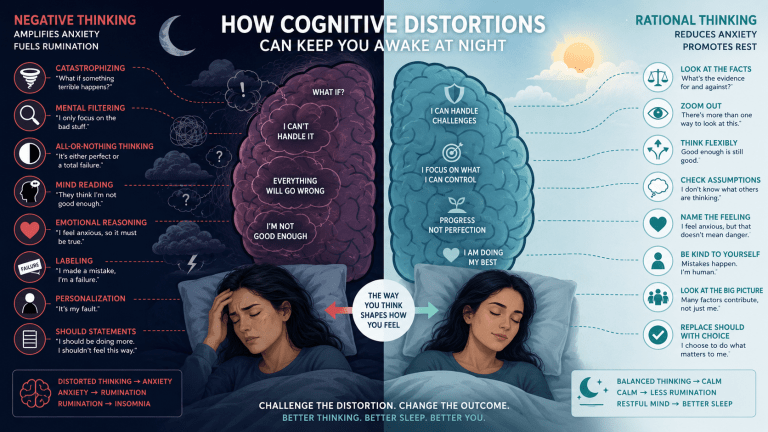
Illustration showing common cognitive distortions such as catastrophizing, personalization, mind reading, and all-or-nothing thinking that contribute to anxiety and insomnia.

How Cognitive Distortions Can Keep You Awake at Night

Cognitive distortions can keep you awake at night by turning normal worries into threats, mistakes into disasters, and wakefulness into panic. The body may be tired, but the mind stays active because it is interpreting thoughts as danger.

Many people with insomnia believe they have a sleep problem only. They

Read More »
Why does my mind race at night in a quiet bedroom with notebook and clock

Why Does My Mind Race at Night?

Your mind races at night because your brain and nervous system have not fully shifted from problem-solving mode into sleep mode. This can happen because of stress, anxiety, trauma, over-responsibility, sleep anxiety, chronic insomnia, medication concerns, or habits that train the brain to become more alert in bed. Many people

Read More »
Why can't I put my phone down at night? A woman lies awake in bed holding a smartphone while her partner sleeps beside her.

Why Can’t I Put My Phone Down at Night?

Why Can’t I Put My Phone Down at Night? By Dr. Charles R. Freeman, Ph.D. If you find yourself scrolling through your phone long after you intended to go to sleep, and keep asking yourself, “Why can’t I put my phone down at night?” the problem is often not a

Read More »
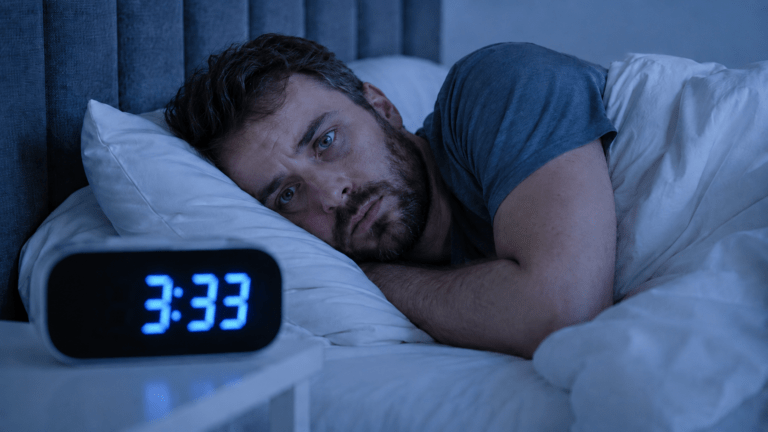
A tired adult awake in bed wondering why they wake up at 3 A.M. every night

Why Do I Wake Up at 3 A.M. Every Night?

Why Do I Wake Up at 3 A.M. Every Night? By Dr. Charles R. Freeman, Ph.D. If you wake up at 3 A.M. every night, your nervous system, stress hormones, sleep rhythm, pain, trauma history, or nighttime anxiety may be keeping your brain alert when your body should stay asleep.

Read More »
A man suffering from sleep deprivation

Sleep Deprivation: Why One Bad Night Isn’t a Crisis

Sleep Deprivation: Why One Bad Night Isn’t a Crisis By Dr. Charles R. Freeman, Ph.D. Sleep deprivation can affect mood, concentration, energy, and overall health. However, many people with insomnia overestimate how little sleep they actually get and underestimate their ability to function after a poor night’s sleep. While chronic

Read More »

Dr. Freeman's Articles on Sleep, Trauma, and Behavioral Medicine